
Plant health care · Pest library
Crape myrtle bark scale: signs, treatment timing and removal
If the bark on your crape myrtles has turned black, the cause is usually an insect, not a disease. Crape myrtle bark scale is an invasive pest, and timing is what makes treatment work.
What it is
Crape myrtle bark scale is an invasive felt scale insect that feeds on the bark of crape myrtles. Texas A&M AgriLife and Clemson University’s Home and Garden Information Center describe it as a growing problem in southern landscapes, including Texas.
Trees and shrubs at risk
- Crape myrtles, the main host on Houston properties
- Rows and plantings of crape myrtles along streets, parking lots and HOA entries, where one infested plant can lead to many
How it attacks
The insects settle in bark crevices and branch crotches and feed on the plant’s sap. As they feed, they excrete honeydew, a sticky, sugary liquid. Black sooty mold then grows on the honeydew, coating the bark and leaves. Clemson HGIC reports that infestations reduce flowering and vigor.
Why it is aggressive and hard to manage
- It is invasive, and crape myrtles are planted across Houston properties.
- It hides in crevices. The scales sit in bark cracks and crotches, where sprays have trouble reaching.
- Sprays and dormant oils are less effective than systemic treatments, according to Texas A&M AgriLife.
- It spreads on plant material. Infested plants and cuttings can carry it to new sites.
- The black bark is misread. Owners often treat the sooty mold or assume a disease, and the insect keeps feeding.

Signs to look for
| Sign | Where |
|---|---|
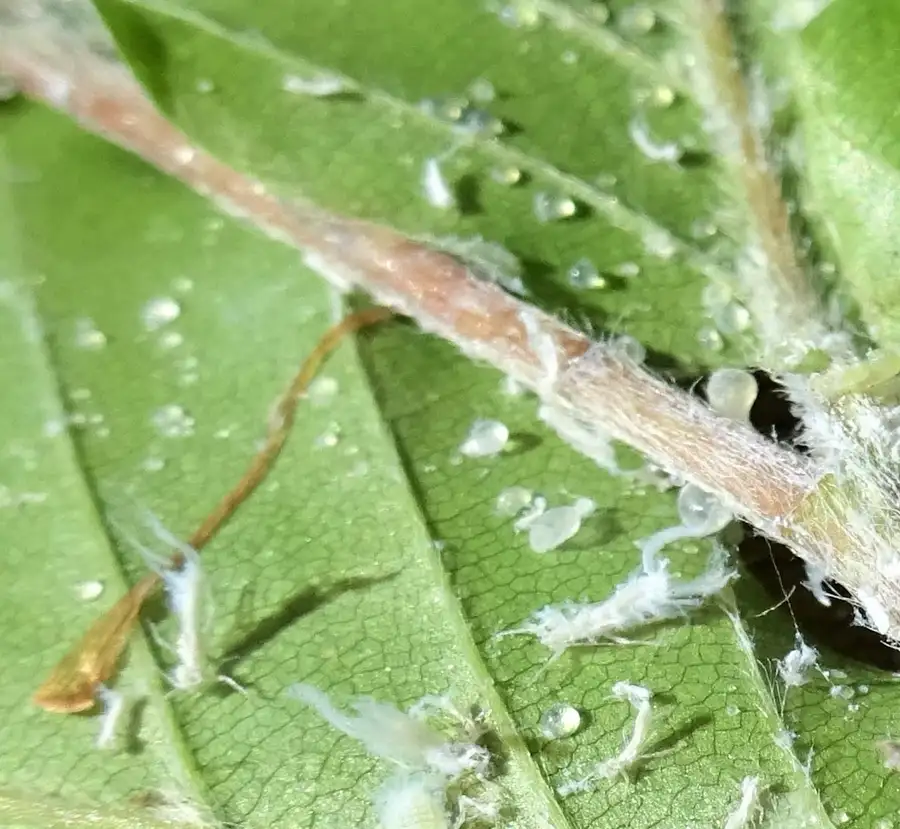
| White to gray felt-like scales | Bark crevices, branch crotches, pruning wounds |
| Black bark | Sooty mold on trunks and branches |
| Sticky leaves and surfaces | Honeydew on leaves and on cars or sidewalks below |
| Fewer flowers | Reduced bloom on heavily infested plants |
The black coating is often mistaken for a disease. See crape myrtle diseases for the fungal problems of crape myrtle and how they differ.
Prevention
- Inspect new plants before they go in the ground.
- Do not move infested cuttings or pruned branches to other sites.
- Encourage lady beetles. Preliminary Texas A&M research suggests lady beetles may give substantial suppression of the scale.
- Check crape myrtles yearly, especially in rows where the insect can move from plant to plant.
Treatment and management
This is the treatment step, the “extermination” part of pest care, done to industry practice. Texas A&M AgriLife guidance points to systemic soil treatments:
- Systemic soil drench with imidacloprid or dinotefuran, according to Williamson County AgriLife Extension.
- Timing matters. AgriLife suggests applying so the product is up in the tree by mid-April to early May.
- Sprays and dormant oils are less effective, though they may be part of a plan.
- Wash off sooty mold if needed, after the insect is under control.
Products are used according to the label and applied by properly licensed applicators where Texas law requires a license.
Quarantine, removal and disposal
There is no Texas quarantine for crape myrtle bark scale. Extraction and disposal still matter:
- Prune and remove heavily infested branches during routine pruning.
- Bag or haul off infested material. We haul it off rather than chipping and spreading it on site.
- Do not take cuttings from infested plants for use elsewhere.
See infested wood disposal in Texas for our debris practices.
How Strong Tree Service handles it
- Site walk. We check crape myrtles across the property for scale, black bark and honeydew.
- Arborist assessment. Our head foreman confirms the insect, separates it from other scale insects and fungal problems, and rates how heavy each infestation is.
- Identification help. If needed, we recommend a sample to Texas A&M AgriLife Extension for confirmation.
- Written scope. Pruning, haul-off of infested material, timing for any referred systemic treatment and follow-up checks are itemized by work zone, with schedule and price.
Aphids can also leave honeydew and sooty mold on crape myrtles. For the full service, see plant health care. To have a property’s crape myrtles checked before spring treatment timing, request a bid.
Frequently asked questions
Why is the bark on our crape myrtles black?
Usually because of sooty mold growing on honeydew from crape myrtle bark scale. Look for white to gray felt-like insects in the bark crevices and branch crotches.
When should crape myrtle bark scale be treated?
Texas A&M AgriLife suggests timing a systemic soil treatment so the product is up in the tree by mid-April to early May.
Will spraying the bark work?
Sprays and dormant oils are less effective than systemic soil treatments, according to AgriLife, because the scales hide in crevices.
Can we chip the infested branches and use them as mulch?
We do not recommend it. Infested branches are bagged or hauled off the site so the insect is not spread around the beds.
Related reading

Request a bid