
Plant health care · Pest library
Tree and shrub insect pest library for Houston-area properties
Thirteen insect pests that damage trees and shrubs on Houston-area properties. Each entry covers what the insect is, how it attacks, prevention, treatment, and how infested material is quarantined, removed and disposed of.
What this library covers
Pest care on these pages means insects only. It does not cover animals such as squirrels, birds or rodents.
Insects damage trees and shrubs in a few main ways:
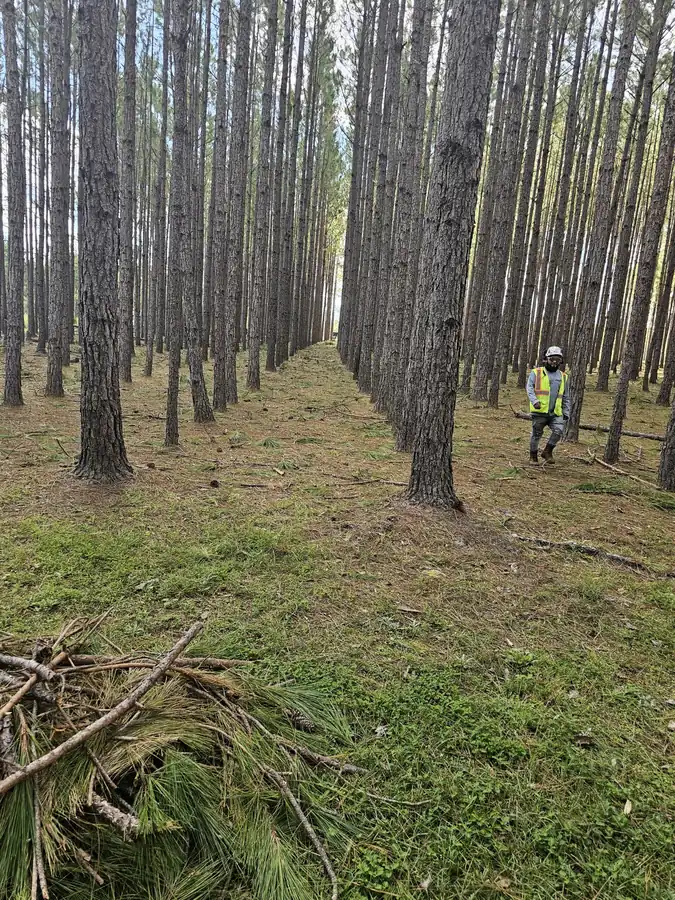
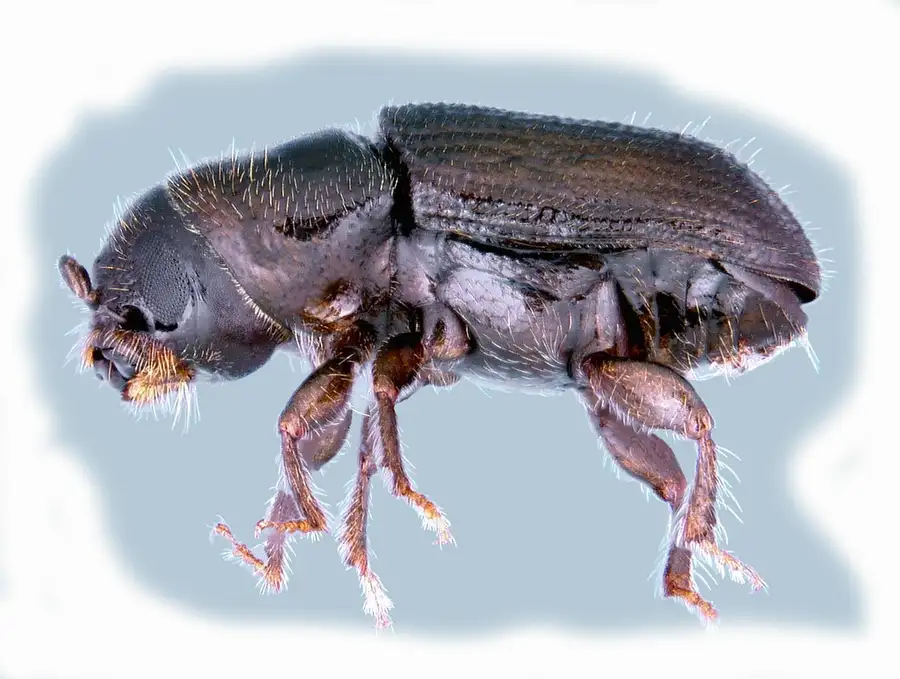
- Bark beetles tunnel under the bark of pines and girdle the tree. Examples: southern pine beetle, Ips engraver beetles and the black turpentine beetle.
- Wood borers tunnel into the wood and weaken trunks and limbs. Examples: emerald ash borer, tree borers, the granulate ambrosia beetle, the redbay ambrosia beetle and Formosan termites in trees.
- Sap feeders drain plant sap and drip honeydew that feeds black sooty mold. Examples: crape myrtle bark scale, other scale insects and aphids.
- Leaf feeders strip foliage. Examples: bagworms and fall webworm.
Why tree insects are hard to control
- Many live inside the tree. Bark beetles, borers and termites feed under the bark or in the wood, where sprays have little effect.
- They breed fast. Texas A&M reports seven or more generations a year for southern pine beetle, and up to four a year for fall webworm in South Texas.
- Stress invites them. Drought, storms, lightning and construction weaken trees and draw secondary pests such as Ips and many borers.
- Some carry disease. The redbay ambrosia beetle carries laurel wilt.
- Infested wood moves them. Firewood, logs, mulch and landscape timbers can carry insects to new areas.
- Some trees cannot be saved. Texas A&M guidance says it is nearly impossible to save a pine once southern pine beetles have colonized it.
Pest table
How serious each pest is reflects its typical effect on established trees and shrubs on a managed property, based on the Texas A&M and university sources cited on each page.
Bark beetles of pines
| Pest | Hosts | Key sign | How serious |
|---|---|---|---|
| Southern pine beetle | Pines | Pitch tubes in bark crevices, S-shaped galleries | Severe; attacks healthy pines, trees rarely saved |
| Ips engraver beetles | Stressed pines | Dime-sized pitch tubes on bark plates, H or Y galleries | Moderate to severe; follows stress |
| Black turpentine beetle | Injured pines | Large pinkish-white pitch tubes low on the trunk | Low to moderate; pines may survive |
Wood borers and wood-dwelling insects
| Pest | Hosts | Key sign | How serious |
|---|---|---|---|
| Emerald ash borer | Ash | D-shaped exit holes about 1/8 inch wide | Severe where present; not confirmed in Harris, Fort Bend or Montgomery as of June 2026 |
| Tree borers | Stressed hardwoods, oaks | Exit holes, frass, dieback | Moderate; mostly attack stressed trees |
| Granulate ambrosia beetle | Elm, pecan, oak, sweetgum, Prunus | Toothpick-like strands of wood dust | Moderate to severe; chemical control generally unsuccessful |
| Redbay ambrosia beetle | Redbay, sassafras | Sawdust toothpicks, sudden wilt | Severe; carries laurel wilt, confirmed in Harris County |
| Formosan termites in trees | More than 50 species, incl. pecan, sweetgum, white oak | Mud tubes, swarms, hollow trunks | Severe for structure; hidden hollowing |
Sap-feeding insects
| Pest | Hosts | Key sign | How serious |
|---|---|---|---|
| Crape myrtle bark scale | Crape myrtle | White felt-like scales, black bark | Moderate; reduced bloom and vigor |
| Scale insects | Many shrubs and trees | Bumps on bark or leaves, honeydew | Low to moderate; yellowing and dieback |
| Aphids and honeydew | Pecans, oaks, crape myrtles | Sticky honeydew, sooty mold | Low for most trees; a nuisance on sites |
Leaf-feeding caterpillars
| Pest | Hosts | Key sign | How serious |
|---|---|---|---|
| Bagworms | Junipers, cedars, evergreens | Spindle-shaped bags hanging from branches | Moderate; can strip evergreens |
| Fall webworm | Sweetgum, oak, hickory, pecan | Silk webs over branch ends | Low; rarely fatal, repeated years add stress |
The five parts of insect pest care
1. Prevention
- Keep trees vigorous with deep watering during drought.
- Protect roots and trunks during construction and mowing.
- Inspect new plants before planting.
- Encourage natural enemies such as lady beetles and wasps.
- Do not bring in firewood, logs or mulch from unknown sources.
2. Treatment (“extermination”)
Treatment follows integrated pest management, an approach built on monitoring, correct identification, thresholds, cultural fixes first and targeted treatments second. Depending on the insect, options include insecticidal soap or oil, Bacillus thuringiensis for young caterpillars, systemic soil treatments for crape myrtle bark scale, and trunk injection for emerald ash borer. For some insects, such as pine bark beetles and the granulate ambrosia beetle, Texas A&M guidance says chemical treatment is not effective or not recommended in residential settings, and removal is the main tool. Products are used according to the label and applied by properly licensed applicators where Texas law requires a license.
3. Quarantine
Some insects are regulated. Texas Department of Agriculture rules (4 Texas Administrative Code 19.700 to 19.703) restrict moving woody ash material and hardwood firewood out of emerald ash borer quarantined counties. For others, such as the redbay ambrosia beetle, Texas A&M guidance is not to transport infested wood for any use.
4. Extraction
Extraction means removing infested trees, limbs, bags or webs from the site at the right time. For pine bark beetles, timing is critical: removing a tree while beetles are still inside stops them from moving to the next tree, while removing it after they leave gives no control benefit.
5. Proper disposal
Disposal methods in Texas A&M guidance include chipping, burning where allowed and no burn ban is in effect, burying, and tarping wood in the sun to heat-kill insects. The right method depends on the insect. Our page on infested wood disposal in Texas covers each in one place.

How Strong Tree Service handles insect pests
- Site walk of the affected plants and the conditions around them.
- Assessment by our head foreman to identify the insect and judge how heavy the problem is.
- Identification referral to Texas A&M AgriLife Extension or Texas A&M Forest Service when the insect needs confirming.
- Written scope, itemized by work zone: trees, work, access, cleanup, stump depth, schedule and price, including how infested wood will be handled.
- Work day, cleanup and a final walkthrough with you.
Tree diseases, including the ones some of these insects carry, are covered in the tree disease library. For the full service, see plant health care. To have your trees checked for insects, request a bid.
Frequently asked questions
Does pest care include animals like squirrels?
No. Pest care on these pages means insects only.
Can insect-infested trees always be saved?
No. Some can, such as ash trees protected by injection before emerald ash borer arrives. Others cannot; Texas A&M says it is nearly impossible to save a pine once southern pine beetles have colonized it.
Is emerald ash borer in Houston?
Not as of June 2026. Texas A&M Forest Service lists 40 confirmed Texas counties, and Harris, Fort Bend and Montgomery are not among them. It has reached Hardin County.
What happens to infested wood after removal?
It depends on the insect. Options include chipping, burning where allowed, burying, or tarping in the sun to heat-kill insects. Regulated wood, such as ash from quarantined counties, must follow TDA rules.
Who applies insecticides?
Where a treatment is part of the plan, it is applied by a properly licensed applicator as Texas law requires, according to the label.
Go deeper
Related reading
Plant health care · Disease libraryTree and shrub disease library for Houston-area properties Plant health care · Wood disposalInfested and diseased wood disposal in Texas: quarantines, extraction and firewood rules
 Plant health care · Pest librarySouthern pine beetle: signs, control and infested wood handling
Request a bid