
Plant health care · Pest library
Southern pine beetle: signs, control and infested wood handling
Southern pine beetle can kill a pine in weeks and move on to the next. Once beetles are inside a tree, the work shifts to protecting the pines that are still healthy.
What it is
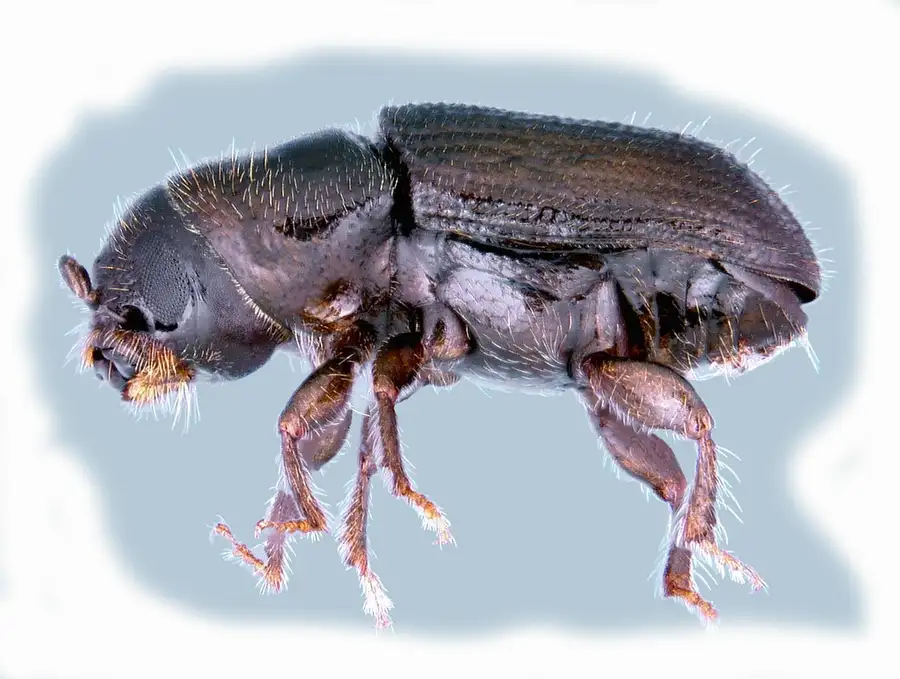
The southern pine beetle (Dendroctonus frontalis) is a small bark beetle. Texas A&M guidance identifies it as the only pine bark beetle in Texas known to attack healthy trees. The other two groups, Ips engraver beetles and the black turpentine beetle, usually go after trees that are already stressed.
Outbreak levels rise and fall over the years. Texas A&M Forest Service continues to run a Southern Pine Beetle Prevention Program built around thinning pine stands. Do not assume a quiet year means no risk.
Trees and shrubs at risk
- All southern pines on Houston-area properties, including loblolly and slash pine
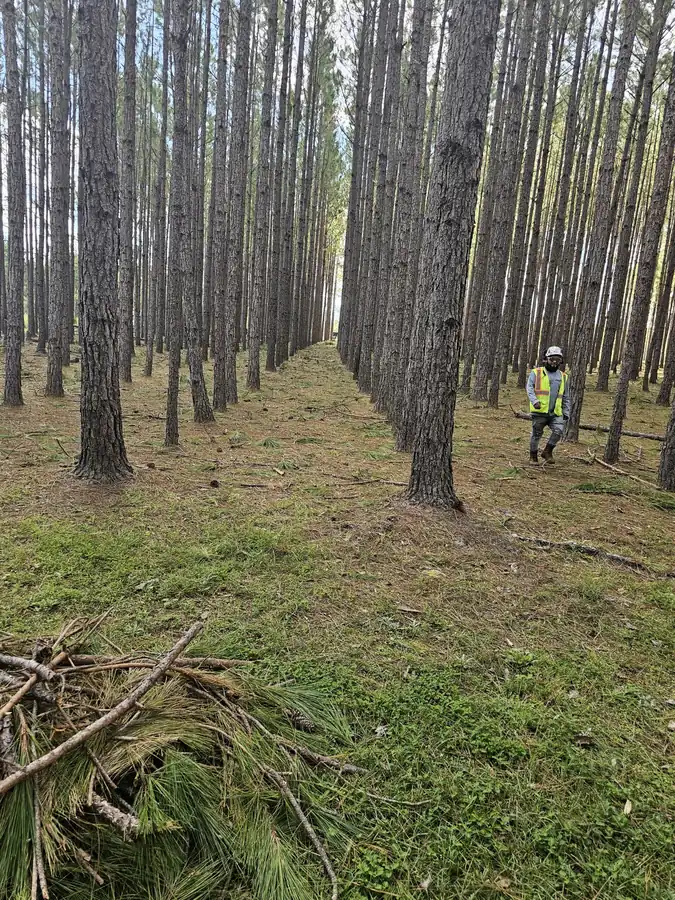
- Dense, crowded pine stands
- Pines stressed by drought, root damage, construction or lightning, though healthy trees can also be attacked
How it attacks
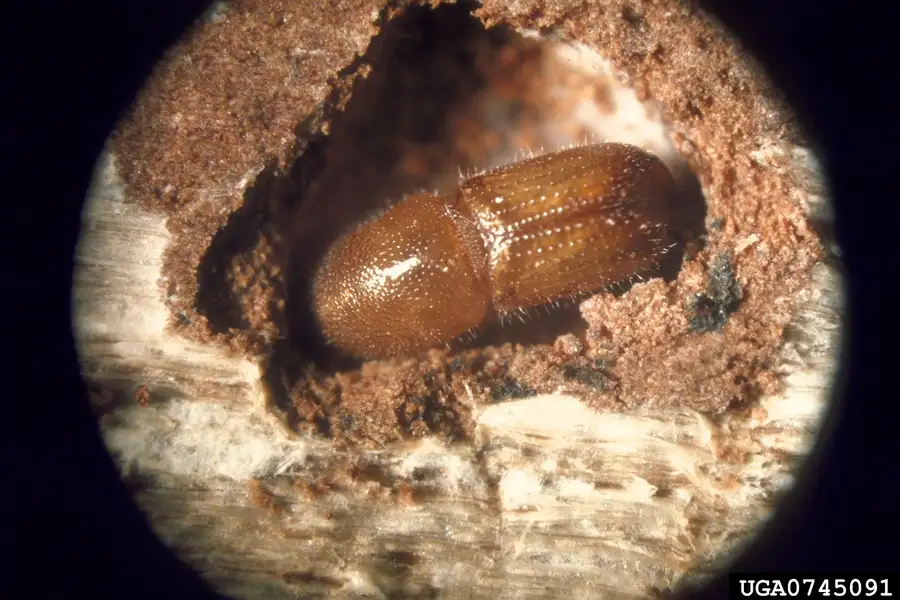
Adult beetles bore through the bark and tunnel in the inner bark, where they lay eggs. The larvae feed there too. Together, adults and larvae cut winding galleries that girdle the tree and stop the flow of water and sugars.
Because the beetle can attack healthy trees and breeds quickly, an infested tree can become the center of a spot that spreads to the pines around it.
Why it is aggressive and hard to manage
- It breeds fast. Texas A&M reports seven or more generations a year, with a life cycle as short as 21 days in summer. Activity stops when temperatures fall below 50 degrees F.
- Healthy trees are targets. Unlike most bark beetles, it does not wait for stress.
- Infested trees are nearly impossible to save. Texas A&M guidance says so plainly.
- Damage shows late. The crown can fade within about three weeks in hot, dry summers, and by then the beetles may already be moving to the next tree.
Signs to look for
| Sign | Where |
|---|---|
| Pitch tubes, small lumps of resin | In the crevices between bark plates |
| Reddish-brown boring dust | In bark crevices and at the base of the tree |
| Winding, S-shaped galleries | Under the bark |
| Needles fading yellow, then red | Whole crown, sometimes within three weeks |
[1] Source in references below
Prevention
From the Texas A&M Landowner’s Guide:
- Keep pines healthy and well spaced. Crowded stands are more vulnerable.
- Avoid root and trunk injury from equipment, mowers and construction.
- Water during drought. The Guide suggests 1 to 4 inches of water under the canopy every 7 to 10 days during drought, applied slowly, after checking soil moisture.
- Mark “no impact” zones during construction to keep equipment and fill off root areas.
- Use plastic trunk guards and mulched rings to protect trunks from mowers and string trimmers.
Treatment and management
Industry practice:
- Remove trees with live beetles promptly, without damaging the pines around them.
- Do not rely on whole-trunk spraying in residential settings. Texas A&M does not recommend it because of drift.
- Preventive treatment of high-value pines is used in some cases. Any such treatment is applied by a properly licensed applicator where Texas law requires a license.
- Reduce stress across the stand through watering, thinning and root protection.
Quarantine, removal and disposal
There is no Texas quarantine for southern pine beetle, but how the wood is handled matters. This step is extraction and disposal, and it is the main control tool:
- Fell infested trees while beetles are still inside. Removing a tree after the beetles have left gives no control benefit, though it may still be needed for safety.
- Burn infested wood quickly where burning is allowed and no burn ban is in effect.
- If burning is not allowed, place the wood in the sun and wrap it with a tarp so the heat kills the beetles inside.
- Do not stack fresh pine wood near healthy pines.
Our page on infested wood disposal in Texas covers these methods and the local rules to check.
How Strong Tree Service handles it
- Site walk. We check the fading pine and every pine around it for pitch tubes, boring dust and crown color.
- Arborist assessment. Our head foreman separates trees with live beetles from trees the beetles have already left, and southern pine beetle from Ips engraver beetles and the black turpentine beetle.
- Identification help. If the beetle needs confirming, we recommend Texas A&M Forest Service or AgriLife Extension resources.
- Written scope. Removals, felling direction, wood handling, haul-off or on-site treatment of the wood, and stand care are itemized by work zone, with schedule and price.
For the full service, see plant health care. If your pines are turning red, request a bid so the infested trees can be dealt with while the beetles are still inside.
Frequently asked questions
Our pine is turning red. Can it be saved?
Usually not once bark beetles have colonized it. Texas A&M guidance says it is nearly impossible to save an infested pine, so the focus is removing actively infested trees and protecting the rest.
Why does timing matter for removing a beetle tree?
Removing the tree while beetles are still inside, and then destroying the wood, stops those beetles from moving to the next pine. Once they have left, removal gives no control benefit.
Can the pines be sprayed?
Texas A&M does not recommend whole-trunk spraying in residential settings because of drift. Preventive treatment of high-value trees is applied by licensed applicators where required.
What do we do with the wood?
Burn it quickly where allowed, or tarp it in the sun to heat-kill the beetles. Do not leave it stacked near healthy pines.
References
Related reading

Request a bid