

HOA · Tree service
HOA tree service in Greater Houston for boards, managers and residents
Trees are among the largest living assets an association owns, and among the most common sources of resident questions. This hub brings together what boards, community managers and homeowners need to know, and how Strong Tree Service plans the work.
Who this section is for
HOA tree work has three audiences, and each needs something different:
- Board members need a plan they can approve, a budget they can defend and bids they can compare under Texas rules.
- Community managers need vendor paperwork on file, a clear scope, resident notices and a contact who answers.
- Residents need to know who is responsible for which tree, whether they need approval to remove one on their lot, and what happens on the day the crew is on their street.
The pages below answer those questions in plain language, with sources for every rule and figure.
Common area tree maintenance
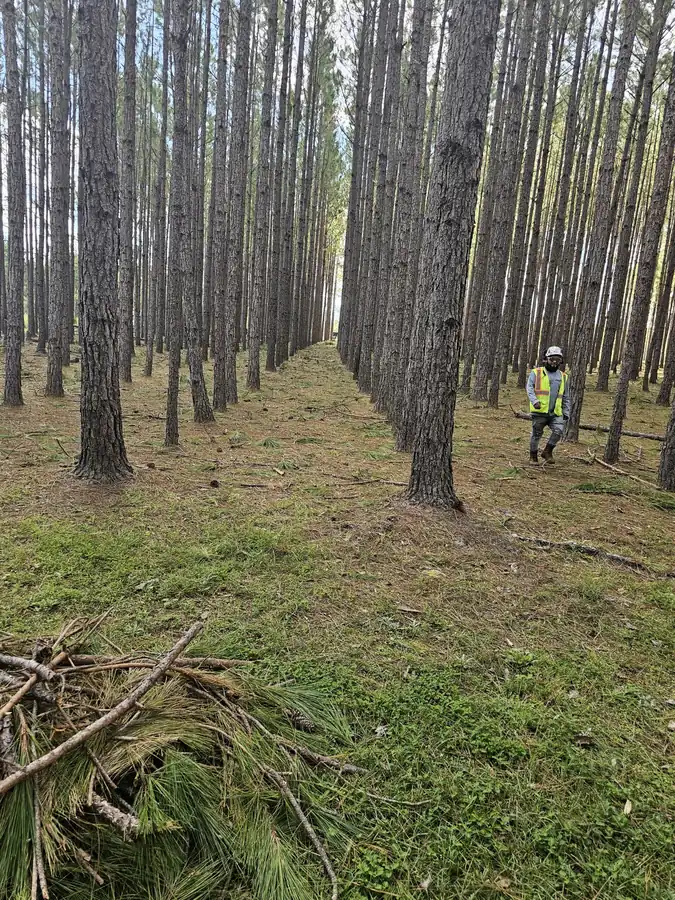
Entrance trees, parks, greenbelts, pond edges, private street trees and amenity centers need care on a schedule, not just when someone complains. A yearly program inventories the trees, reviews risk, prunes in cycles by zone and reports back to the board before the budget meeting.
Start with HOA tree maintenance, which explains how a program fits an association. From there:
- Who is responsible for trees in a Texas HOA: common area versus lot trees, overhanging branches and boundary trees.
- HOA tree budgets and reserves: operating budget or reserve study, zone budgets and the $50,000 bid rule.
- Resident notices for HOA tree work: what to tell residents before and after work, with templates.
HOA tree removal
Some trees have to come out: dead trees, failing trees, trees in conflict with structures or lines. For a board, the hard part is often explaining the decision to residents. A written reason for each removal, permits where required and a plan for stumps and replacements make that easier.
See HOA tree removal for how common area removals are planned, and the homeowner approval guide for residents who want to remove a tree on their own lot.
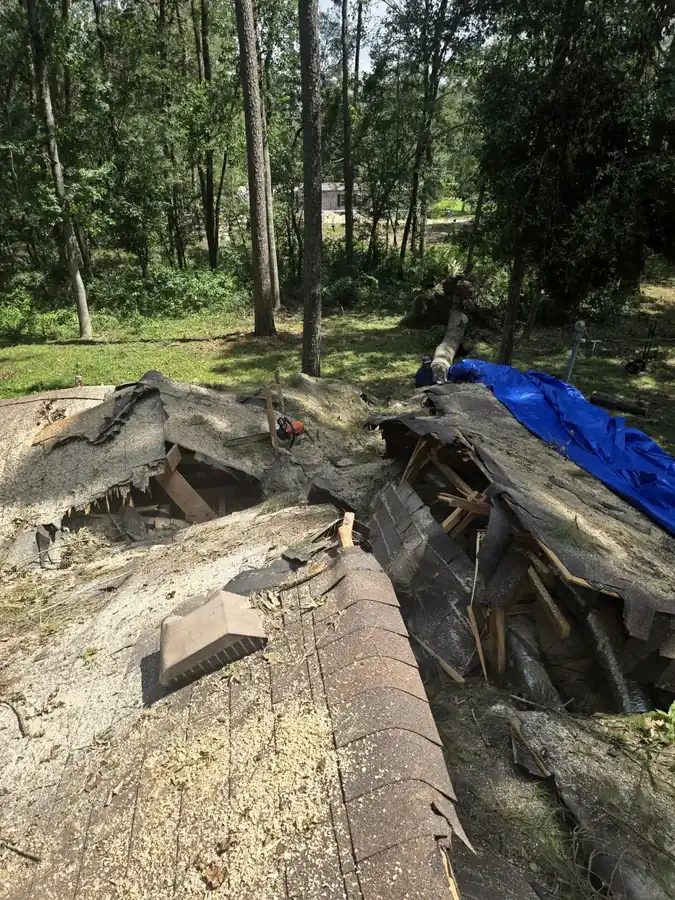
HOA storm cleanup and hurricane plans
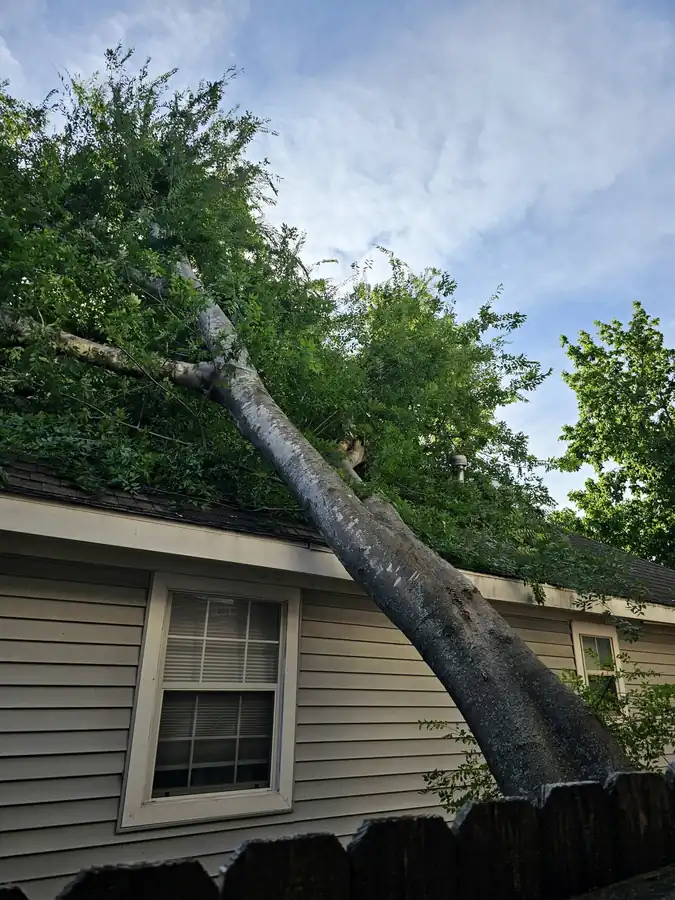
Hurricane season runs June 1 to November 30, peaking around September 10, according to NOAA’s National Hurricane Center. When a storm hits, the board needs to act in hours, residents need to know where to put debris, and fallen trees on power lines need to go to CenterPoint Energy, not a tree crew.
See HOA storm cleanup for the full picture, and the printable HOA hurricane tree plan for a checklist your board can adopt each spring.
What every HOA board should know about Texas rules
Texas has specific rules for how associations contract and meet. These are general information, not legal advice:
What that means in practice:
- A large multi-year tree program may need a formal bid process.
- The tree budget line goes through the open budget meeting.
- Emergency tree work can often be approved quickly by an out-of-meeting vote, if your documents allow it.
The Texas HOA vendor rules page covers these in detail, and your association attorney is the final word.
What to ask any HOA tree vendor
Boards and managers can use this list for any bidder, including us:
- Credentials. Who oversees the work, and what is their ISA certification number? ISA certification can be checked through ISA’s public credential search.
- Paperwork. Will you send a current certificate of insurance naming the association as certificate holder, and a W-9? See the vendor compliance packet.
- Scope. Is the bid itemized by tree or zone, with the work stated in ANSI A300 terms? See how to read a tree bid.
- Power lines. Which trees are near energized lines, and who will handle them?
- Residents. How will residents be told about the work, and who answers their questions on the day?
- Cleanup. Where do chips and wood go, and is there a final walkthrough?
For residents: quick answers
- Is the tree in my yard the HOA’s job? Usually not, if its trunk is on your lot. The recorded declaration and plat decide, and trunk location generally decides ownership under Texas case law. See common area vs homeowner trees.
- Can I trim the HOA’s branches over my yard? Texas case law generally allows trimming back to the property line, but you can be liable for injuring the tree. Ask management first.
- Do I need approval to remove a tree on my lot? Often yes. Many associations require written approval through their architectural review process. See the homeowner approval guide.
- A tree is touching a power line. Stay away and call CenterPoint Energy, or 911 if anything is sparking or down.
How Strong Tree Service works with associations
Every job starts with a site walk, usually with the community manager or a board member. At the site walk, we confirm which trees are on common area before we bid. You then get a written, itemized scope by work zone that lists the trees, the work on each, access and parking, cleanup, stump depth for removals, the schedule and the price, so the board can approve all of it or part of it. On the work day, the crew follows the scope. The job ends with cleanup and a final walkthrough with your contact.
Safety and training credentials are available on request. The crew has about 15 years in the field, including work for national tree care firms. A certificate of insurance and a W-9 are sent on request. Our work comes by word of mouth in the industry.
Strong Tree Service serves associations in Houston, Katy, Spring, Sugar Land and The Woodlands. For planned work, request a bid. For a tree down on a common area, call the 24/7 emergency line at (832) 525-1070. For general questions, see the tree service FAQ.
Related services
HOA programs draw on the same services we provide to commercial properties: tree trimming, tree removal, plant health care, tree maintenance programs and right-of-way tree clearing for private streets and drainage easements.
[1] Source in references below
[2] Source in references below
[3] Source in references below
[4] Source in references below
Frequently asked questions
Who maintains trees on HOA common areas?
The association, as set by its declaration and plat. Trees rooted on common area are usually the HOA’s responsibility, and trees on lots are usually the owner’s, unless the documents say otherwise. Check your own governing documents.
Does our HOA need multiple bids for tree work?
If the contract is for services over $50,000, Texas Property Code 209.0052 requires the association to use a bid process it sets up. Itemized bids by zone make the comparison simpler.
Can the board approve emergency tree work without a meeting?
Texas Property Code 209.0051 allows board action outside a meeting if each director can give an opinion and vote and the action is recorded at the next meeting. A pre-signed emergency authorization with a not-to-exceed amount makes that faster.
Can you send a certificate of insurance for our HOA?
Yes. A certificate of insurance and a W-9 are sent on request. Tell us the association’s exact name and address for the certificate holder.
Do I need HOA approval to remove a tree on my lot?
Often yes. Many associations require written approval through their architectural review process before a tree is removed. Check your design guidelines and ask management in writing.
References
Go deeper
Related reading
Request a bid