HOA · Common area vs lot trees
Who is responsible for trees in a Texas HOA?
Most disputes about HOA trees start with one question: whose tree is it? The answer usually comes from the association’s documents and the location of the trunk. Here is how it generally works, and what to do when it is unclear.
General information only. This page is not legal advice. For a dispute, talk to your association attorney or your own lawyer.
The documents come first
In a Texas HOA, the recorded declaration (often called the CC&Rs) and the plat set out what the association owns and maintains and what each owner owns and maintains. Those documents are the starting point for any tree question.
A common pattern, though not a law, is:
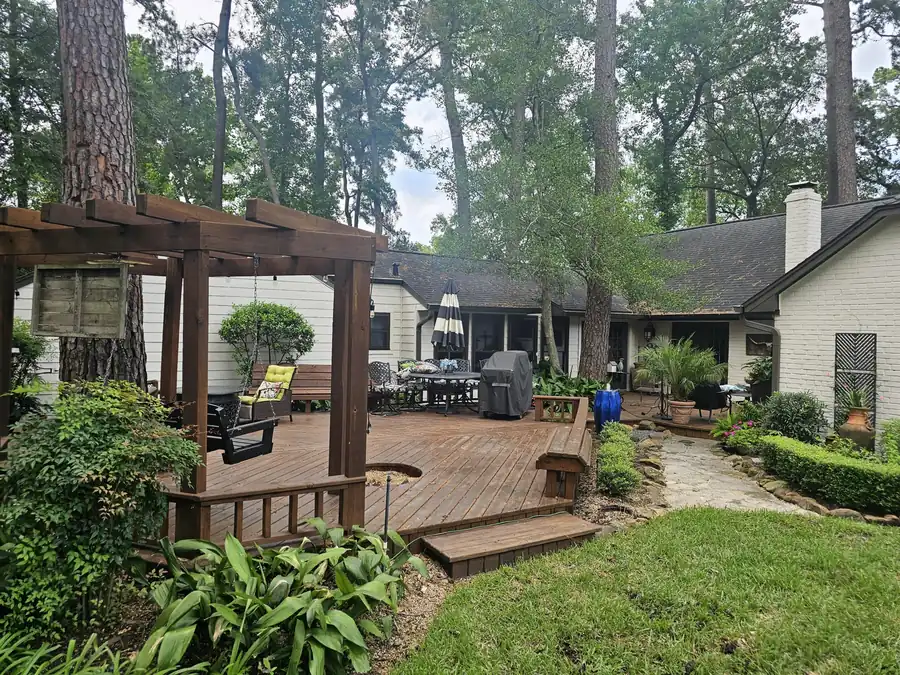
- Trees rooted in common areas are the association’s responsibility: entrances, parks, greenbelts, ponds and private street areas the HOA owns.
- Trees rooted on a lot are the owner’s responsibility, even when the HOA controls what the owner may do with them through design guidelines.
Some declarations change this. An association may maintain street trees planted on lots, or front yard trees in a certain section. Others make owners responsible for trees in an easement on their lot. Read the documents, or ask the manager to point to the section.
Trunk location generally decides ownership
So a tree whose trunk stands on common area is generally the association’s, even if most of its canopy hangs over a lot. A tree whose trunk stands on a lot is generally the owner’s, even if it shades the common area.
Overhanging branches
For residents, that means:
- You can generally trim HOA branches back to your property line, as long as you do not damage the tree.
- Cutting into the trunk, removing large limbs at the trunk, or cutting in a way that kills or badly weakens the tree can create liability.
- Your HOA’s rules may add limits, such as requiring notice to management first.
The safer path is to ask management to have the overhanging limbs handled as part of the common area program. That way the work is done to pruning standards and the question of damage does not come up.
Trees on the line
When a trunk straddles the line between a lot and the common area, ownership can be shared. That is a situation where nobody should remove the tree alone. Get agreement in writing from the association before any work, and get legal advice if there is a dispute.
Who pays when a tree falls
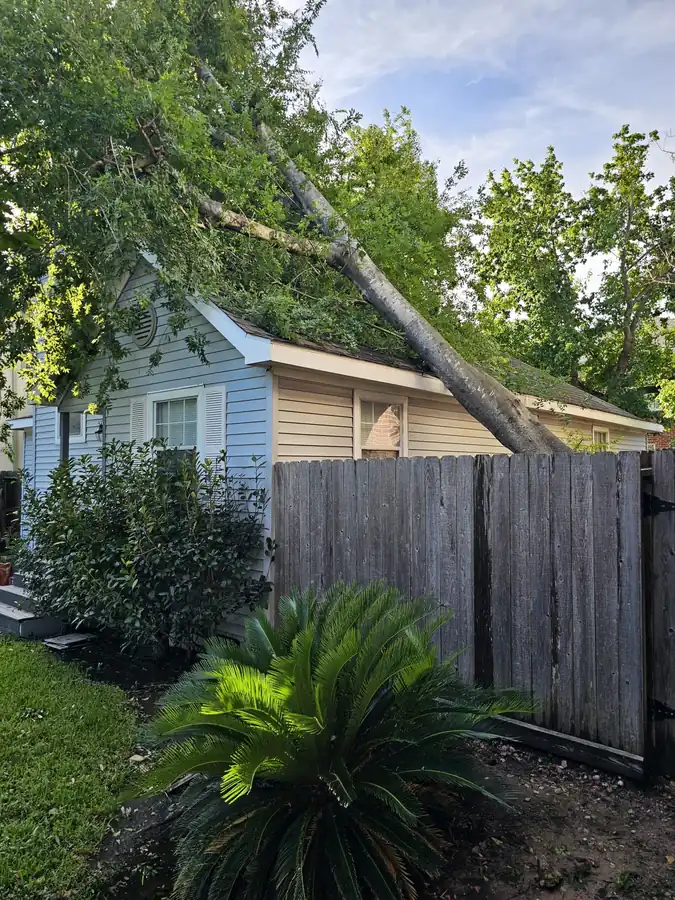
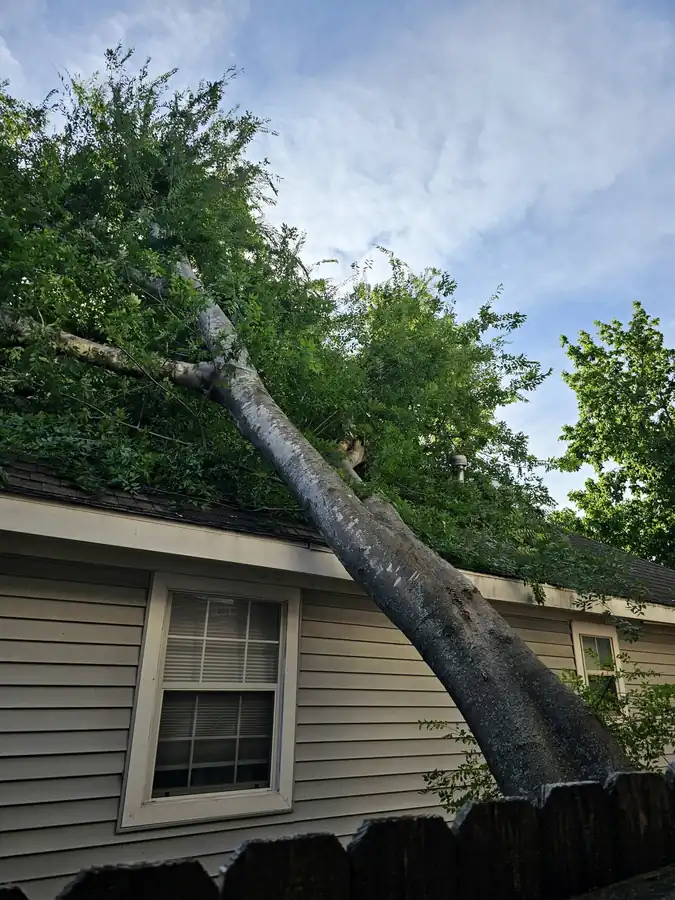
When an association tree falls on a home, or a homeowner’s tree falls on common area, the usual starting point is the owner of the tree, set by trunk location and the governing documents. The answer is also subject to insurance on each side, and each policy reads differently. These are legal questions, so get advice for any real dispute, and keep photos and records of the damage either way.
Before an association can charge an owner for damage or levy a fine, Texas law sets notice steps the association must follow. Ask your manager or attorney what applies.
HOA approval for lot trees
Even when a tree is the owner’s, the association may control what happens to it. Many HOAs require written architectural review approval before an owner removes a tree on their lot. See the homeowner approval guide for the steps.
Drought is a separate case. Texas HB 517 (2025) added Property Code 202.008, which bars HOA fines for brown or discolored turf or vegetation during watering restrictions.
Trees near power lines
Trees near CenterPoint Energy distribution lines are a different matter. CenterPoint trims trees near its lines through its own crews and contractors. Whether the tree is on a lot or the common area, a tree touching or near a power line goes to CenterPoint, not to a tree crew. See what to do when a branch touches a power line.
Get it in writing
Most tree disputes in HOAs come from unclear verbal answers. For any tree near a boundary, ask management for a written answer that says:
- Whose tree it is, and which document or map says so.
- What work is approved, and by whom.
- Who will pay for it.
How Strong Tree Service handles it
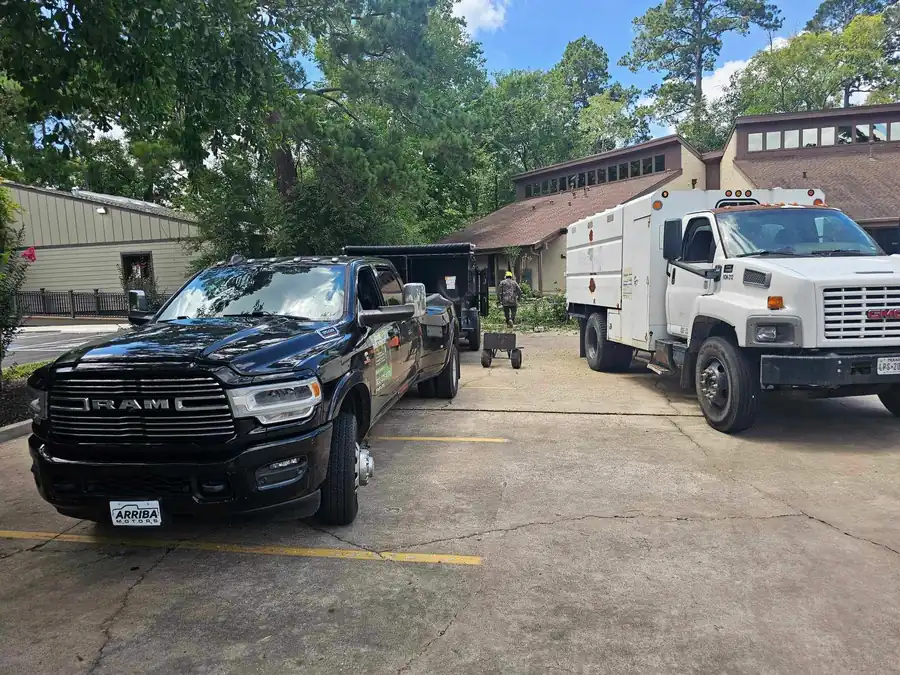
At the site walk for an HOA program, we confirm with the manager which trees are on common area before we bid, and the written, itemized scope by work zone lists only those trees. Lot trees stay out of the association’s scope unless the board says otherwise in writing. Boards and managers can request a bid for a common area scope, and residents with questions about a specific tree should start with their community manager. The full program is on HOA tree maintenance, and storm responsibility is covered on HOA storm cleanup.
[1] Source in references below
[2] Source in references below
[3] Source in references below
Frequently asked questions
Who is responsible for a tree in my yard in an HOA?
Usually you, if the trunk is on your lot. The declaration and plat decide, and some documents assign certain lot trees to the association. Check with management for your section.
Can I trim the HOA’s branches that hang over my yard?
Texas case law generally allows trimming overhanging branches back to the property line, but you can be liable if you injure the tree. Your HOA’s rules may add limits, so ask management first.
Who handles a tree on the line between my lot and the common area?
Ownership may be shared. Do not remove it alone; get the association’s agreement in writing before any work, and get legal advice for a dispute.
Who pays if an HOA tree falls on my house?
Usually the owner of the tree, set by trunk location and the governing documents, and subject to insurance. Each case turns on its own documents and facts. Get legal advice for a real dispute.
Can my HOA fine me for dead plants during a drought?
Texas HB 517 (2025) added Property Code 202.008, which bars fines for brown or discolored turf or vegetation during watering restrictions. A dead tree that is a hazard is a separate question, so ask management.
References
Related reading
Request a bid