
HOA · Storm cleanup
HOA storm cleanup and hurricane plans for Houston communities
After a storm, a board has to move fast, residents want answers and some trees are on power lines. A plan made in spring turns that day into a checklist instead of a scramble.
Before the season
The work that matters most happens before June. By May, the association should have:
- A walk-through of common areas to find dead trees, large dead limbs over homes and streets, split trunks and leaning trees, with corrective work scheduled.
- A priority list of the places that must be cleared first: entrances, private streets, fire lanes, the amenity center and drainage inlets.
- A written storm plan with contacts, a site map and gate codes.
- A pre-signed emergency authorization with a not-to-exceed amount.
- The tree vendor’s paperwork on file: a current certificate of insurance and a W-9.
The printable HOA hurricane tree plan turns this into a checklist the board can adopt each spring, and hurricane season prep covers the tree work itself.

Pre-approved emergency work
The biggest delay after a storm is often approval, not the crew. A pre-signed emergency authorization lets the manager call in work up to a stated amount without waiting for a meeting.
Annual budget approval is not allowed outside a meeting, so fund an emergency line in the budget ahead of time. Check your own documents with your association attorney.
After the storm: safety first
- Downed lines. Treat every downed line as energized. Keep residents away and call 911 and CenterPoint Energy. Do not let anyone, including the tree crew, work on trees touching lines. CenterPoint Energy or a line-clearance qualified crew handles those, and Strong Tree Service coordinates with them.
- Wait for the weather. OSHA 1910.269(r)(1)(vi) presumes thunderstorms and high winds too hazardous for line-clearance tree work, and crews start once conditions allow.
- Access routes. Entrances, private streets and fire lanes are cleared first so residents and emergency vehicles can move.
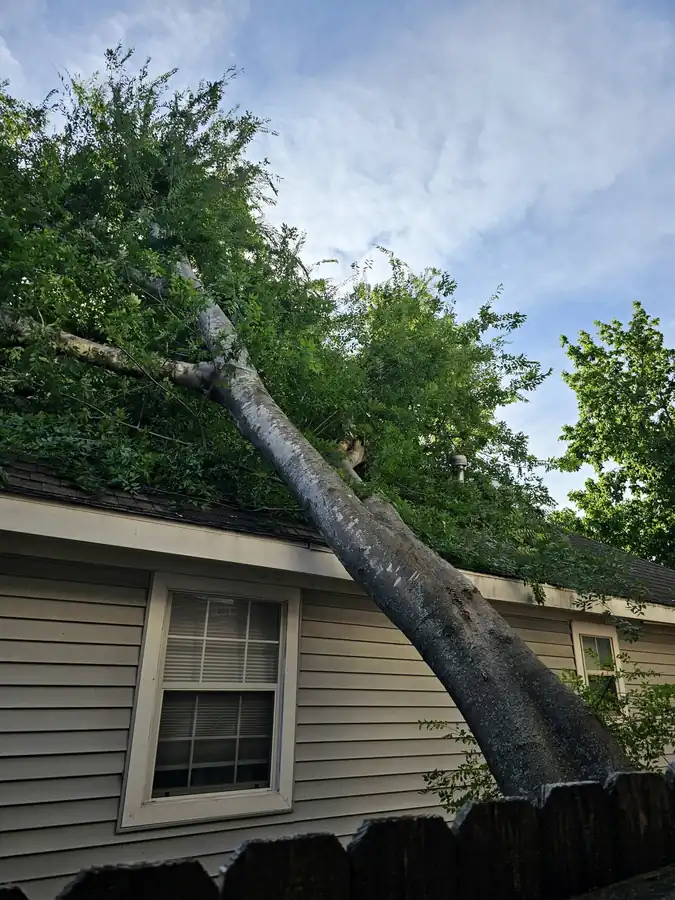
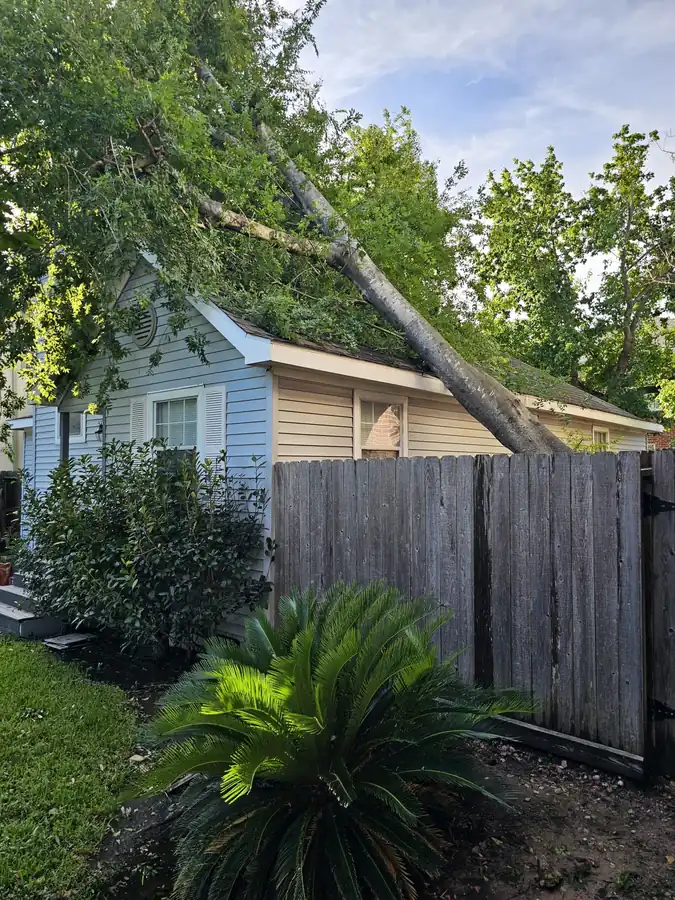
- Structures. Trees on homes, the amenity center or walls are taken off in sections.
- Common areas. Parks, greenbelts, pond edges and drainage come next.
See storm safety and downed lines for what residents should and should not do.
Common area debris vs lot debris
The governing documents decide what the association pays for. A common pattern is that the HOA clears trees and debris rooted in or fallen on common areas, and owners handle trees from their own lots. Gray areas, such as an HOA tree that fell onto a lot, or a lot tree that fell across a common area path, should be settled in writing. See common area vs homeowner trees.
FEMA: what to expect
Many residents assume FEMA will pay for neighborhood cleanup. Usually it will not, for private property.
- FEMA Public Assistance generally does not pay to remove debris from commercial property, such as apartments and condominiums, because owners are expected to insure for it.
- Debris on private roads in gated or HOA communities may be eligible in some declared disasters, but only through the local government, with FEMA approval.
If your community has private streets, contact your city or county after a declared disaster to ask whether it is pursuing private road debris removal. Keep records either way. FEMA’s guidance changes, so confirm with your local emergency management office.
Records for insurance and the board
Whatever the source of payment, the board needs records: what failed, when, what it hit and what the work cost. Photos before and after, a tree list and an itemized invoice by zone cover most needs. If you need photos or a tree list from the crew, say so when the scope is written. See insurance documentation.
Keeping residents informed
After a storm, residents need short, frequent updates. Useful messages include:
- Safety: stay away from downed lines and trees on lines, call 911 and CenterPoint Energy, keep children out of debris.
- Status: which streets and areas are cleared, which are next.
- Lot debris: where residents should place their own debris, and whether the city or county is running storm pickup.
- Closures: which parks, trails or amenities are closed until cleared.
For residents: your community manager is the first contact for common area trees. For a tree from your own lot, check your homeowner policy and your HOA’s rules before work begins.
How cleanup is scoped
After the site is safe, Strong Tree Service walks the community with the manager or a board member. You then get a written, itemized scope by work zone: the trees, the work on each, access, cleanup, stump depth, the schedule and the price. Because it is split by zone, the board can approve the urgent zones first and the rest later. The job ends with cleanup and a final walkthrough with your contact. The full emergency method is on emergency tree removal and the storm cleanup process.
For a tree down now, call the 24/7 emergency line at (832) 525-1070. We do not promise arrival times, because roads and weather decide that after a storm, but we will tell you what happens next. To get a pre-season walk-through or a storm scope in place, request a bid.
Who leads the work
Safety and training credentials are available on request. The crew has about 15 years in the field, including work for national tree care firms. A certificate of insurance and a W-9 are sent on request. We serve associations in Houston, Katy, Spring, Sugar Land and The Woodlands.
[1] Source in references below
[2] Source in references below
[3] Source in references below
[4] Source in references below
[5] Source in references below
Frequently asked questions
When should our HOA prepare for hurricane season?
Before June 1. The season runs to November 30 and peaks around September 10, according to NOAA. Walk the common areas, schedule corrective work and adopt a storm plan by May.
Will FEMA pay to clear our neighborhood?
Usually not for private property. Private roads in HOA or gated communities may qualify in some declared disasters, but only through your city or county with FEMA approval.
Can the board approve emergency tree work without a meeting?
Texas Property Code 209.0051 allows action outside a meeting if each director can weigh in and vote, and the action is recorded at the next meeting. A pre-signed authorization with a not-to-exceed amount makes that faster.
Who clears trees on power lines after a storm?
The utility. Call CenterPoint Energy and 911 and keep people away. CenterPoint Energy or a line-clearance qualified crew handles trees on lines, and we work the rest of the site.
How bad can storm damage get in Houston?
After Hurricane Beryl in 2024, Texas A&M Forest Service estimated that about half of Houston-area urban trees were affected, as reported by Texas A&M AgriLife Today. That is why a spring plan matters.
Who removes debris from a homeowner’s lot?
Usually the homeowner, under most governing documents, while the association handles common areas. Check your documents and settle gray areas in writing.
References
Go deeper
Related reading
Request a bid