
Emergency · Insurance documentation
Storm tree damage documentation for insurance and board records
After a storm, insurers, boards and owners all ask the same questions: what failed, when, what it hit and what it cost. Good records answer them the first time.
Why records matter after a storm
A claim or a board decision depends on facts that are easy to lose once the debris is gone. Insurers want the cause, the date, the location and the cost. Boards want to know what was spent, on what, and why each tree came down. Residents want to know why their view changed. If the record is made while the work happens, nobody has to reconstruct it later.
General information only: this page is not insurance or legal advice. Your policy and your agent decide what is covered.
What to record
These are the records that usually help with a commercial or HOA claim and with board files:
| Record | What it shows |
|---|---|
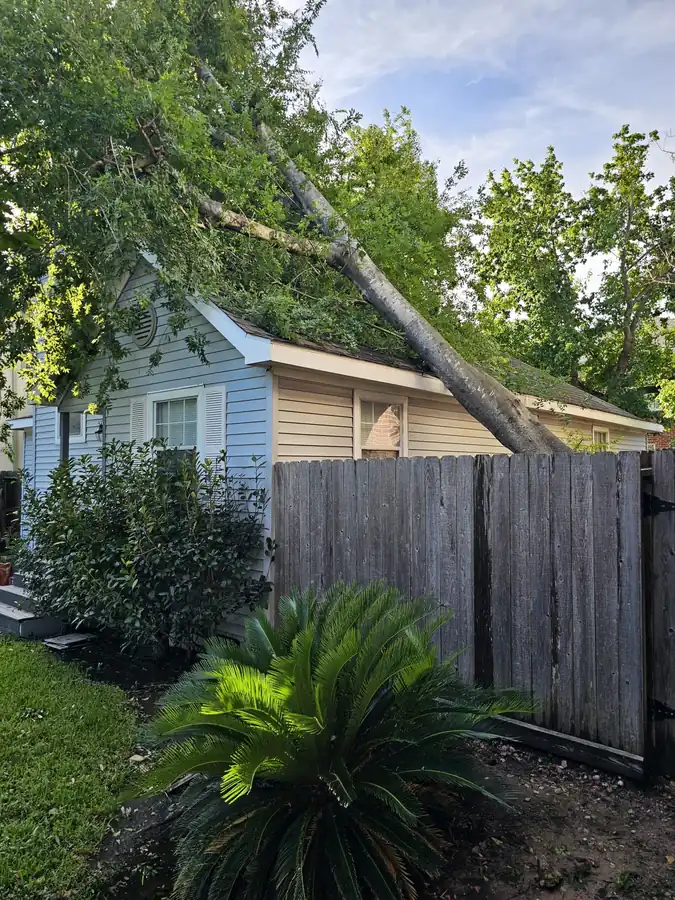
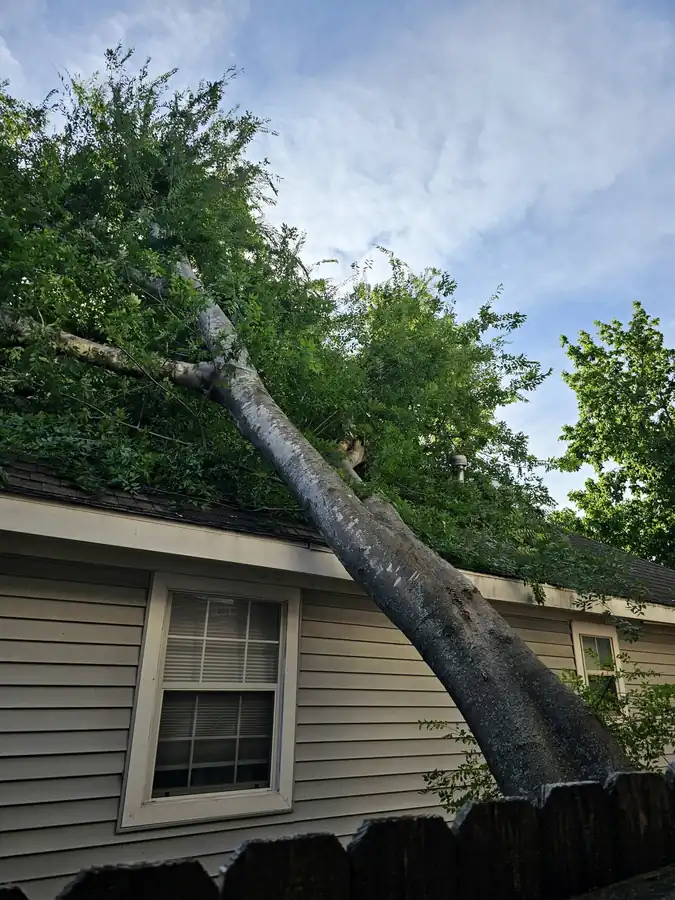
| Photos before work | The tree as it fell and what it hit |
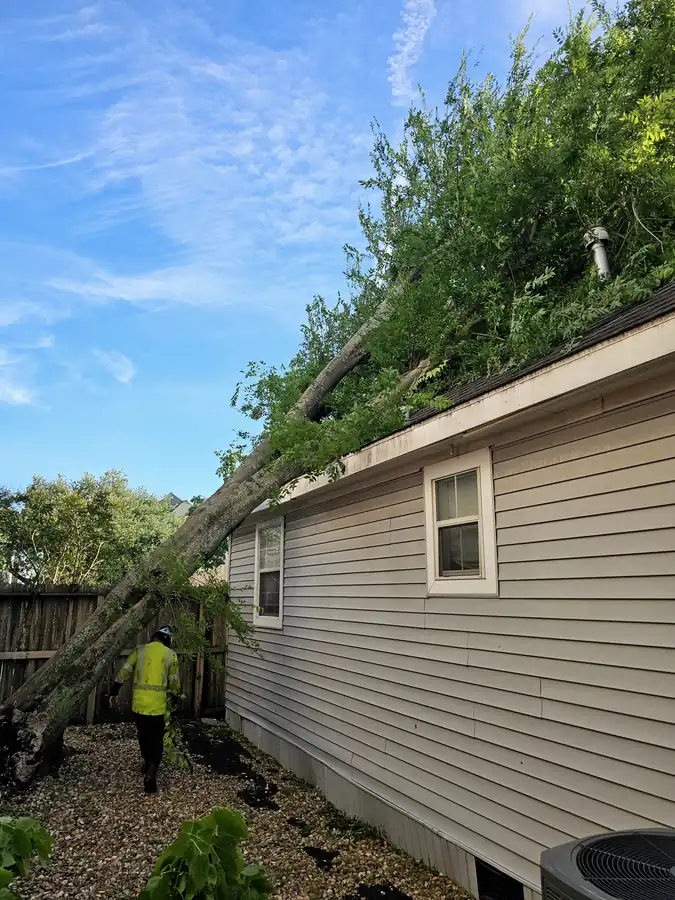
| Photos during and after | That the structure was protected and the area cleared |
| Tree list | Each tree with species, approximate trunk diameter and how it failed (uprooted, trunk split, limb failure) |
| Damage list | What the tree hit: roof, fence, vehicle, road, utility line |
| Event and date | The storm’s name or the date and weather that caused the failure |
| Itemized invoice | Separate lines for removal from a structure, cleanup, hauling and stump work |
Take your own photos from a safe distance before the crew starts, and keep them with the date. If your insurer or board needs a tree list or more photos, tell us at the site walk and the scope can list them.
Why the invoice should be split
A single line that says “storm cleanup” is hard to use. Insurers and boards often treat different parts of the work differently. Removing a tree from a damaged building may be handled as part of repairing the building, while hauling debris from a lawn may not be covered at all. An invoice split by work zone and by task lets each party see the part that matters to them. Strong Tree Service’s written scope is itemized by work zone, with trees, work, access, cleanup, stump depth, schedule and price, so the invoice follows the same structure.
How tree coverage often works
Policies vary, and only your policy decides. Two general points help set expectations:
- Homeowner policies. The Insurance Information Institute has said homeowner policies commonly pay a limited amount, often $500 to $1,000, for tree removal when a tree damages an insured structure. That is a homeowner figure and does not describe commercial policies. HOA residents dealing with their own lot trees should check their own policy.
- Commercial property forms. A PropertyCasualty360 analysis of the standard ISO commercial property form says its coverage extension for trees applies only to named causes such as fire, lightning, explosion, riot and aircraft, which do not include windstorm. The same analysis notes that removing a tree from a damaged building may count as part of the cost to repair the building. Ask your agent how your policy treats both.
FEMA and private property
Many boards assume FEMA will pay after a declared disaster. Usually it will not, for private property:
- FEMA Public Assistance generally does not pay for debris removal from commercial property, such as industrial parks, golf courses, apartments and condominiums, because businesses are expected to carry insurance for it.
- Debris on private roads in gated or HOA communities may be eligible in some declared disasters, but the request goes through the local government, and FEMA must approve it.
If your community has private streets, contact your city or county after a declared disaster to ask whether it is pursuing private road debris removal. Keep your records either way. FEMA’s guidance is updated over time, so confirm the current rules with your local emergency management office.
What we do and do not do
Strong Tree Service provides the written scope, the itemized invoice and the records listed in the scope. We do not adjust claims, decide coverage, deal with your insurer on your behalf or change invoices to fit a claim. The work is described as it was done.
For the full emergency process, see emergency tree removal. HOA boards can find the resident and common area side on HOA storm cleanup. To have a scope prepared for storm damage on your property, request a bid, or call the 24/7 emergency line at (832) 525-1070 if the tree is still on a structure.
[1] Source in references below
[2] Source in references below
[3] Source in references below
[4] Source in references below
Frequently asked questions
Will our insurance pay for tree removal after a storm?
It depends on the policy. Homeowner policies often pay a limited amount, commonly $500 to $1,000, when a tree damages a covered structure, according to the Insurance Information Institute. Commercial forms differ, and one analysis of the standard commercial form found its tree extension does not cover windstorm. Ask your agent.
Will FEMA pay to clear our commercial property or HOA?
Usually not for commercial property. Private roads in gated or HOA communities may qualify in some declared disasters, but only through your city or county with FEMA approval. Contact your local government after a declaration.
Can you document storm damage for our claim?
The written scope and itemized invoice by work zone are standard. If your insurer or board needs a tree list or before and after photos, say so at the site walk so the scope includes them.
Do you handle the insurance claim for us?
No. We do not adjust claims, decide coverage or negotiate with insurers. We supply accurate records of the work, and you or your manager work with your agent.
Why should the invoice be itemized?
Different parts of storm work can be treated differently by insurers and boards. Separate lines for removal from structures, cleanup, hauling and stumps let each party see what applies to them.
References
Related reading
Request a bid