

HOA · Tree maintenance
HOA tree maintenance in Greater Houston: common area programs your board can approve
Common area trees shape how a community looks and how safe it feels. A planned program keeps them healthy, keeps the budget steady and gives residents answers before they have to ask.
What an HOA tree program maintains
Most associations are responsible for more trees than anyone on the board has counted. A typical common area program covers:
- Entrance and monument trees, the first thing residents and buyers see.
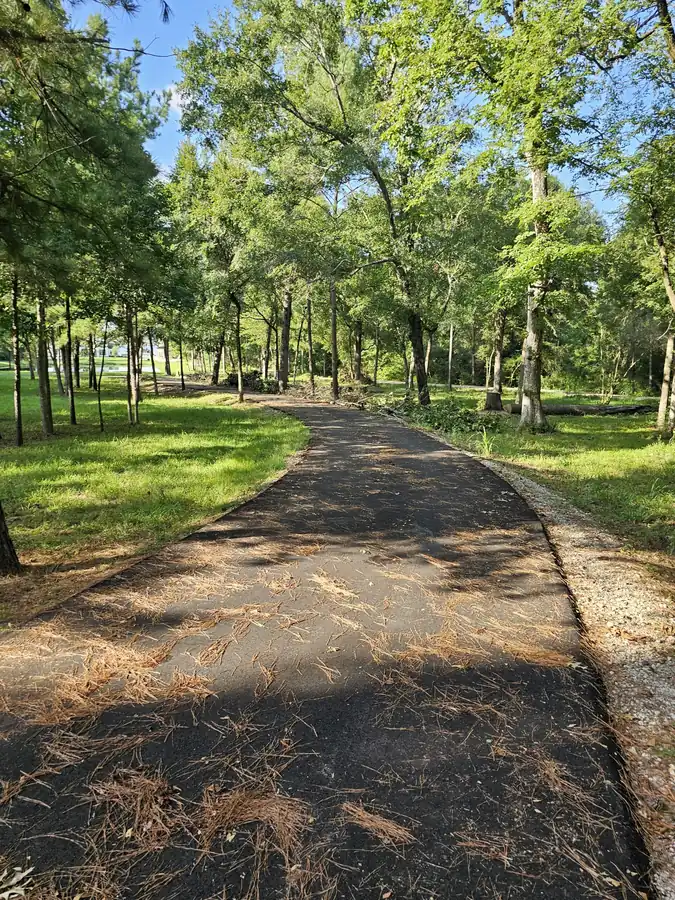
- Parks, greenbelts and trails, where people walk, play and gather.
- Pond, detention and drainage edges, where fallen limbs can block water.
- Private street trees and medians, which need clearance for trucks, buses and sight lines.
- Amenity centers and pools, where limbs hang over decks and roofs.
- Perimeter walls and buffers, where trees press against fences and neighbors.
Strong Tree Service plans and quotes HOA maintenance programs. The exact contents of each program are set with the board or manager at the site walk, so ask what fits your community.

Why common area trees need a plan
Without a plan, tree work happens when a resident complains, a limb falls or a storm hits. That approach costs more, because problems are bigger by the time they are noticed and emergency work is harder to schedule. It also creates uneven budgets and frustrated residents. A program puts every tree on a schedule, finds defects while they are small and gives the board a predictable line item.
Step one: know which trees are yours
Before any bid, the association has to know which trees it is responsible for. The recorded declaration and the plat decide. A common pattern is that the HOA handles trees rooted in common areas and owners handle trees on their lots, unless the documents say otherwise, and Texas case law generally treats the tree as belonging to the owner of the land where the trunk stands. At the site walk, we confirm which trees are on common area before we bid. The common area vs homeowner trees page explains the rules and the gray areas, including overhanging branches and trees on the line.
The yearly program
An HOA program follows the same steps as any yearly tree maintenance program:
- Inventory. Each common area tree mapped by zone, with species, size, condition and needs. See tree inventory and risk assessment.
- Risk review. Trees near homes, streets, play areas and the amenity center looked at first, led by our head foreman.
- Pruning cycle by zone. Each zone pruned in rotation, to ANSI A300. Many urban forestry programs use about a five-year cycle for mature trees, with shorter cycles for young trees, based on a Milwaukee study in Arboriculture and Urban Forestry and UMass Extension guidance. See pruning cycles and standards.
- Young-tree care. Structural pruning, mulch and watering checks for new plantings.
- Storm prep. A pre-season walk-through and a storm plan before June 1. See HOA storm cleanup.
- Reports. Work done, open items and next year’s plan, timed for the budget meeting.
The Houston seasonal calendar lays out the full year.
Budgeting the program
Trees are usually budgeted as an operating expense, not a reserve component. One reserve study firm says landscaping is usually treated as an operating expense and most providers leave it out of the reserve study by default, though the Community Associations Institute’s reserve study standards let a provider include a component that meets its test. Check with your reserve study provider. Splitting costs by zone, with the pruning cycle spread across years, keeps each year’s total level. See HOA tree budgets and reserves.
Bids that fit Texas rules
A multi-year program for a large community can cross that line. Itemized bids by zone make it possible to compare vendors line by line. The Texas HOA vendor rules page covers bid and meeting rules in more detail. This is general information, not legal advice.
Keeping residents informed
Residents notice tree work. They see trucks on their street, hear chippers and come home to a changed view. A short notice before the work, naming the dates, the zones, any parking limits and a contact, prevents most complaints. No Texas statute requiring HOAs to notify residents before routine tree work was found in our research, but it is good practice. Templates are on resident notices for HOA tree work.
For residents: if crews are coming to your street, move vehicles from the marked area, keep children and pets out of coned zones and send questions to your community manager.
Reports to the board
A program should report back in a form the board can put in its packet: work done by zone, a map, open and closed risk items, costs against budget and the plan for next year. Timing the year-end report before the budget meeting matters, because Texas Property Code 209.0051 requires the annual budget to be approved at a noticed open meeting. See budgeting and board reporting.
Vendor paperwork
Most management companies ask vendors for a current certificate of insurance naming the association, and a W-9, before work starts. Strong Tree Service sends a certificate of insurance and a W-9 on request. The vendor compliance packet page explains what to check on any vendor’s certificate.
How Strong Tree Service scopes HOA maintenance
It starts with a site walk with the manager or a board member. You then get a written, itemized scope by work zone: the trees, the work on each, access and parking, cleanup, stump depth for removals, the schedule and the price. The board can approve the whole scope or phase it by zone. Each work day follows the scope and ends with cleanup and a final walkthrough with your contact. When you are ready, request a bid.
Safety and training credentials are available on request, and the crew has about 15 years in the field. We serve associations in Houston, Katy, Spring, Sugar Land and The Woodlands. Removals are covered on HOA tree removal, and disease and pest care on plant health care.
[1] Source in references below
[2] Source in references below
[3] Source in references below
[4] Source in references below
[5] Source in references below
Frequently asked questions
Who maintains trees on HOA common areas?
The association, as set by its declaration and plat. Trees rooted on common area are usually the HOA’s responsibility. Check your own governing documents for exceptions.
Are trees part of our reserve study?
Usually not. One reserve study firm says landscaping is generally an operating expense and most providers leave it out by default, though it can be included if it meets the reserve study standards’ test. Ask your reserve study provider.
Do we need multiple bids for a tree program?
If the contract is for services over $50,000, Texas Property Code 209.0052 requires a bid process set by the association. Ask your attorney how your documents apply.
How often should common area trees be pruned?
Many urban forestry programs use about a five-year cycle for mature trees and shorter cycles for young trees. Your cycle should be set from your own inventory.
Can the board approve a tree contract by email?
Texas Property Code 209.0051 allows many actions outside a meeting if each director can give an opinion and vote and the action is recorded at the next meeting. Approving the annual budget is not one of them.
Will residents be told before crews arrive?
Good programs include a written notice with the dates, zones, parking limits and a contact. No Texas statute requiring notice for routine HOA tree work was found, but it prevents most complaints.
References
Go deeper
Related reading
Request a bid