
Maintenance · Inventory and risk
Tree inventories and risk assessments for HOAs and commercial sites
You cannot plan for trees you have not counted. An inventory puts every tree on a map, and a risk review tells you which ones need attention first.
What a tree inventory is
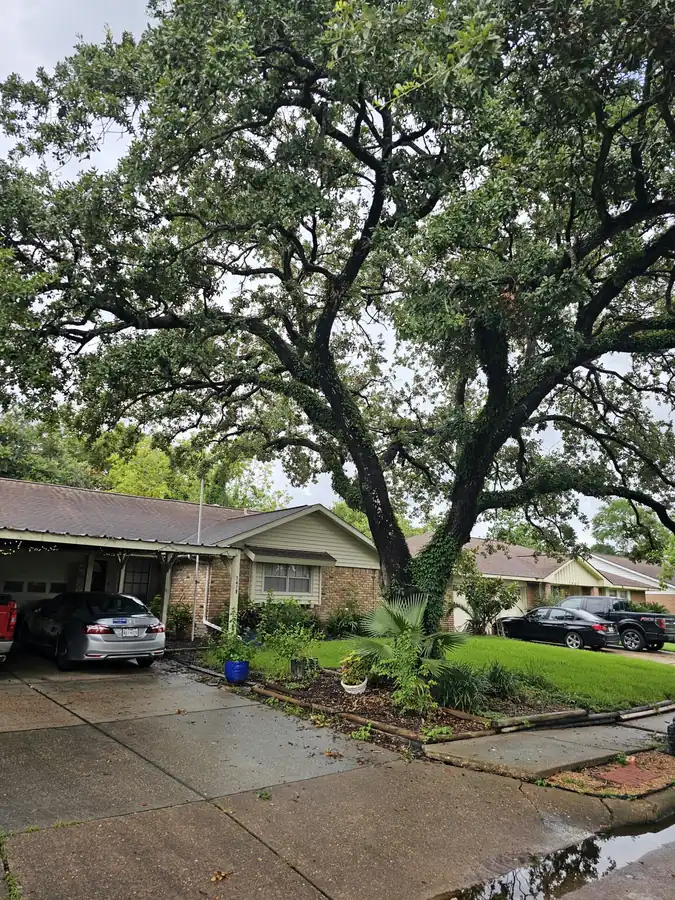
A tree inventory is a record of each tree a property is responsible for, tied to a location. For an HOA, that usually means common area trees: entrance and monument trees, parks, greenbelts, pond edges, private street trees and the amenity center. For a commercial site, it covers parking islands, building perimeters, buffers and drives.
The inventory becomes the base for the whole program. It tells the board how many trees it owns, what shape they are in, what work they need and what that work will cost.

What an inventory records
| Field | Why it matters |
|---|---|
| Location (map position) | So anyone can find the tree again |
| Tag or ID number | So the tree can be named in bids, reports and minutes |
| Species | Species decides pruning timing, such as oak wilt rules, and typical problems |
| Trunk diameter | Size drives cost and how much a failure could damage |
| Height class | Helps judge what the tree could reach if it fell |
| Condition | A plain rating of overall health and structure |
| Defects | Deadwood, cracks, decay, weak unions, root problems, lean |
| Nearby targets | Buildings, parking, walks, play areas, roads, lines |
| Recommended work | Prune, monitor, remove or no action |
| Priority | Which work comes first |
Trees near power lines are flagged for CenterPoint Energy, since that work is the utility’s.
How tree risk is assessed
Tree risk assessment looks at three things together:
- Likelihood of failure. How likely is the tree, or a part of it, to break or fall in the time frame being considered?
- Likelihood of impact. If it fails, how likely is it to hit something, such as a car, a roof or a person?
- Consequences. How serious would that impact be?
A large dead limb over an empty field is a lower risk than a smaller one over a playground. Size alone does not decide risk.
Levels of assessment
ISA’s tree risk assessment guidance describes three levels, in plain terms:
- Level 1, limited visual. A quick look at many trees, often from a vehicle or on foot, to find obvious defects. Useful for a first pass across a whole site or after a storm.
- Level 2, basic. A walk around each tree at ground level, looking at the roots, trunk and canopy from all sides, usually with simple tools and a standard form. This is the common level for priority trees.
- Level 3, advanced. Detailed testing of specific concerns, such as checking for internal decay or inspecting the upper canopy. Used when a Level 2 review raises a question it cannot answer.
The right level depends on the tree, its location and what the owner needs to know.
Who does the assessment
ISA offers a voluntary credential called Tree Risk Assessment Qualification (TRAQ), which trains people in the ISA method. Holders must retrain and retest every seven years, and ISA Certified Arborists are eligible to earn it. Strong Tree Service’s risk reviews are led by the head foreman, and we describe them as arborist assessments, not TRAQ assessments. If your board or insurer requires a TRAQ assessor for a specific tree, say so at the site walk.
What you receive
A finished inventory and risk review should give the owner:
- A map with every tree in scope, tagged by number and zone.
- A table with the fields above.
- A risk priority for each tree that needs work.
- Recommended work for each tree, and a suggested timeline.
- A list of trees referred to the utility.
That package feeds the pruning cycle and the zone budget and board report.
What an assessment cannot do
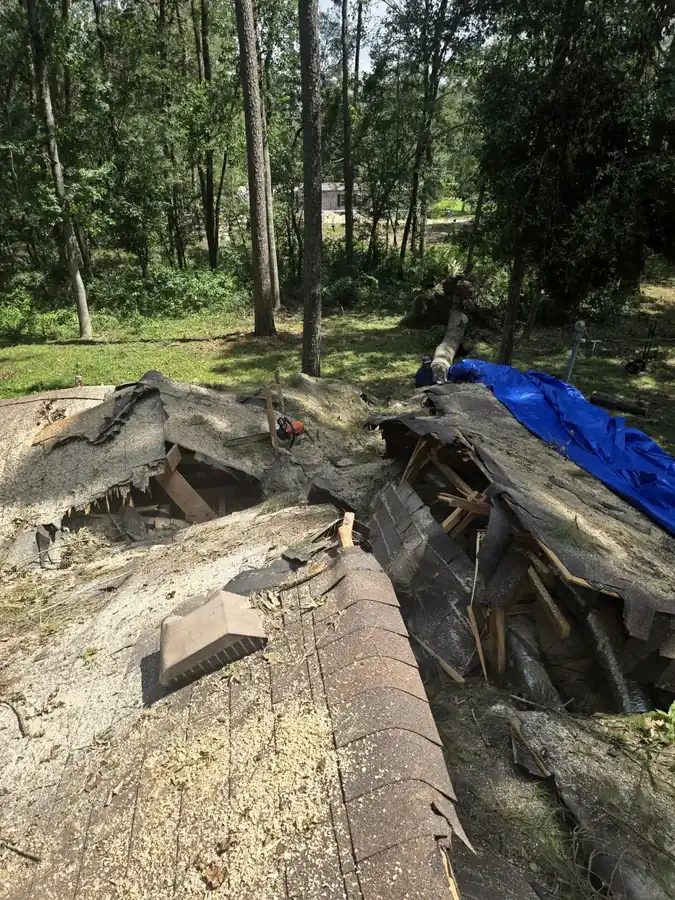
No assessment can guarantee that a tree will not fail. Trees are living things, and hurricane winds can break sound trees. A risk review lowers the chance of a surprise by finding known defects and dealing with them in order. It does not remove risk entirely, and any report that claims to should be questioned.
When to do it
Many properties update the inventory each winter, before the budget meeting and before the spring hurricane prep walk-through. A quick Level 1 pass after a major storm helps find new damage. See hurricane season prep for how this fits the storm calendar.
How Strong Tree Service scopes it
The work starts with a site walk to confirm which trees are in scope. You then get a written, itemized scope by work zone stating the trees, the assessment work, access, the schedule and the price. To set one up for your property, request a bid. The full program is on tree maintenance programs.
[1] Source in references below
[2] Source in references below
Frequently asked questions
What is a tree risk assessment?
It is a structured way to judge how likely a tree or a part of it is to fail, what it could hit and how serious that would be. ANSI A300 Part 9 is the national standard for it.
What level of tree risk assessment do we need?
It depends on your trees and what you need to know. A quick limited visual pass suits a whole site or a post-storm check, a basic ground-level review suits priority trees, and advanced testing answers specific questions a basic review cannot.
What makes a tree dangerous?
Defects such as deadwood, cracks, decay, weak branch unions and root problems raise the chance of failure, and what sits underneath decides how serious a failure would be. Size alone does not make a tree dangerous.
Do your assessors hold the ISA TRAQ credential?
Our risk reviews are led by our head foreman, and we do not describe them as TRAQ assessments. If a specific tree needs a TRAQ assessor for your board or insurer, tell us at the site walk.
Can an assessment guarantee a tree will not fall?
No. An assessment lowers risk by finding and prioritizing known defects, but no method can promise a tree will not fail, especially in hurricane winds.
References
Related reading
Request a bid