
Plant health care · Disease library
Ganoderma butt rot: what a conk at the base of a tree means
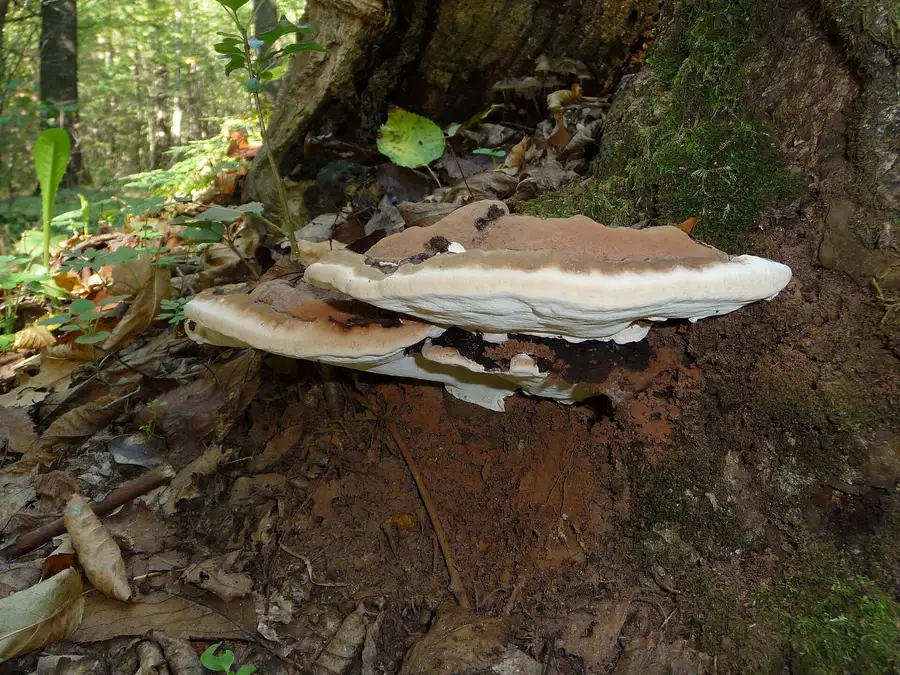
A shelf-like fungus at the base of a trunk is a sign that wood decay is already under way. Ganoderma butt rot has no known control, so the question becomes whether the tree is still structurally sound.
What it is
Ganoderma root and butt rot is wood decay caused by fungi in the genus Ganoderma. The “butt” is the lowest part of the trunk. The Texas Plant Disease Diagnostic Lab (Plant Clinic) at Texas A&M describes the fungus decaying the roots and the base of the trunk.
The visible part of the fungus is a conk, a hard, shelf-like fruiting body that grows out of the wood. The conk is not the disease itself. It is the sign that the fungus has been feeding inside the tree for some time.
Trees and shrubs at risk
- Oaks
- Maples
- Honeylocust
- Other hardwoods
Trees with old wounds at the base, from mowers, string trimmers, vehicles or construction, are more exposed.
How it attacks
The fungus enters through roots and wounds near the base and decays the wood. The Plant Clinic notes that decay can reach from a few inches to several feet up into the trunk. As the wood breaks down, the trunk base and structural roots lose strength, even while the crown may still look green.
Why it is aggressive and hard to manage
- No known control. The Plant Clinic and the Missouri Botanical Garden both note there is no known control for Ganoderma once it is established.
- The conk appears late. By the time a conk forms, the decay is already established.
- The crown can look normal. A tree can carry significant decay at its base while the leaves look healthy, so the danger is easy to underestimate.
- The failure point is the base. Decay at the root collar affects the whole tree, not one limb.
Signs to look for
| Sign | Detail |
|---|---|
| Shelf-like conks at or near the base | Hard brackets on the trunk or on roots near it |
| New conks each year | New conks often form in summer and fall |
| Large conks | The Missouri Botanical Garden notes conks can reach about 14 inches wide |
| Old wounds at the base | Mower damage, vehicle strikes, construction scars |
| Crown decline | Thinning or dieback, sometimes late |
Conks can be identified from a sample through the Texas Plant Disease Diagnostic Lab at Texas A&M, though the structural question still needs an on-site look.
Prevention
- Protect trunk bases. Mulched rings and trunk guards keep mowers and string trimmers off the bark, as Texas A&M guidance recommends.
- Protect roots during construction. The City of Houston advises protecting at least 75 percent of the critical root zone.
- Keep vehicles and equipment off root zones.
- Prune and maintain trees properly so wounds stay small.
Treatment and management
Industry practice is a structural assessment, not a chemical treatment:
- Inspect the base and root collar. Look at how much of the trunk circumference and root area is affected.
- Consider the targets. Identify what the tree could hit if it failed: buildings, parking, walkways, play areas, roads.
- Decide on mitigation. Options can include reducing the crown to lower the load, setting up a monitoring schedule, or removing the tree when the risk is not acceptable.
No fungicide or injection cures Ganoderma butt rot.
Quarantine, removal and disposal
Ganoderma butt rot is not under a Texas quarantine. When a tree is removed, the trunk, conks and stump are hauled away and the stump is ground below grade. See infested wood disposal in Texas.
How Strong Tree Service handles it
- Site walk. We look at the conks, the trunk base, the root area and the targets around the tree.
- Arborist assessment. Our head foreman evaluates the decay and the tree’s condition and explains the options.
- Lab referral when needed. If the fungus needs identifying, we recommend a sample to the Texas Plant Disease Diagnostic Lab at Texas A&M.
- Written scope. Crown reduction, monitoring or removal, stump depth and hauling are itemized by work zone, with schedule and price.
Ganoderma is one of two root and butt rots in our library, along with Armillaria root rot. Oozing streaks on a trunk are a different issue, covered under slime flux and wetwood. For the full service, see plant health care, or request a bid.
Frequently asked questions
What is the shelf-like fungus at the base of our tree?
It may be a Ganoderma conk, the fruiting body of a fungus that decays the roots and trunk base. It means decay is already established inside the tree.
Can we just knock the conk off?
Removing the conk does not remove the fungus. The decay is inside the wood, and new conks often form each summer and fall.
Does a conk mean the tree must come down?
Not always. Texas A&M Plant Clinic guidance is to have the tree inspected for structural integrity. The decision depends on how much wood is affected and what the tree could hit.
Is there a treatment for Ganoderma?
No known control exists. Management focuses on assessment, load reduction, monitoring or removal.
Related reading


Request a bid