
Tree trimming · Pruning safety
Tree pruning safety on HOA and commercial sites
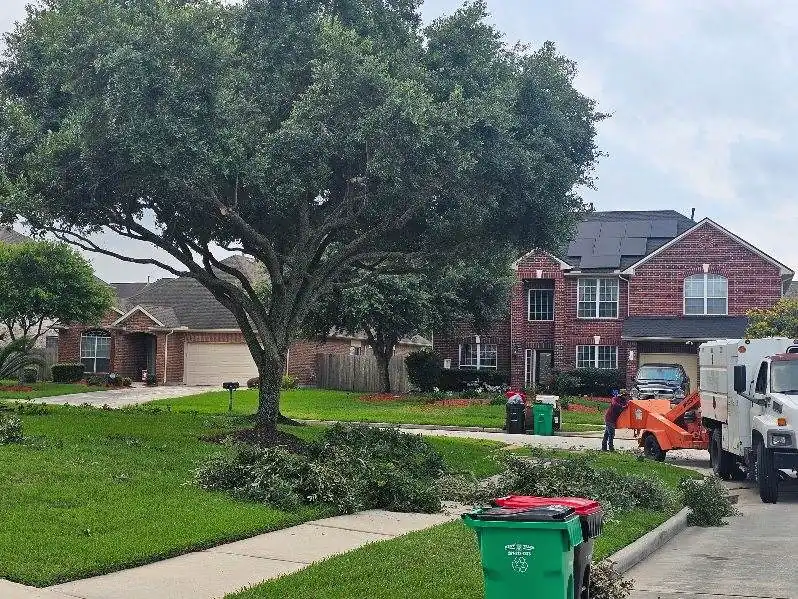
Pruning over parking lots, sidewalks and pool decks puts residents, tenants, traffic and the crew under moving wood. Safe pruning is planned before the first cut and controlled until the last branch is chipped.
Why tree work is dangerous
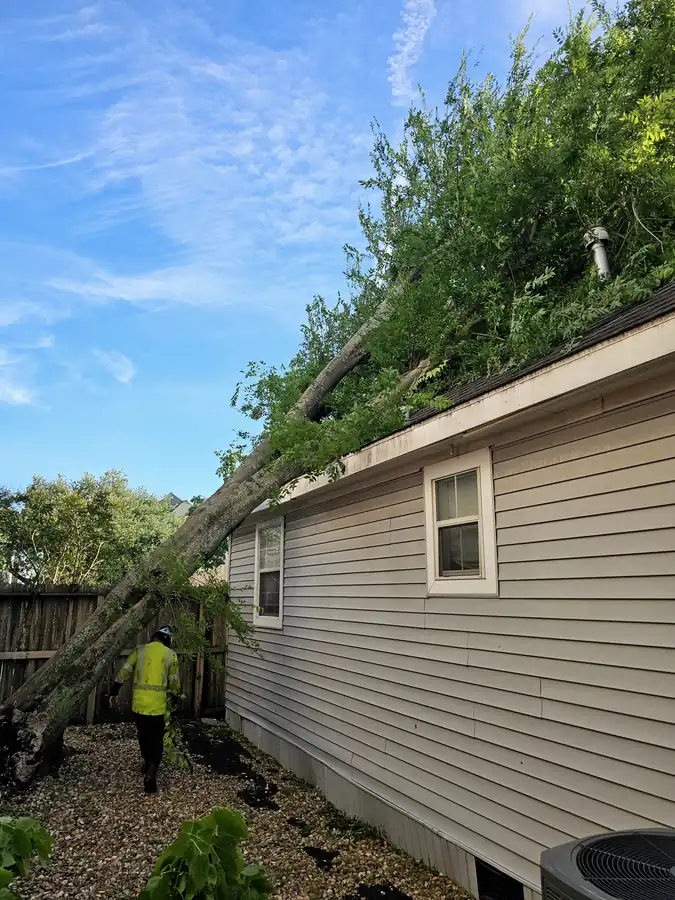
OSHA’s tree care page names three main hazards in tree work: falls from height, being struck by falling objects, and electricity. All three are present on a typical commercial pruning job. A limb that looks light from the ground can be far heavier than it seems once it is cut loose. A dropped hand saw is a hazard to anyone below. And Houston’s streets and parking lots are lined with overhead lines that run through or near tree canopies.
On an occupied property there is a fourth factor: people who do not know the work is happening. A resident walking a dog, a tenant moving a car or a delivery driver pulling into a fire lane can all walk into a drop zone if it is not marked and watched.
The industry safety standard
ANSI Z133 is the safety standard for arboricultural operations in the United States. In plain terms, it covers personal protective equipment, work zones, climbing practices, electrical hazards and the safe use of chippers and other machines. It is a voluntary industry standard, not a certification, so the right question for a contractor is “do you work to Z133?” rather than “are you Z133 certified?”
OSHA has not issued a standard written specifically for tree care. Tree work is covered by general industry rules, and TCIA reports that a federal tree care rulemaking has been in progress. Until a rule is final, Z133 remains the reference the industry uses.
How a pruning site is controlled
- Job briefing. Before work starts, the crew reviews the scope, the trees, the lines and other hazards nearby, and who does what.
- Work zone and drop zone. Cones, tape and signs mark off the area under each tree being pruned. The drop zone covers the full area where cut wood can land, including bounce and roll.
- Ground person. Someone on the ground keeps people out of the drop zone and talks with the climber before branches come down.
- Traffic control. In parking lots and on private streets, lanes are coned off and traffic is routed around the work area. Where a public street is involved, the jurisdiction’s rules apply.
- Brush handling. Brush is moved to the chip truck in a controlled path, away from foot traffic.
- Final check. The area is cleared and checked for hung branches before it reopens.
Chippers
The brush chipper is one of the most dangerous machines on a tree job. Z133 covers chipper operation, and OSHA’s line-clearance rule, 29 CFR 1910.269(r)(2), requires ignition locking devices and secured access panels on brush chippers used in line-clearance work. Good practice on any site is to keep bystanders well away from the infeed, feed brush butt first and never reach into the chute.

Weather stops
OSHA’s line-clearance rule, 1910.269(r)(1)(vi), treats nearby thunderstorms, high winds and ice storms as conditions presumed too hazardous for line-clearance tree work. The same logic applies to any pruning job. Wet bark, gusts that swing limbs and lightning in the area are reasons to stop. Houston’s summer storms build fast, so a weather stop on a pruning day is normal, not a delay to argue about.
Power lines
Pruning near overhead lines has its own legal limits. Texas Health and Safety Code 752.004 bars work that could bring a person, tool or material within 6 feet of a high voltage line (over 600 volts) unless the line operator has been notified at least 48 hours ahead and a safety arrangement has been made. CenterPoint Energy or a line-clearance qualified crew handles any part of a tree inside the minimum approach distance. Strong Tree Service coordinates with them and works outside those distances. Our canonical pages on power line safety and branches touching power lines cover the rules in full.
What we need from the property
| Item | Why it matters |
|---|---|
| Notice to residents or tenants | People avoid the work zones and know to move cars |
| Vehicle moves | Cars parked under trees are inside the drop zone |
| Gate codes and access | The crew and chip truck need a clear path |
| Pool, playground and amenity closures | Shared areas under trees must be empty during work |
| A contact on site or by phone | Questions are answered without stopping the job |
We put these items into the written scope by work zone, so the board or manager knows what to send out and when.
What a buyer should ask
- Do you work to ANSI Z133, and how do you mark work and drop zones?
- Who on the crew watches the ground while limbs come down?
- How will you handle trees near power lines, and who does that part?
- What happens when weather turns on the work day?
- Can you send a certificate of insurance? Strong Tree Service sends one, with a W-9, on request.
How Strong Tree Service scopes safety
Safety starts on the site walk. We note targets under each tree, overhead lines, traffic, access points and amenities, then write them into the scope beside the work. Safety and training credentials are available on request, and the crew has about 15 years in the field. For the standards behind the cuts themselves, see how we prune to ANSI A300, or go back to the main tree trimming and pruning page. To get a written scope that includes site controls, request a bid.
[1] Source in references below
[2] Source in references below
[3] Source in references below
[4] Source in references below
[5] Source in references below
Frequently asked questions
Do residents need to leave while you prune?
Usually not. They need to stay out of the marked work zones and move vehicles parked under the trees being pruned. The scope lists which areas close and when, so the manager can send a clear notice.
Is there an OSHA standard for tree care?
OSHA has not issued a standard written for tree care. Tree work falls under general industry rules, and TCIA reports that a federal rulemaking has been in progress. The industry’s safety reference is ANSI Z133.
Why did the crew stop work during a storm?
Lightning, high winds and wet conditions make climbing and cutting unsafe. OSHA’s line-clearance rule treats nearby thunderstorms and high winds as presumed too hazardous for that work, and the same reasoning applies to other pruning.
Can you prune trees near the power lines along our street?
Not inside the minimum approach distance. Texas law requires 48 hours notice to the line operator and a safety arrangement before work within 6 feet of a high voltage line. CenterPoint Energy or a line-clearance qualified crew handles that part, and we coordinate the rest.
References
Related reading
Request a bid