
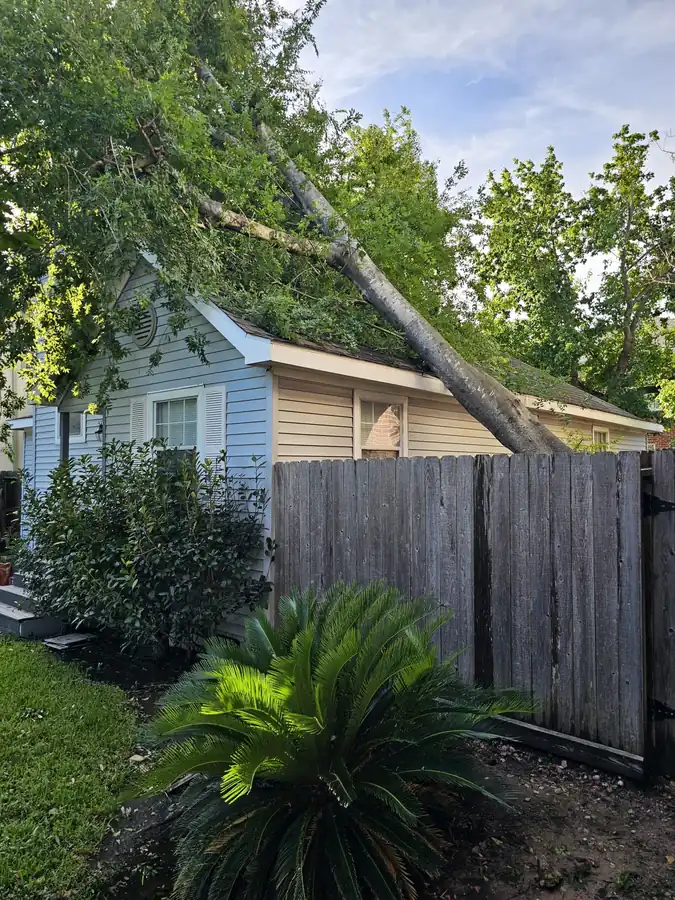
Katy · Emergency tree removal
Katy emergency tree removal after storms and failures
When a tree comes down in Katy, the first questions are who is safe, whether a line is involved and which government owns the road. Our 24/7 line is (832) 525-1070.
Katy storm history in brief
Katy sits in the path of Gulf storms and the heavy rains that come with them. Two recent events shaped how local properties think about trees:
- Hurricane Harvey, 2017. Rain filled Addicks and Barker reservoirs, and neighborhoods upstream of Barker, including parts of Cinco Ranch and Canyon Gate, flooded. A federal court later ruled the Army Corps of Engineers responsible for flooding private properties upstream of the reservoirs. Long flooding weakens tree roots for years.
- Hurricane Beryl, 2024. The City of Katy reported limbs down across town. A cedar fell at East Avenue and Franz Road, narrowly missing a business. City debris pickup started July 16.
On Katy’s prairie clay, soaked ground plus high wind is the classic setup for whole trees tipping over, roots and all.
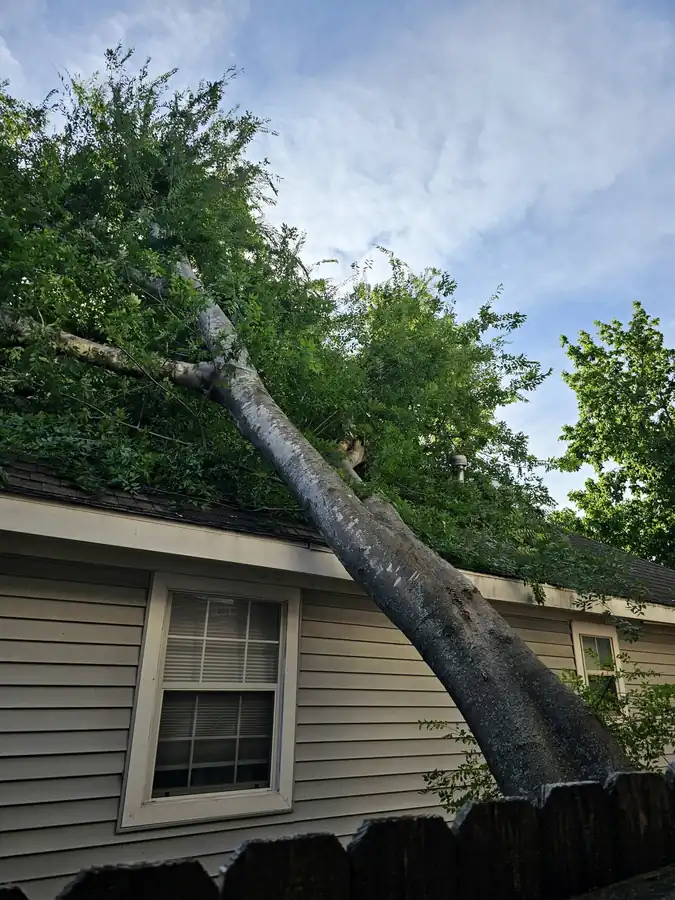
First steps when a tree is down
- Get people clear. Keep everyone out of the area a hanging limb or leaning trunk could hit.
- Look for lines. If a wire is down or a limb is on a line, stay at least 35 feet away, as CenterPoint Energy advises, and report it to CenterPoint at 713-207-2222. Call 911 if anyone is hurt or in contact with a line.
- Call us. Our 24/7 line is (832) 525-1070. Tell us what the tree is on: a roof, a car, a fence, a street or a common area.
- Take photos before anything is moved, for the insurance claim. Our insurance documentation page lists the shots adjusters want.
The order of work after a Katy storm
After a large storm, calls come in from homes, associations and businesses at once. We sort them by risk:
- Trees on occupied homes and through roofs.
- Trees blocking the only way in or out of a property, or blocking emergency access.
- Trees hanging over walks, pools and play areas.
- Downed trees with no immediate hazard, then general cleanup.
For associations, we often start with entries and main drives so residents and service vehicles can move, then work through greenbelts and ponds. Our storm cleanup process page explains each stage. We make no promise about arrival times after a regional storm, because demand and road conditions vary, but we tell you honestly where your job stands.
Who handles which trees
- Trees on your home or lot: the property owner, often with an insurance claim.
- Common-area trees: the HOA or community association.
- Trees in a City of Katy street or right-of-way: the city manages vegetation on its rights-of-way and easements. Report street blockages to the city.
- Trees on unincorporated county roads: the county that owns the road.
- Trees on lines: CenterPoint Energy or the utility on your bill.
Debris left at the curb follows the city or county pickup rules. After Beryl, the City of Katy asked residents to keep vegetative debris unbagged and to put small branches out with regular garbage. Rules can change with each storm, so check the city or county notices.
Local rules
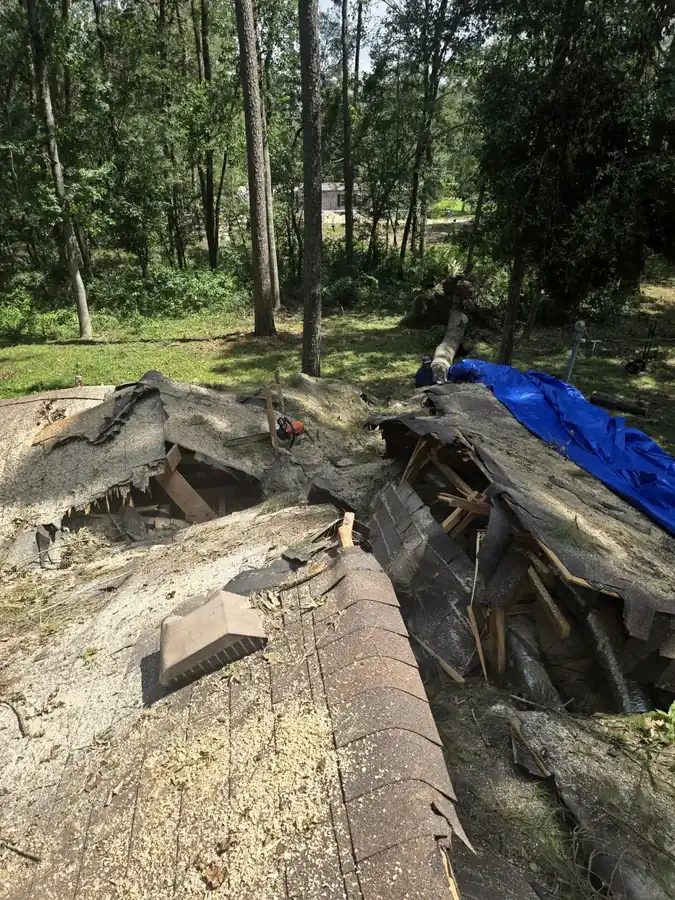
Emergency work does not erase ownership. Inside the City of Katy, a tree in a public right-of-way, park or easement falls under the public works director, so a street tree blocking a road is the city’s call. Outside the city, county road crews handle county right-of-way. Check whether your covenants allow emergency work on a private lot before architectural approval, and whether they ask for notice afterward. When in doubt, we document the hazard with photos before removal.
What we scope on Katy properties
In an emergency, the scope is short but still written. For each work zone it lists:
- The tree and what it is on or blocking.
- The immediate step: making safe, removing from a structure, or clearing access.
- What waits for a later visit, such as stump grinding or final cleanup.
- Access notes, line status and who has been contacted.
- Price for the emergency work and, separately, for the follow-up.
Afterward, we walk the site with you and provide photos for your adjuster. For planned work after the emergency, request a bid. The company-wide guide is on our emergency tree removal page, and hurricane season prep covers what to do before the next storm.
[1] Source in references below
[2] Source in references below
Frequently asked questions
A tree fell on my Katy house. What do I do first?
Get everyone out of the affected rooms and away from the tree. If a line is involved, call CenterPoint at 713-207-2222. Then call our 24/7 line at (832) 525-1070 and take photos before anything moves.
Who removes a tree blocking a street in the City of Katy?
Trees in city rights-of-way are managed by City of Katy Public Works. Report the blockage to the city. If the tree came from your lot, you may still be responsible for the debris on your side.
Does my HOA have to approve emergency removal?
Check your covenants for how they treat an immediate hazard. Photos of the damage before removal help with both the HOA and your insurer.
Will the city pick up my storm debris in Katy?
After big storms, the City of Katy has run debris pickup for residents inside city limits. In unincorporated areas, the county or your HOA’s hauler sets the rules. Watch for official notices after each event.
References
Related reading

Request a bid