
Spring · HOA tree service
HOA tree service in Spring, TX for boards, managers and residents
In Spring, the HOA’s deed restrictions often stand in for a city tree code. That gives boards more say over trees, and more questions from residents about who owns what.
Why HOAs carry more weight in Spring
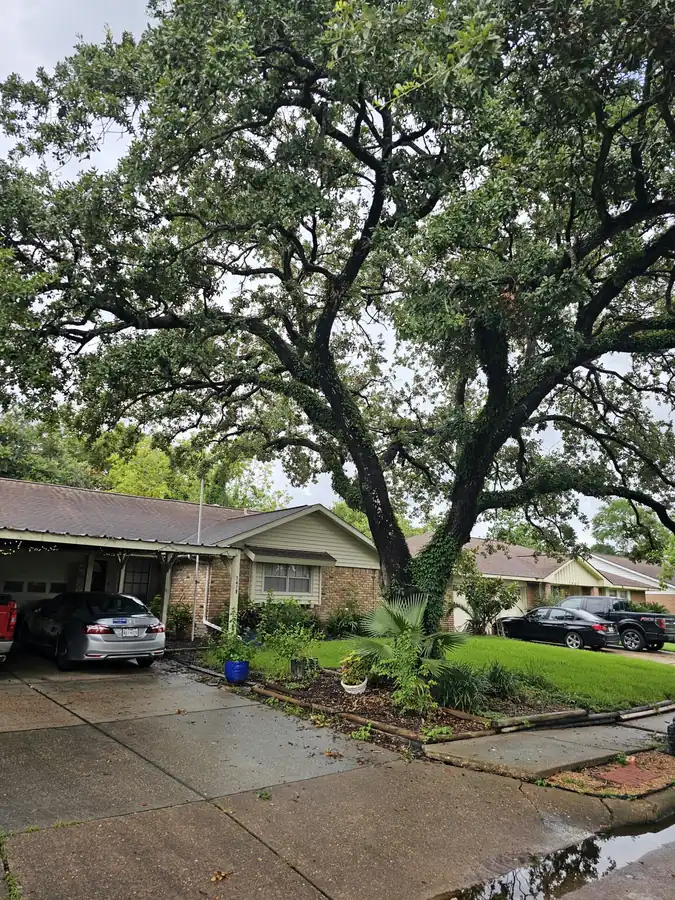
Spring is unincorporated, and most of its neighborhoods are deed-restricted subdivisions with a homeowners association. Without a city tree ordinance, the association’s declaration and architectural guidelines are usually the only written rules about removing or pruning a tree on a lot. The board also owns and maintains the common areas: entrances, parks, greenbelts, pond edges and amenity centers, many of them shaded by tall pines.
That creates three jobs for a Spring board:
- Care for common-area trees on a plan, not just when someone complains.
- Decide homeowner requests to remove or heavily prune lot trees, fairly and consistently.
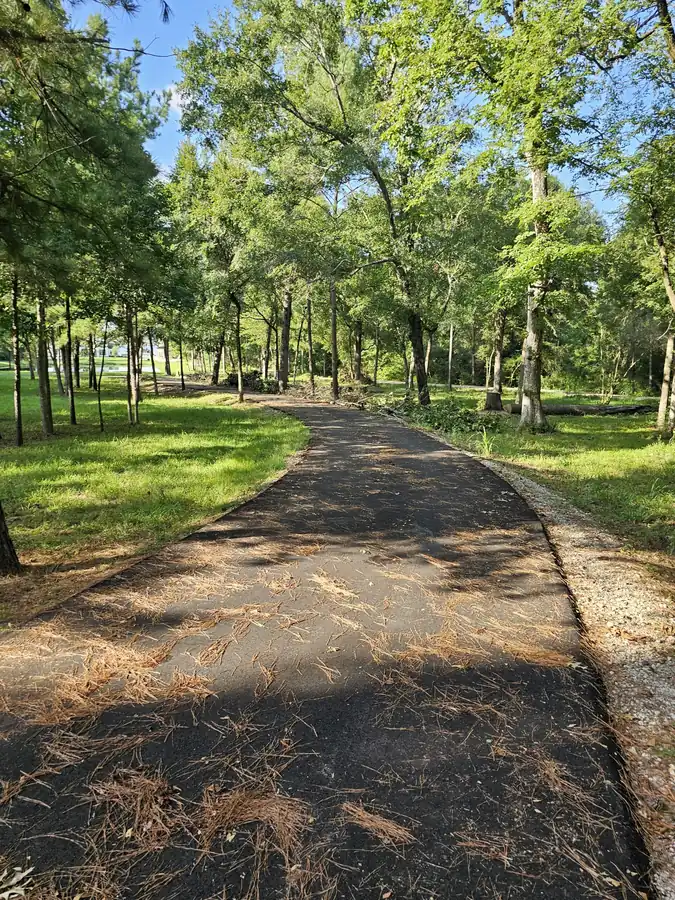
- Answer boundary questions, because in Spring the tree next to the trail might belong to the HOA, the MUD, the county or a homeowner.
Common area versus lot versus MUD
The most frequent question we hear from Spring residents is “whose tree is this?” The answer comes from the plat and the deed records, not from who mows nearby.
| Location | Usually responsible |
|---|---|
| Tree on a homeowner’s lot | Homeowner, subject to deed restrictions |
| Entrance, park, greenbelt owned by the HOA | Association |
| Detention pond, drainage tract, trail owned by the MUD | The MUD |
| Public street right-of-way | County |
| Branches over a property line | Texas law generally lets a neighbor trim to the line, without harming the tree |
The full explanation is on common area vs homeowner trees. The neighbor rule comes from the Texas State Law Library’s guide to neighbor law on trees.
[1] Source in references below
Local rules
The rules that govern HOA tree work in Spring are state law plus the association’s own documents:
- Texas Property Code Chapter 209 sets how property owners associations give notice and enforce restrictions. Under Section 209.0051, board meetings, including those approving tree contracts, follow open meeting and notice rules.
- Texas Property Code 209.0052 requires associations to solicit bids for contracts over $50,000, with exceptions in the statute.
- The declaration and architectural guidelines decide whether a homeowner needs approval to remove a lot tree, and what replacement, if any, the HOA requires. These vary from one Spring subdivision to the next, so read your own.
- County and MUD land is outside the association’s authority, even when it looks like part of the neighborhood.
[2] Source in references below
[3] Source in references below
For vendor rules boards should know, see Texas HOA vendor rules.
Pines on common areas
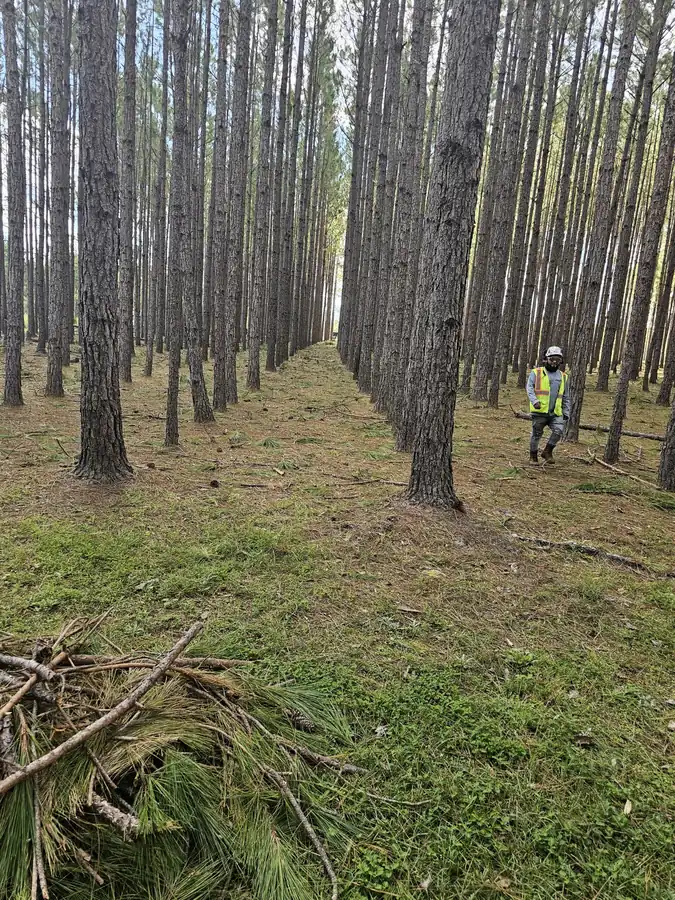
Spring’s greenbelts and entrances are often lined with loblolly pines left from the original forest. They give the neighborhood its character, but they need watching. A pine with fading needles, pitch tubes or a dead top should be looked at soon, because pine bark beetles can move to nearby pines. A dead pine over a trail or playground should not wait for the next budget cycle. See plant health care in Spring for what we look for.
Resident communication
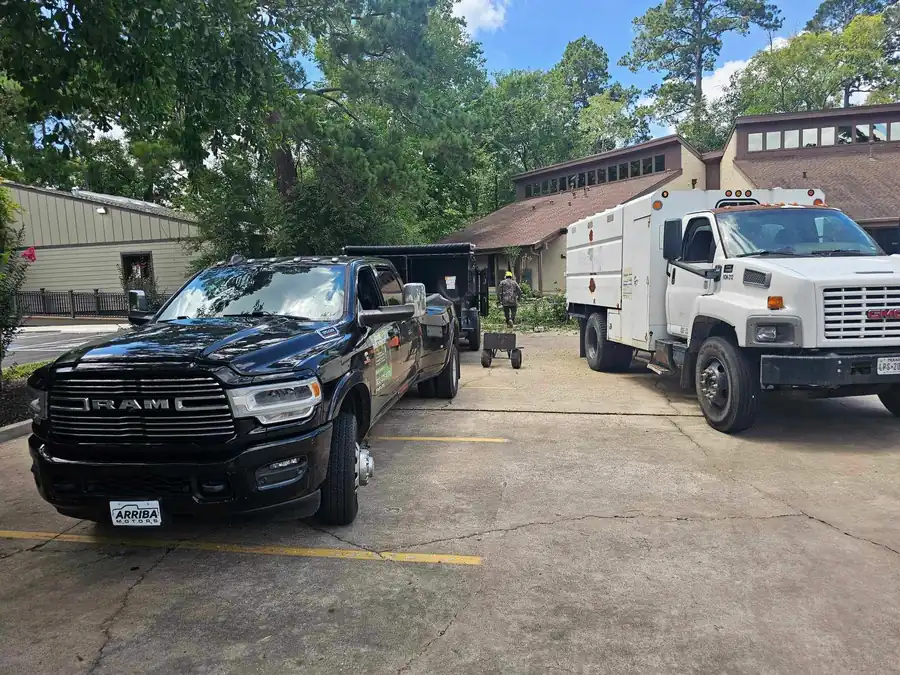
Tree work makes residents nervous, especially removals. Spring boards have fewer complaints when they post notices before work, explain why each removal is needed, and say what replaces it. The resident notices page has templates. For homeowners asking to remove a tree on their lot, point them to the homeowner approval guide. The main HOA tree service hub collects everything in one place.
What we scope on Spring properties
For an association, the written, itemized scope is built so the board can approve it and the manager can track it:
- Trees by zone: entrance, each park, each greenbelt segment, pond banks, amenity center.
- Work in each zone: pruning objectives, removals with the reason for each, pine checks.
- Access: gates, trail widths, turf and irrigation protection, resident parking.
- Cleanup: chips and brush hauled, trails cleared the same day, pine debris off site.
- Stump depth: grind depth and fill for removals in mowed areas.
- Schedule and price by zone, so work can be phased across budget years.
A certificate of insurance and a W-9 are sent on request for the manager’s vendor file. Longer-term plans are on tree maintenance programs in Spring, and storm work is on emergency tree removal in Spring. To get a scope for your association, request a bid.
Frequently asked questions
Does a Spring homeowner need HOA approval to remove a tree?
It depends on your deed restrictions. Many Spring associations require architectural approval to remove a tree, especially in the front yard. Read the declaration and guidelines, or ask the manager, before scheduling the work.
Who is responsible for a tree on the greenbelt behind my Spring home?
Check the plat. If the greenbelt is HOA common area, the association is responsible. If it belongs to the MUD, the district is. The homeowner is responsible only for trees on the lot itself.
Can the HOA make me remove a dead tree on my lot?
Many declarations require owners to maintain their lots, and associations can enforce that through the notice process in Texas Property Code Chapter 209. Read your restrictions for the exact maintenance standard.
How should our board compare tree bids?
Ask every bidder to price the same zones, trees and work, with cleanup, stump depth and schedule written out. Our how to read a tree bid page has a checklist.
Do you work with our management company?
Yes. Most of our HOA work is coordinated through a community manager, with the board approving the scope.
References
Related reading
Request a bid