

Spring · Tree trimming
Tree trimming in Spring, TX for pines, oaks and HOA common areas
In Spring, most trimming calls involve tall loblolly pines over roofs and driveways, water oaks reaching across streets, and HOA greenbelts that have not been pruned in years. Here is how trimming works under Spring’s county and deed-restriction rules.
What trimming looks like on a Spring property
A Spring yard often has three or four loblolly pines that were left standing when the subdivision was cleared, with hardwoods planted later underneath. The pines shed dead lower limbs, drop cones and needles into gutters, and carry most of their live crown near the top. The water oaks and live oaks below spread toward the house and the street.
That means trimming here usually means a few specific things:
- Deadwood removal in pines. Dead pine limbs break and fall without warning, especially in wind. Removing them is the most common pine pruning request we see.
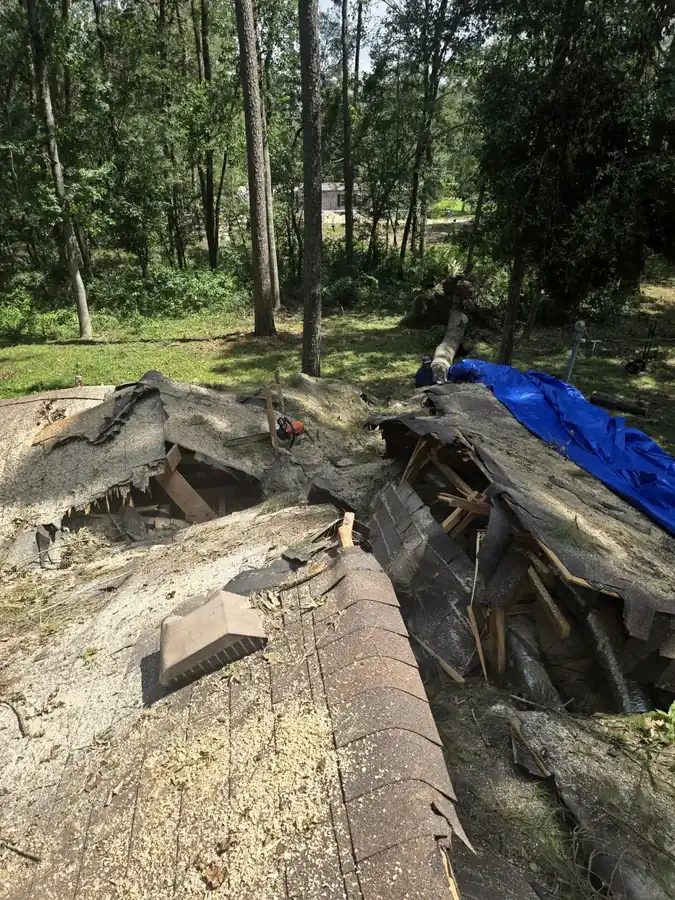
- Roof and structure clearance for oaks and pines leaning over shingles, pool screens and fences.
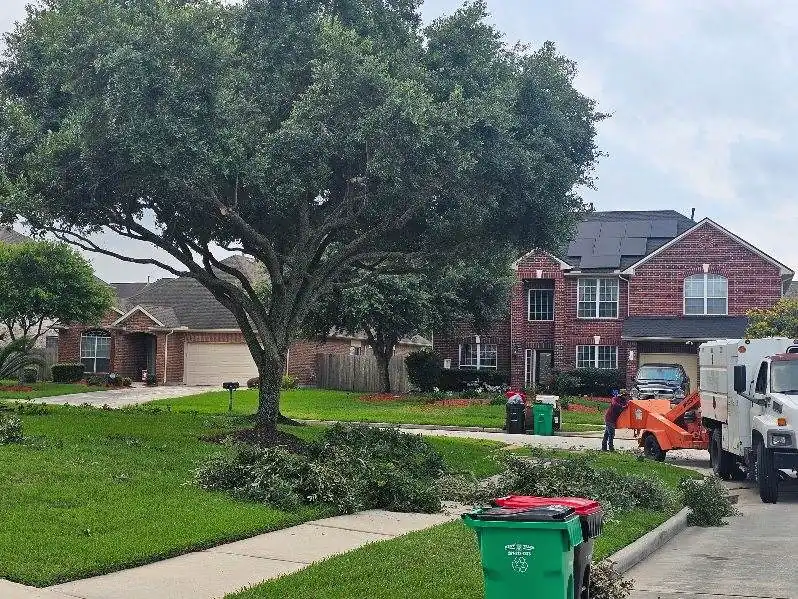
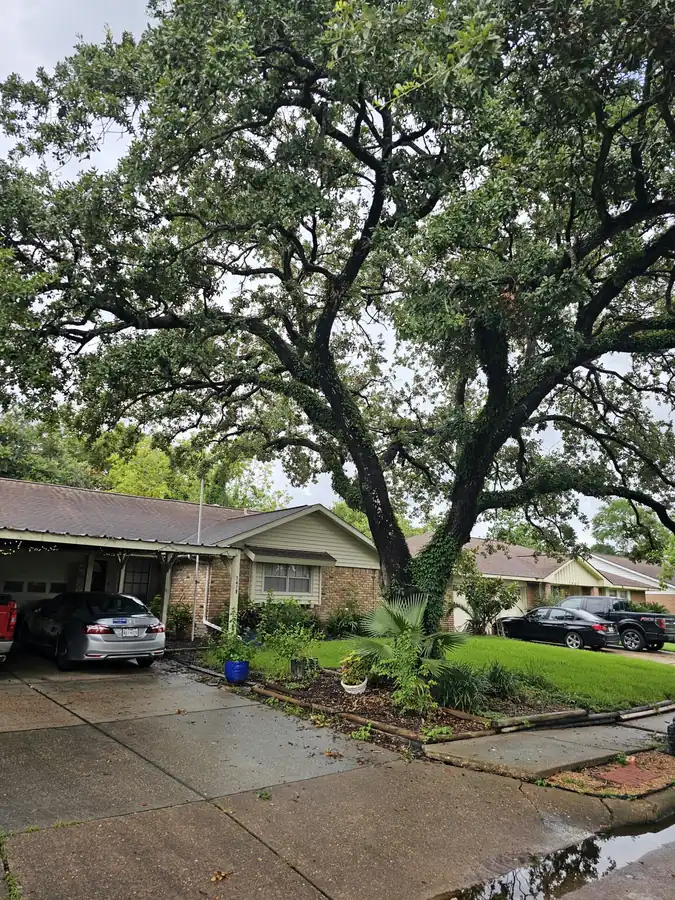
- Street and sidewalk clearance where oaks reach over the curb, which matters for school buses, trash trucks and HOA inspections.
- Crown cleaning and thinning of water oaks and live oaks, done lightly so the tree is not stressed.
What we do not do is “lift” a pine by stripping most of its lower live limbs, or top any tree. A pine that loses too much live crown at once is more prone to stress, and stressed pines attract bark beetles. Our types of pruning page explains the difference between cleaning, thinning, raising and reducing.
Timing in Spring
Pine beetles are active through the warm months, and fresh wounds and pine debris can draw them. Pine work in Spring is planned to keep cuts clean, keep live crown removal modest and get pine debris off the site promptly instead of leaving it piled in the yard. For oaks, the oak wilt guidance from Texas A&M Forest Service is to avoid wounding oaks from February through June, or paint wounds right away if pruning cannot wait. More detail is on oak pruning in oak wilt season.
[1] Source in references below
[2] Source in references below
Local rules
Spring has no city government, so there is no city trimming permit. We found no Harris County or Montgomery County ordinance that requires a permit to prune a tree on a private lot. Three things still apply:
- Deed restrictions and HOA rules. Many Spring associations require owners to keep trees trimmed off sidewalks and streets, and some regulate pruning that changes a tree’s appearance. Check your restrictions before major work.
- County right-of-way. If branches over a county road need cutting from the road side, the Harris County Office of the County Engineer asks for a Right of Way Notification for work in county right-of-way. Whether trimming alone triggers it was not confirmed, so we call the county first. In the Montgomery County part of Spring, the precinct office for the road is the place to ask.
- Power lines. CenterPoint Energy serves most of Spring. Limbs near energized lines are handled by the utility or a line-clearance qualified crew, and Texas Health and Safety Code Chapter 752 requires 48 hours notice before work within 6 feet of a high-voltage line. See branches touching power lines.
[3] Source in references below
[4] Source in references below
Pruning to standard
We prune to ANSI A300, the national standard for tree care operations. That means cuts made just outside the branch collar, no flush cuts, no stubs, no topping, and a written objective for each tree before any limb comes off. The standard is explained on ANSI A300 pruning standards, and the safety side of the work is on pruning safety. For the full service, see tree trimming.
What we scope on Spring properties
After the site walk, you get a written scope organized by work zone. On a typical Spring job, that looks like:
- Trees and objectives. Each tree listed by location and species, with what the pruning should achieve: deadwood out, roof clearance, street clearance.
- The work. Cleaning, thinning, raising or reduction, with the clearance targets written down.
- Access. Gate widths, backyard access between houses, and where trucks and the chip truck will park.
- Cleanup. Chips hauled or left for mulch, needles and cones raked, debris off the street the same day.
- Schedule and price for each zone, so an HOA can approve the work in phases.
For associations, trimming works well inside a yearly plan; see tree maintenance programs in Spring and HOA tree service in Spring. To get a written scope, request a bid.
Frequently asked questions
Do I need county permission to trim trees on my lot in Spring?
We found no county permit requirement for pruning on a private lot. Your HOA’s deed restrictions may still have rules. Work from a county road or in county right-of-way should be cleared with the county first.
How often should pines in Spring be trimmed?
Most healthy pines need only periodic deadwood removal and clearance work, often every few years. Pines over roofs or play areas may need a closer look after each major storm. A site walk sets the schedule tree by tree.
Can you trim the lower limbs off my pines so grass will grow?
Some raising is fine, but removing too much live crown at once stresses a pine. Stressed pines are more likely to attract bark beetles. We keep live crown removal modest and explain the trade-off before cutting.
My HOA sent a notice about branches over the sidewalk. What should I do?
Ask the association for the clearance it requires, then have the branches pruned back to a proper cut. We write the clearance target into the scope so you can show the HOA the work matches its notice.
References
- Texas A&M Forest Service, Prevent the spread of oak wilt in Texas this spring
- Texas Cooperative Extension and Texas Forest Service, Landowner’s Guide: Pine Bark Beetles
- Harris County Office of the County Engineer, Notification of Construction in the ROW
- Texas Legislature, Health and Safety Code Chapter 752
Related reading
Request a bid