
Sugar Land · Tree trimming
Sugar Land tree trimming that meets the city's clearance code
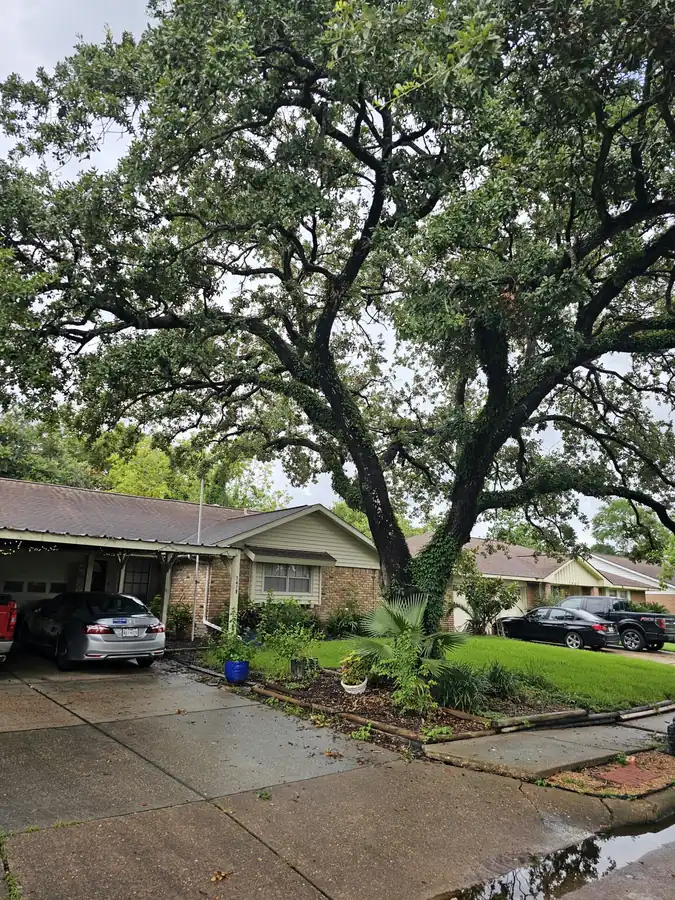
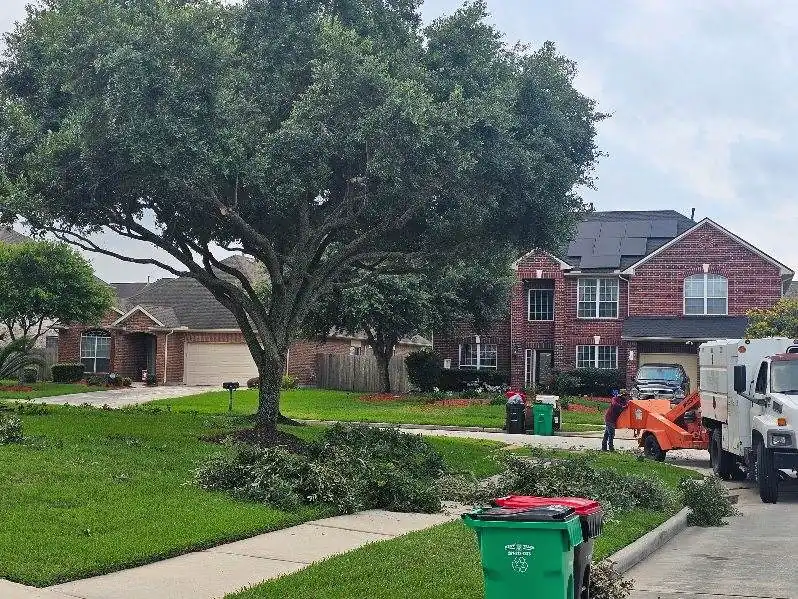
Sugar Land’s code tells owners exactly how high limbs must be over its streets and walks, and Public Works checks on a three-year cycle. The goal is to reach those heights while leaving a healthy tree behind.
The clearance numbers you are pruning to
Sec. 3-164 of the City of Sugar Land Code of Ordinances covers trees in the visibility triangle and right-of-way. The city explains the heights this way:
- A residential tree must be pruned to 12 feet above the roadway and 8 feet above the sidewalk.
- A nonresidential tree must be pruned to 14 feet above the roadway and 8 feet above the sidewalk.
Owners must trim when their trees affect public rights-of-way, so that fire trucks, ambulances and garbage trucks can pass safely. Public Works inspects roadway trees every three years and publishes the schedule ahead of time. Knowing when your section is due lets an owner or association prune on its own timeline instead of answering a notice.
Reaching the height without harming the tree
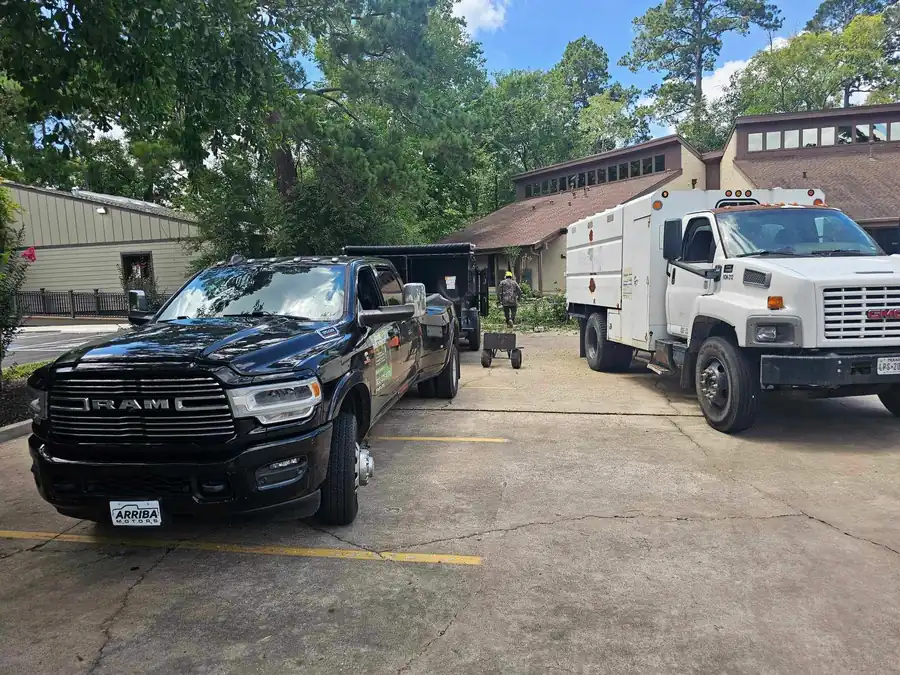
A 12 foot clearance over a street is a lot of lift on a young live oak whose lower limbs carry much of its leaf area. Stripping every low limb in one visit can starve the tree and leave large wounds. Better practice is to:
- Remove the lowest limbs over the street and walk first.
- Shorten other low limbs with reduction cuts so they rise over time.
- Spread the raise over more than one visit on young trees, leaving enough crown to keep the tree growing.
- Keep the live crown balanced on the street side and the yard side.
On large mature trees, the clearance work is usually a matter of removing a few low limbs and dead branches that have dropped with weight. All cuts follow ANSI A300. Read ANSI A300 pruning standards and types of pruning for detail, or the full tree trimming service page.
Crowded canopies in older Sugar Land neighborhoods
The city’s own FAQ explains that First Colony trees were planted close together to look full right away, and that as they grew, their canopies merged. Dense shade killed turf and led to runoff into storm sewers. The city’s answer on some roadways was removal, but on private lots and common areas, selective thinning can let in light while keeping the trees. The city describes thinning as selectively removing branches within the canopy so light reaches the ground. Thinning must stay within limits: stripping inner branches and leaving tufts at the tips, called lion’s tailing, weakens limbs.
Live oaks and the spring window
Texas A&M Forest Service advises against pruning or wounding oaks from February through June and recommends painting every oak wound. Our research found no confirmed oak wilt record in Fort Bend County, but Sugar Land’s many live oaks are pruned in the lower-risk months anyway. For more, read live oak pruning in Houston and oak pruning and oak wilt season.
Local rules
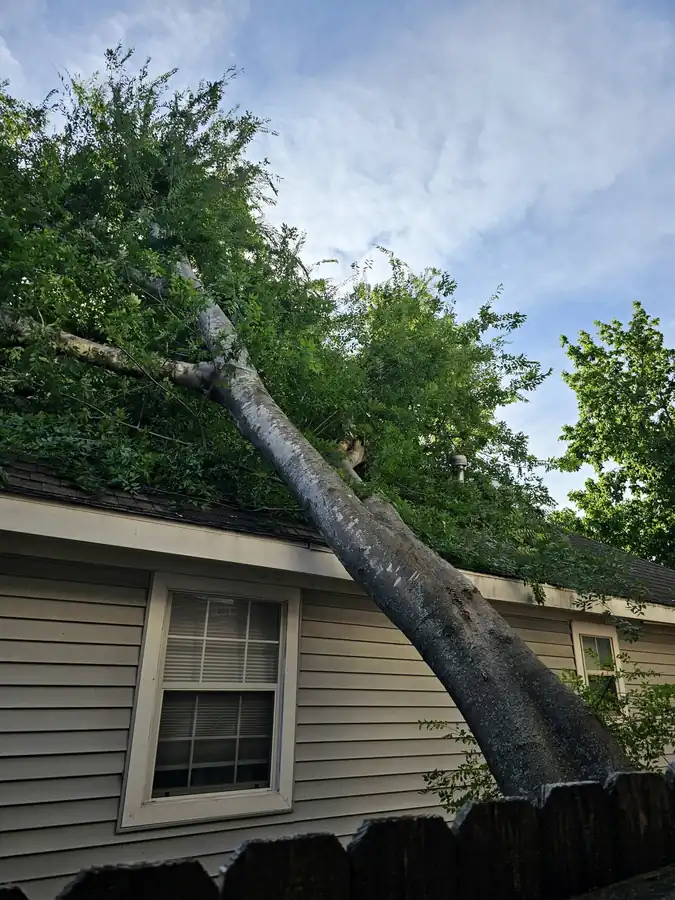
The city sets the 8, 12 and 14 foot clearances under Sec. 3-164. The city also notes that the tree’s owner is responsible for maintenance and that where an HOA maintains the trees in front of homes, the HOA may handle the work. Residents should confirm with their HOA before pruning a front-yard tree. Deed restrictions in some Sugar Land communities add their own rules about tree work on private lots.
What we scope on Sugar Land properties
A Sugar Land trimming scope is written by work zone and lists:
- The trees in each zone and the pruning type for each.
- The city clearance target that applies: 12 or 14 feet over the street, 8 feet over the walk.
- Whether the tree is on a residential or nonresidential property, since that sets the street height.
- How many visits a young tree needs to reach the height safely.
- Access, including gates, pools and parked cars.
- Cleanup and hauling.
- Schedule, with oak pruning placed outside February through June, and price per zone.
The job closes with a walkthrough where we check the clearances with you. Our head foreman directs the cuts. For a trimming scope, request a bid.
[1] Source in references below
[2] Source in references below
[3] Source in references below
Frequently asked questions
Is it 12 feet or 14 feet over the street for my property?
Residential trees need 12 feet over the roadway. Nonresidential trees, such as those at businesses, churches and commercial centers, need 14 feet. Both need 8 feet over the sidewalk.
When will the city inspect my street?
Public Works inspects roadway trees every three years and posts schedules on the city’s Trees and Tree Trimming page. Check the schedule and prune before your area’s turn.
Can my young oak be raised to 12 feet in one visit?
Often it should not be. Taking that much lower crown at once can stress a young tree. We usually spread the raise over visits while keeping the street and walk passable.
My HOA trims the front trees. Do I still need to do anything?
If your HOA maintains front-yard trees, it may handle clearance. Confirm with the HOA, since the city holds the tree’s owner responsible.
Does thinning help with the dense shade in First Colony?
Selective thinning can let more light through without removing trees, but it must be done within limits. Over-thinning weakens limbs and invites sunscald.
References
Related reading

Request a bid