
Service · Emergency tree removal
Emergency tree removal and storm cleanup for Houston commercial properties and HOAs
When a tree is on a roof, across a fire lane or hanging over a walkway, the first job is to make the site safe. Call the 24/7 emergency line at (832) 525-1070, and the crew works through hazards, structures, access and cleanup in that order.
What counts as a tree emergency
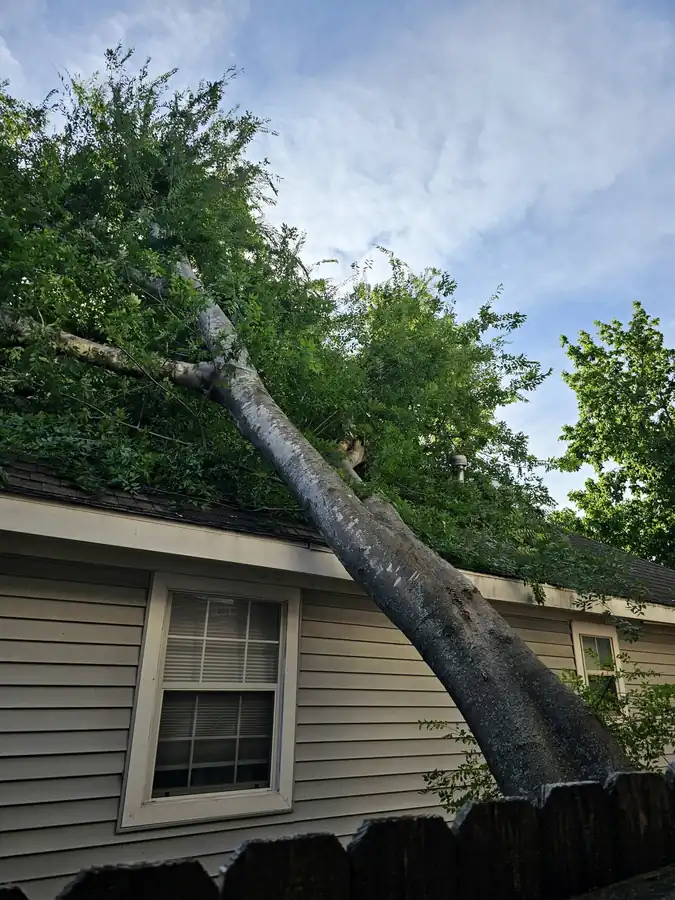
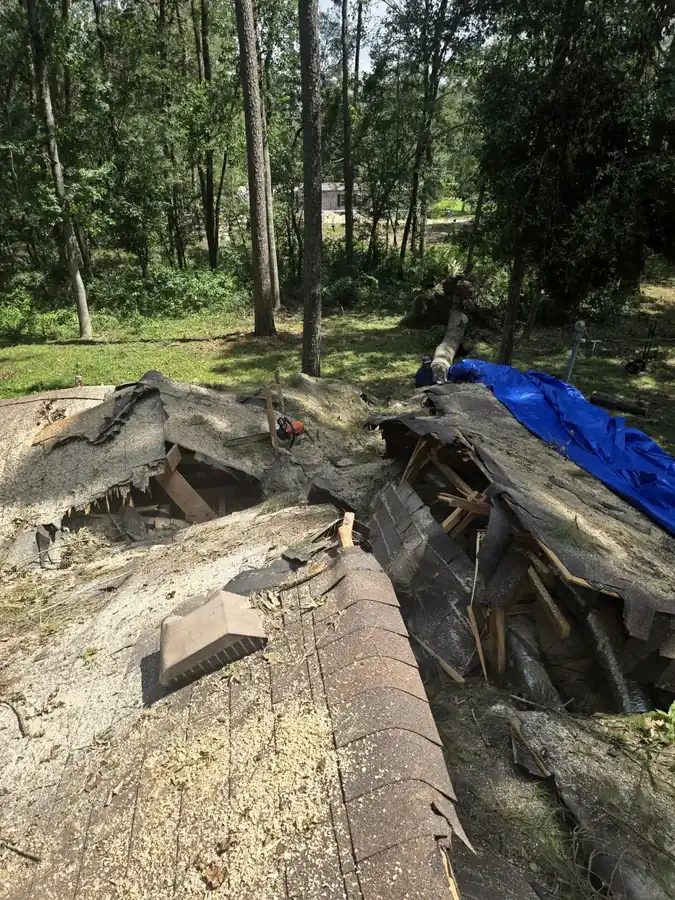
A tree emergency is a tree or a limb that threatens people, a building or access to the property right now. On commercial and HOA sites, the calls that cannot wait usually look like this:
- A tree or a large limb resting on a roof, a carport, a fence line or a parked vehicle.
- A tree across a fire lane, an entrance, a private street or the only drive into a parking lot.
- A split trunk or a hanging limb over a sidewalk, a pool deck, a playground or a building entry.
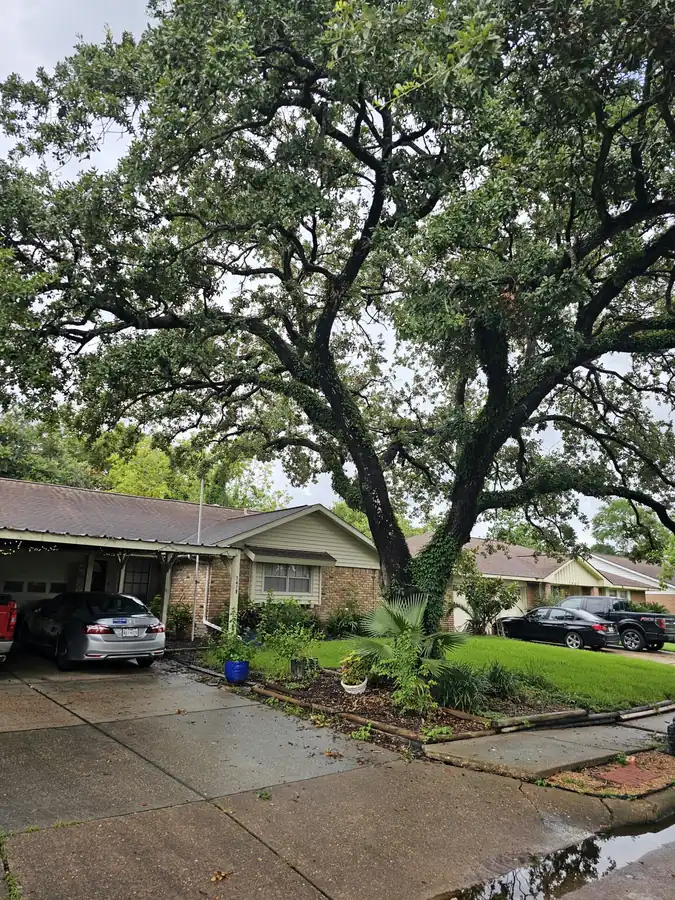
- A tree that has started to lean after the soil was saturated, with the root plate lifting on one side.
- A tree tangled in or resting on a power line.
That last case is different from all the others. If a tree touches a power line, nobody on the property should go near it, and the first calls go to 911 and to CenterPoint Energy, not to a tree company.
Our page on storm safety and downed lines explains what residents, managers and crews should and should not do around storm-damaged trees.
How to reach the emergency line
Call (832) 525-1070. It is a 24/7 emergency tree removal line. You can also email strongtreeservicetx@gmail.com for non-urgent follow-up.
Have this ready when you call:
- The property address, the gate code and where the crew should enter.
- The name and phone number of the person who will meet the crew.
- What the tree has hit: a building, a vehicle, a fence, a road or nothing yet.
- Whether any wires are down, sagging or touching the tree.
- Photos, if someone can take them from a safe distance.
Arrival depends on weather, road conditions and how many sites are calling after a storm, so we do not promise a time over the phone. We tell you what happens next and keep the on-site contact informed.
What happens when the crew arrives
Emergency work follows a fixed order, because the order is what keeps people safe:
- Hazard check. The crew walks the area, looks for downed or nearby lines, hung limbs, trunks under tension and root plates that could shift, and marks off a work zone.
- Utility check. If any part of the tree is within the minimum approach distance of an energized line, the crew stops that part of the job and the utility is called. Strong Tree Service coordinates with CenterPoint Energy or a line-clearance qualified crew and works on the rest of the tree once the line is clear.
- Site control. Cones and tape keep residents, tenants and vehicles out of the drop zone.
- Weight off structures. Limbs and trunk sections are taken off roofs and fences in pieces, so nothing slides or drops onto what is left.
- Access first. Fire lanes, entrances and drives are cleared before common areas and landscaping.
- Cleanup and walkthrough. Debris is chipped or hauled as the scope states, and the job closes with a walkthrough with your contact.
The full method is on the storm cleanup process page, so you can compare it with any other crew’s approach.
Downed lines and utility work
Power lines are the utility’s responsibility. Strong Tree Service is not a utility line-clearance contractor and does not work on trees inside the minimum approach distance of energized lines. When a tree is in contact with a line, CenterPoint Energy or a line-clearance qualified crew handles that part, and our crew works on the rest of the tree and the site around it.
Federal rules also stop line-clearance tree work during bad weather. OSHA 29 CFR 1910.269(r)(1)(vi) presumes thunderstorms and high winds too hazardous for that work, so tree crews start after the weather clears, not during the storm.

Storm debris cleanup for large sites
After a named storm, an HOA or a commercial campus may have dozens of trees damaged at once. Cleanup on a large site is planned like any other job, just faster:
- Roads, fire lanes and parking come first, then building perimeters, then parks, greenbelts and pond edges.
- Drainage inlets and detention outfalls are checked, because limbs in a channel can back water up into streets.
- Debris is chipped, hauled or staged where your city allows curbside pickup, and the scope says which.
- Stumps and lifted root plates are handled as their own line items, and a Texas 811 utility locate should be requested before any grinding.
HOA boards dealing with resident questions and common area debris will find more detail on the HOA storm cleanup page.
Save or remove: an arborist’s call on each tree
Not every damaged tree has to come down. A tree that lost a few limbs may recover with proper pruning, while a tree with a split trunk or a torn root plate is a hazard that should go. The head foreman looks at each damaged tree and puts a recommendation in writing, so the board or owner decides with the reasons in hand. Trees that stay can be restored under a normal tree trimming scope once the emergency is over.
Documentation for insurance and your board
Boards, owners and insurers all ask the same questions after a storm: what failed, when, what it hit and what the work cost. The written scope and the itemized invoice by work zone answer most of them, and you can ask for photos and a tree list at the site walk. Our page on insurance documentation explains what records usually help and what policies commonly do and do not pay for. Strong Tree Service does not adjust claims or decide coverage.
Hurricane season readiness
A pre-season walk-through finds dead trees, split trunks and large dead limbs over buildings and parking while there is still time to deal with them on a normal schedule. Our hurricane season prep page lays out a checklist, and a yearly tree maintenance program builds that walk-through into the calendar.
How we scope emergency work
After the site is safe, you get a written, itemized scope by work zone:
| Scope field | What it states |
|---|---|
| Trees | Each tree or limb in the zone, with what it has hit |
| Work | Removal, limb removal, or pruning to save the tree |
| Access | Where the crew enters, what is closed and for how long |
| Cleanup | Chipped, hauled or staged, and what happens to the wood |
| Stump depth | Left at a stated height or ground to a stated depth |
| Schedule | Make-safe work now, remaining work by date |
| Price | Line items by zone, so the board can approve in parts |
If your board approves emergency work outside a meeting, an itemized scope makes that vote simpler. When you are ready, request a bid for planned work or call the emergency line for anything that cannot wait.
Who leads the work
Safety and training credentials are available on request. ISA certification numbers can be checked through ISA’s public credential search. The crew has about 15 years in the field, including work for national tree care firms. A certificate of insurance and a W-9 are sent on request.
Service area
Strong Tree Service works across Greater Houston, including Houston, Katy, Spring, Sugar Land and The Woodlands.
[1] Source in references below
[2] Source in references below
[3] Source in references below
Frequently asked questions
What should we do first if a tree is on a power line?
Keep everyone away, treat the line as energized and call 911 and CenterPoint Energy. Do not touch the tree, the line or anything in contact with them. Under ANSI Z133, tree workers who are not qualified for electrical work must stay at least 10 feet from lines up to 50 kV, so the utility handles the line first.
Can your crew work during the storm?
No. OSHA 1910.269(r)(1)(vi) presumes thunderstorms and high winds too hazardous for line-clearance tree work, and the same logic applies to any climbing or cutting in storm conditions. The crew starts once the weather allows safe work, beginning with whatever threatens people and buildings.
How fast can you get here?
We do not promise arrival times. After a major storm, roads, weather and the number of damaged sites all change how quickly any crew can reach a property. Call the emergency line at (832) 525-1070 and we will tell you what happens next.
Will our insurance pay for emergency tree removal?
It depends on the policy. Homeowner policies often pay a limited amount when a tree damages a covered structure, and commercial property forms differ, so read your policy and ask your agent. We provide the itemized scope and invoice that a claim or a board file usually needs.
Will FEMA pay to clear our commercial property or HOA?
Usually not for commercial property, which FEMA expects owners to insure. Private roads in gated or HOA communities may qualify in some declared disasters, but only through the city or county. See our insurance documentation page for details.
Do you decide which damaged trees can be saved?
Yes. The head foreman looks at each damaged tree and gives a written recommendation to keep and prune it or to remove it. The owner or board makes the final call.
References
Go deeper
Related reading
Request a bid