

Sugar Land · Tree maintenance programs
Sugar Land tree maintenance programs on the city's rhythm
The City of Sugar Land prunes its own trees on a 3 to 5 year rotation and asks residents to do the same. A maintenance program turns that advice into a zone-by-zone plan with a budget a board can approve.
Why a program fits Sugar Land
Three city practices make planned maintenance a natural fit here:
- A known rotation. The city’s FAQ says it prunes its trees every 3 to 5 years and encourages residents to follow a similar schedule.
- A known inspection cycle. Public Works inspects roadway trees every three years for compliance with the clearance ordinance, and posts the schedule.
- Fixed clearance targets. Sec. 3-164 sets 12 feet over residential streets, 14 feet over nonresidential streets and 8 feet over sidewalks.
With those three facts, an association or commercial owner can lay out exactly which zones need work in which year, rather than waiting for a notice or a storm.
Sugar Land’s older communities add another reason. Some plantings, such as the First Colony street trees the city describes, went in close together and are now mature and crowded. The city has described the problems that follow, from shade-killed turf to runoff and shared root disease. A program can deal with crowding gradually, thinning or removing a few trees each cycle instead of all at once.
What a Sugar Land program covers
Inventory and mapping
We map the common-area trees by zone and record species, size and condition. Street frontage zones are tagged with their city inspection year. How we do it is on tree inventory and risk assessment.
Rotation by zone
Each zone gets a cycle. Frontage zones are timed to finish clearance work before their inspection year. Interior parks and trails can run on a longer cycle. Background on cycle length is on pruning cycles and standards.
Crowding management
For dense older plantings, each cycle can include selective thinning and removal of the weakest trees so the rest develop fuller crowns.
Seasonal timing
Oak work stays outside February through June, as Texas A&M Forest Service advises. Storm-risk pruning lands before hurricane season. Our Houston seasonal calendar applies to Sugar Land.
Health monitoring
Issues found on a visit are passed to Sugar Land plant health care for follow-up.
Budget documents
Yearly scopes and prices fit annual budgets and reserve studies. Our budgeting and board reporting page shows the format.
Storm planning inside the program
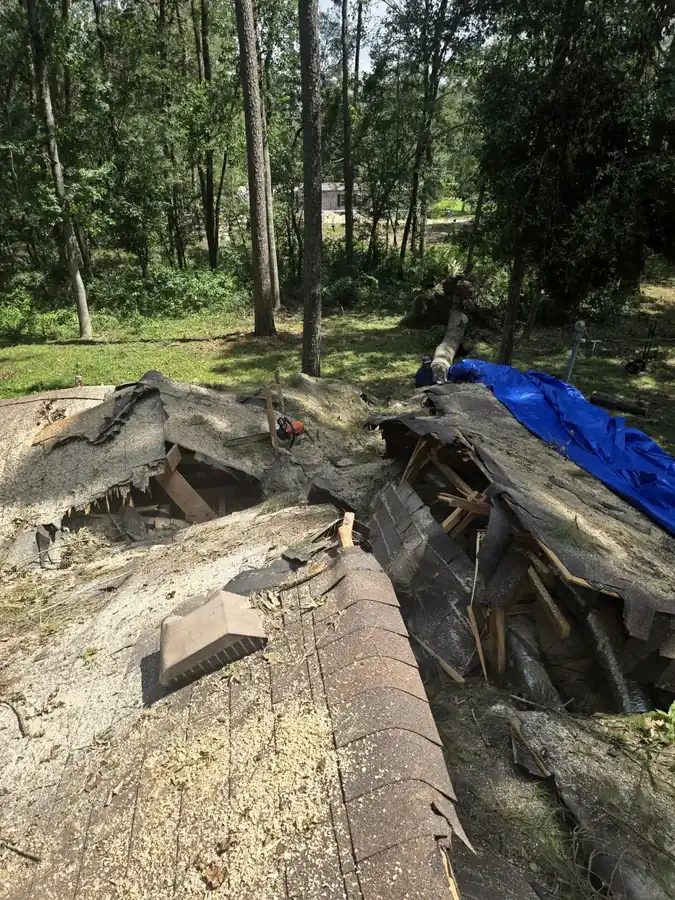
Hurricane Beryl in 2024 led to a citywide debris collection that took about two months and cost the city $7.6 million, Community Impact reported. A program cannot stop that kind of storm, but it can reduce the number of dead limbs and weak crotches in the trees when it hits. A current tree map also speeds up post-storm work on common areas. The response side is covered on Sugar Land emergency tree removal.
Local rules
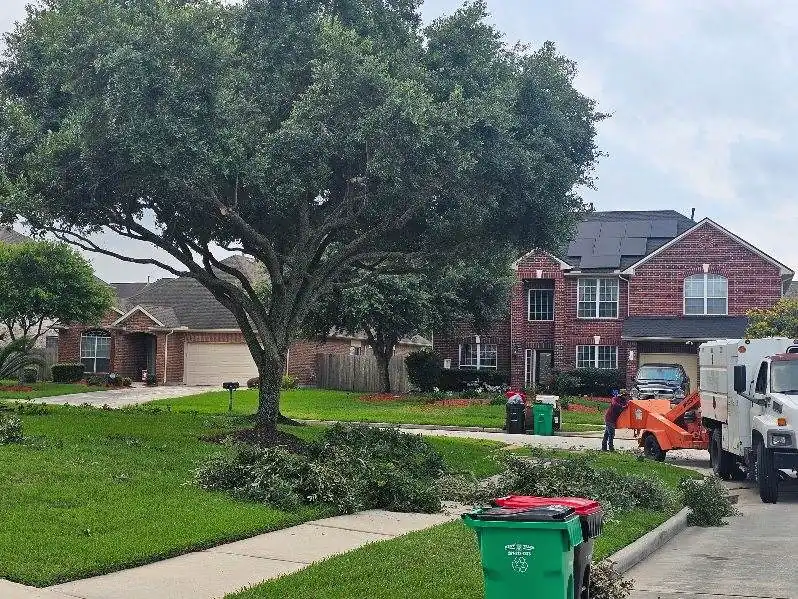
The city’s Sec. 3-164 clearances govern every frontage zone in the program. The city FAQ puts tree maintenance on the tree’s owner, and on the HOA where it maintains trees in front of homes, so the program records which trees the association has taken on. Removals made during construction that requires a building permit may trigger Protected Tree replacement under the Development Code, which applies to hardwoods of 8 inches caliper or more. Deed restrictions can add community-specific rules.
What we scope on Sugar Land properties
A Sugar Land maintenance program document includes:
- A map of zones: entries, frontage segments, parks, lakes, levee reserves and amenity centers.
- What grows in each zone and how healthy it is.
- Work planned for each zone in each year, with clearance targets.
- The inspection year for each frontage segment.
- Access and resident notice needs.
- Cleanup standards for every visit.
- A schedule respecting oak timing and hurricane season.
- Prices by zone and year.
We walk each completed zone with the manager or board representative. Our head foreman leads the program. More on the overall approach is on our tree maintenance programs page. To set up a program, request a bid.
[1] Source in references below
[2] Source in references below
[3] Source in references below
Frequently asked questions
How often should Sugar Land HOA trees be pruned?
The city prunes its own trees on a 3 to 5 year rotation and encourages residents to do the same. Frontage zones should also be timed to the city’s three-year inspection cycle.
Can a program help us pass city inspections?
Yes. Tagging each frontage segment with its inspection year lets us finish clearance work before Public Works comes through.
We have crowded trees from the original planting. Should we remove them all at once?
Usually not. Removing or thinning a few each cycle keeps shade and screening while giving the remaining trees room to grow.
Does the program include trees the HOA does not own?
Only if the owner agrees. Trees that belong to homeowners or other parties are flagged, not worked, unless a separate agreement is in place.
References
Related reading
Request a bid