
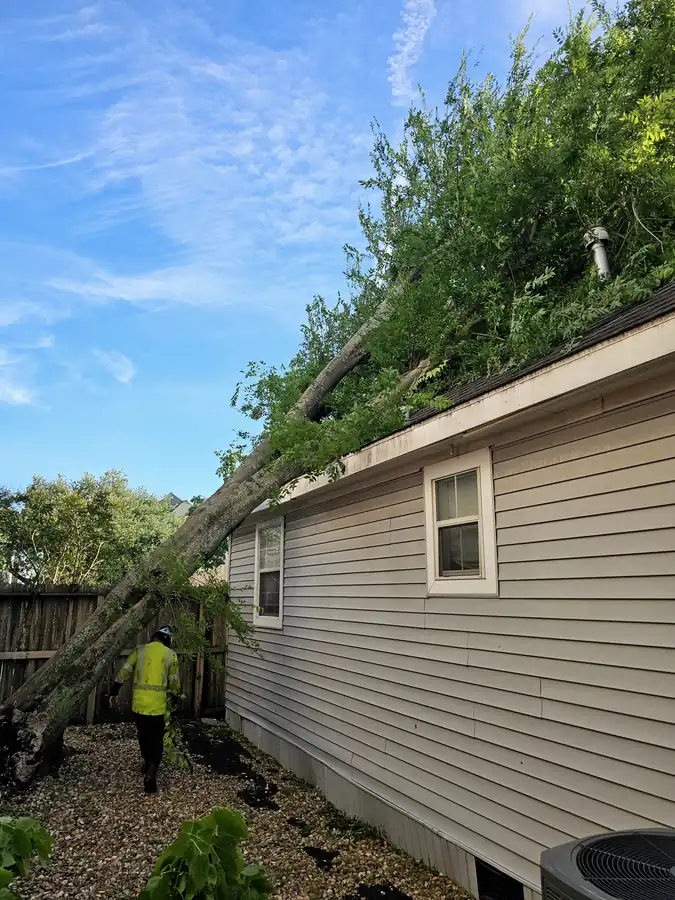
Emergency · Storm cleanup process
How commercial storm cleanup is done to industry standards
A storm cleanup should follow the same order on every site: people, structures, access, then everything else. Here is the method step by step, so you can compare any crew against it.
Step 1: triage
On a large site after a storm, there is more damage than any crew can handle in one visit. Triage sets the order:
- Life safety. Hung limbs over walkways, trees on occupied buildings, anything over a place people must use.
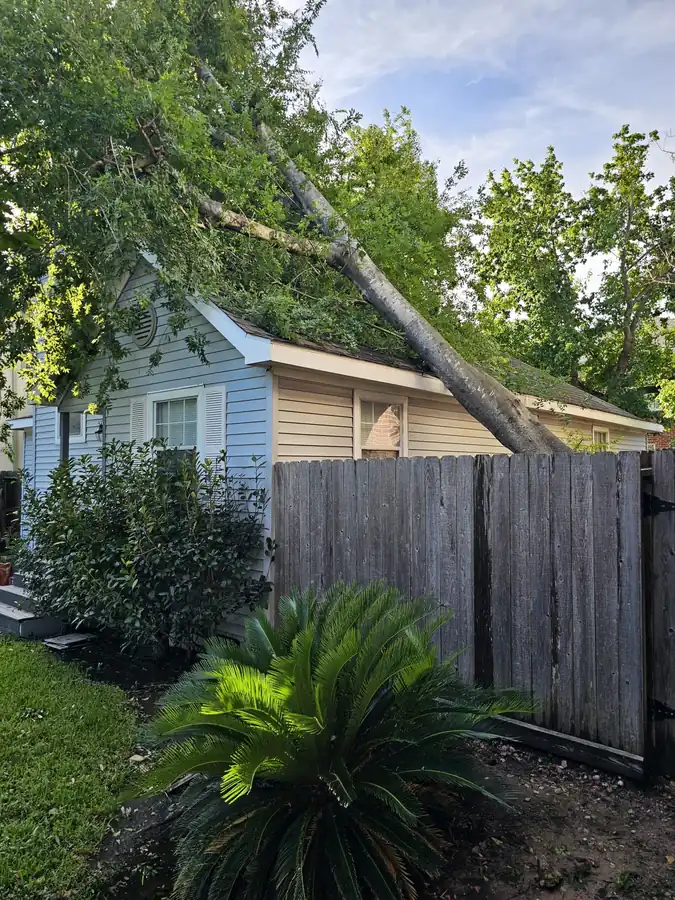
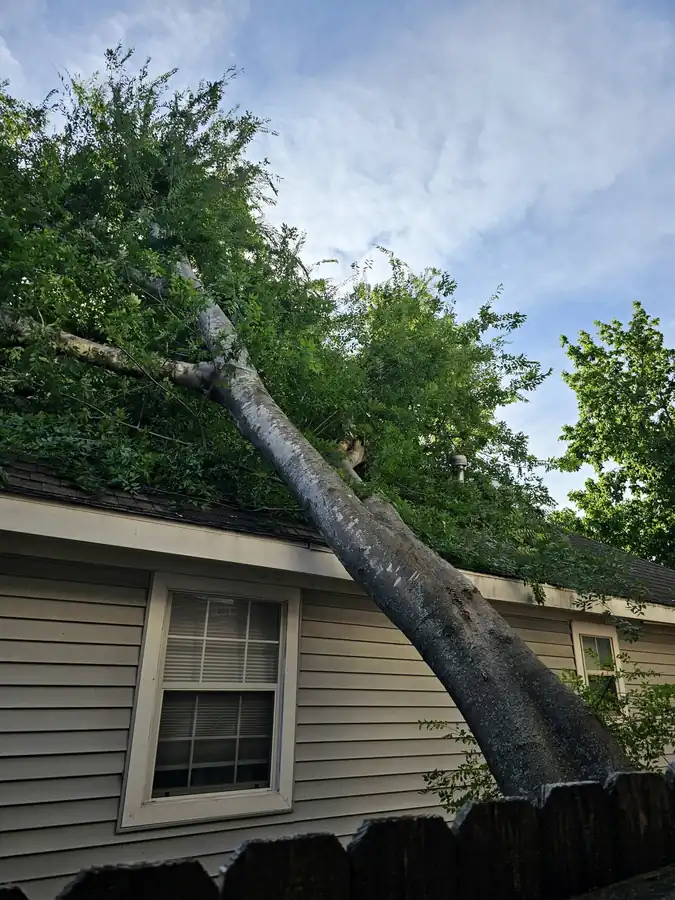
- Structures. Weight on roofs, carports and fences, where every hour adds water damage or collapse risk.
- Access. Fire lanes, entrances, private streets and the drives tenants and residents need.
- Cleanup. Common areas, parks, greenbelts, pond edges and landscape beds.
The property’s storm plan, if it has one, should already list these priorities by zone.
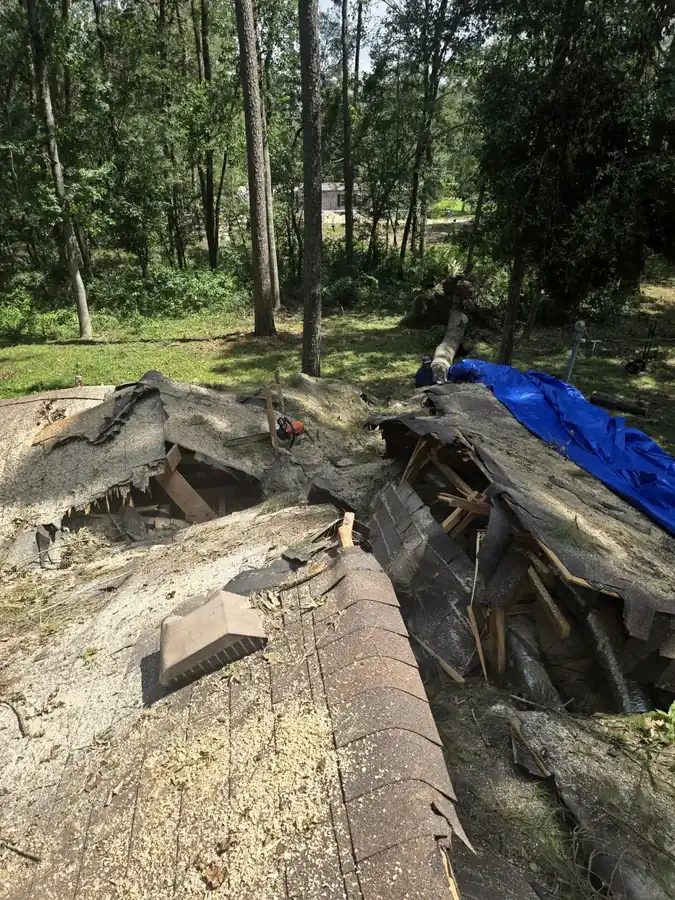
Step 2: electrical check
Before any cutting, the crew identifies every line near the work. Under ANSI Z133, workers without electrical qualification keep at least 10 feet from energized conductors up to 50 kV, including tools and equipment, according to TCIA’s summary of the standard. If that distance cannot be kept, that part of the tree waits for CenterPoint Energy or a line-clearance qualified crew. Strong Tree Service coordinates with the utility and works on the rest of the site in the meantime. More detail is on the storm safety and downed lines page.
Step 3: set the work zone
The crew marks a drop zone around each tree, closes it with cones and tape and keeps people out until the last piece is down. On HOA and commercial sites, that often means moving vehicles and briefly closing a walk or a drive, which is why the scope names the access plan and the on-site contact.
Step 4: choose the removal method
How a damaged tree comes down depends on what is under and around it:
- Felling, when there is open ground and room for the whole tree to fall.
- Sectional removal, taking the tree down in pieces and lowering them, when the tree is over a roof, a fence or a drive.
- Weight reduction first, when a tree is resting on a structure. Limbs and sections come off from the top and outside in, so the load comes off the structure gradually and nothing slides.
Damaged trees behave differently from healthy ones. Split wood, trunks under tension and lifted root plates can move without warning, so the crew reads each one before it is cut. The method for each tree should be part of the plan, and if a job needs equipment beyond what the crew brings, the scope should say so before the work starts.

Step 5: decide which trees to save
An arborist should decide which damaged trees can be pruned and kept. A tree that lost limbs but has a sound trunk and roots can often recover with proper pruning to ANSI A300. A tree with a split trunk, a torn root plate or major decay exposed by the break is usually a removal. Texas A&M Forest Service advises patience with storm-stressed trees and recommends watering to help them recover. Strong Tree Service’s head foreman gives a written recommendation for each damaged tree, and the owner or board decides. Saved trees can move into a normal tree trimming scope.
Step 6: stumps and root plates
Stumps and root plates are their own line items, quoted by stump depth. Before any grinding, a Texas 811 utility locate should be requested, and the scope should say who requests it.
Storms tear up roots near buried lines, and grinding goes below grade, so a locate request before grinding is sound practice. Our tree removal page covers stump work in more detail.
Step 7: handle the debris
Debris goes one of three ways, and the scope should say which:
- Chipped, with chips hauled away or left on site where the owner wants mulch.
- Hauled, with logs and brush removed from the property.
- Staged, cut to size and placed at the curb, only where the city or county is running storm debris pickup and allows it.
Drainage inlets and channels should be cleared of limbs early, because blocked drainage can flood streets on the next rain.
Step 8: close-out
The job ends with a walkthrough with the client contact to confirm every zone is done, the site is clean and nothing was missed. The written scope becomes the record of what was done, alongside the itemized invoice by zone. If you need photos or a tree list for an insurer or a board file, see insurance documentation.
How to compare storm crews
Ask each bidder:
- In what order will you work, and why?
- How will you handle trees near lines?
- How will you decide which trees to save?
- Who requests the 811 locate before grinding?
- Where will debris go?
- Who oversees the job, and what is their credential?
At Strong Tree Service, Safety and training credentials are available on request. The crew has about 15 years in the field. For anything still on a structure, call the 24/7 emergency line at (832) 525-1070. For planned storm cleanup on a large site, request a bid. HOA boards can see the community side on HOA storm cleanup, and the overall service is on emergency tree removal.
[1] Source in references below
[2] Source in references below
[3] Source in references below
Frequently asked questions
What order should storm cleanup follow?
Life safety first, then structures, then access routes, then general cleanup. That order keeps people safe and limits further damage to buildings while the rest of the site waits.
Should 811 be called before grinding storm stumps?
Yes. Texas law requires notice to Texas 811 at least two working days before excavation, and storm-damaged roots are often near buried lines. Ask that the scope state who requests the locate.
Can damaged trees be saved instead of removed?
Often, if the trunk and roots are sound. Our head foreman looks at each tree and recommends pruning or removal in writing. Texas A&M Forest Service advises patience and watering for storm-stressed trees.
What happens to the debris?
The scope states it: chipped, hauled, or staged at the curb where a city or county storm pickup allows it. Drainage inlets and channels are cleared early so the next rain does not flood the streets.
How do we know the job is finished?
The job closes with a walkthrough with your contact, zone by zone, against the written scope. Anything missed is noted against the scope.
References
Related reading
Request a bid