
Spring · Tree removal
Tree removal in Spring, TX for dead pines and hazard trees
Most removals in Spring start with a pine: one killed by beetles, drought or root damage, standing tall over a roof or a fence. Here is how removal works in an unincorporated area with no city permit, and what to check instead.
Why trees come down in Spring
The removal requests we see in Spring follow the area’s tree mix and its weather history:
- Dead and dying loblolly pines. Pines killed by bark beetles, drought or flooding dry out and become brittle. The 2011 drought hit Harris County’s loblolly pines harder than any other species, according to preliminary Texas Forest Service data reported by Community Impact, and dead pines from that period are a reminder of how quickly a stand can turn.
- Trees weakened by flooding. Lots near Spring Creek and Cypress Creek saw long standing water during Hurricane Harvey in 2017. Roots that sat underwater for days can decline for years afterward.
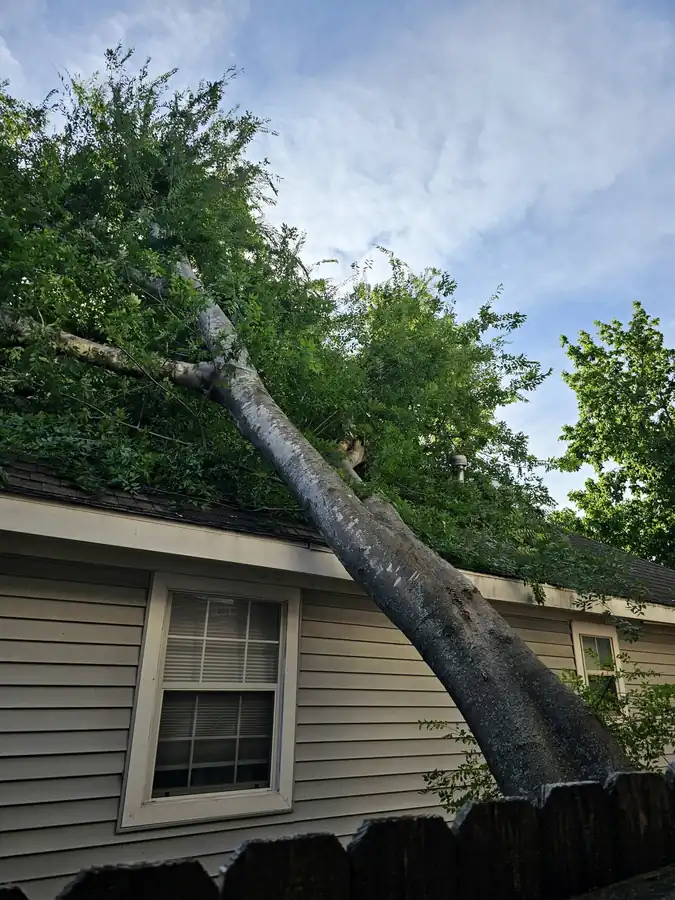
- Storm-damaged trees. Split trunks, hung limbs and trees that started leaning after a storm.
- Trees in conflict with structures. Pines planted or left too close to a foundation, driveway or pool.
A dead pine is not just an eyesore. As it dries, the wood loses strength, and a dead pine near a house is harder and riskier to take down the longer it stands. Our hazard tree signs page lists what to watch for.
[1] Source in references below
Beetle-killed pines need prompt handling
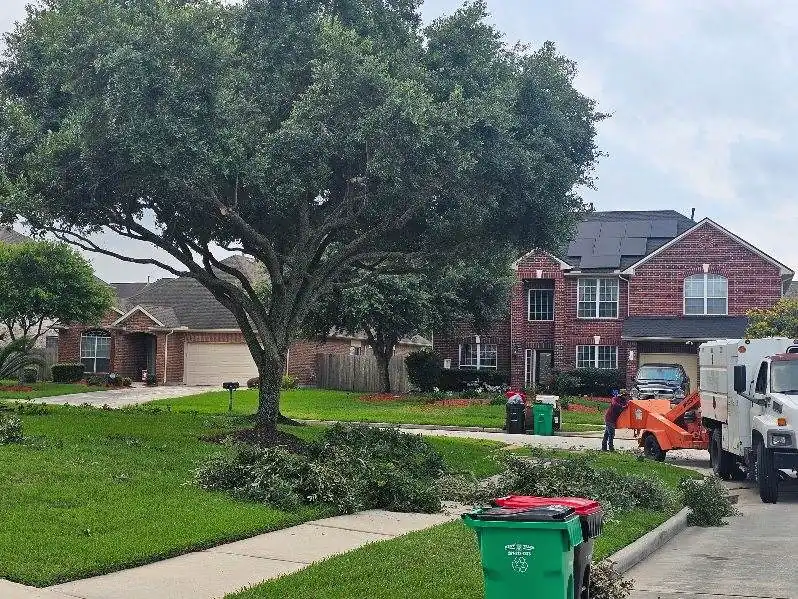
When a pine dies from southern pine beetle or Ips engraver beetles, the timing of removal matters. Texas extension guidance on pine bark beetles describes removing infested trees and handling the wood so beetles do not move to nearby pines. In a subdivision where pines stand close together across several lots, one infested tree can be a neighbor’s problem too. We plan beetle-tree removals so the wood leaves the site promptly, and the disposal options are on infested wood disposal in Texas.
[2] Source in references below
Local rules
Spring is unincorporated, so no city tree removal permit applies, and we found no Harris County or Montgomery County tree protection ordinance for private lots. Before a removal, we check four things:
- Deed restrictions and HOA approval. Many Spring associations require architectural approval to remove a tree on a lot, especially a front-yard tree. Texas Property Code Chapter 209 governs how property owners associations enforce their restrictions. The homeowner approval guide explains the process.
- Who owns the land. A tree on a MUD detention tract, a drainage easement or HOA common area is not the lot owner’s to remove.
- County right-of-way. A tree in a Harris County road right-of-way falls under the county. The Office of the County Engineer handles right-of-way notifications, and the commissioner precinct maintains county roads. In the Montgomery County part of Spring, ask the precinct office.
- Power lines. If the tree is within reach of a CenterPoint line, the utility or a line-clearance qualified crew handles the work near the line, and we coordinate and stay outside the minimum approach distances.
[3] Source in references below
How a Spring removal is done
Tall pines next to houses rarely allow a straight fell. Most are taken down in sections: a climber removes limbs, then lowers trunk pieces with ropes and rigging so nothing hits the roof, fence or pool. When the job needs it, we arrange a crane or other specialized equipment. The methods are covered on limited-access and near-structure removal and crane and rigging removal. Crew safety and the drop zone are on tree removal safety.
Pine stumps are usually ground out. The scope states the grind depth and whether the grindings stay or go. See stump grinding and the main tree removal page.
What we scope on Spring properties
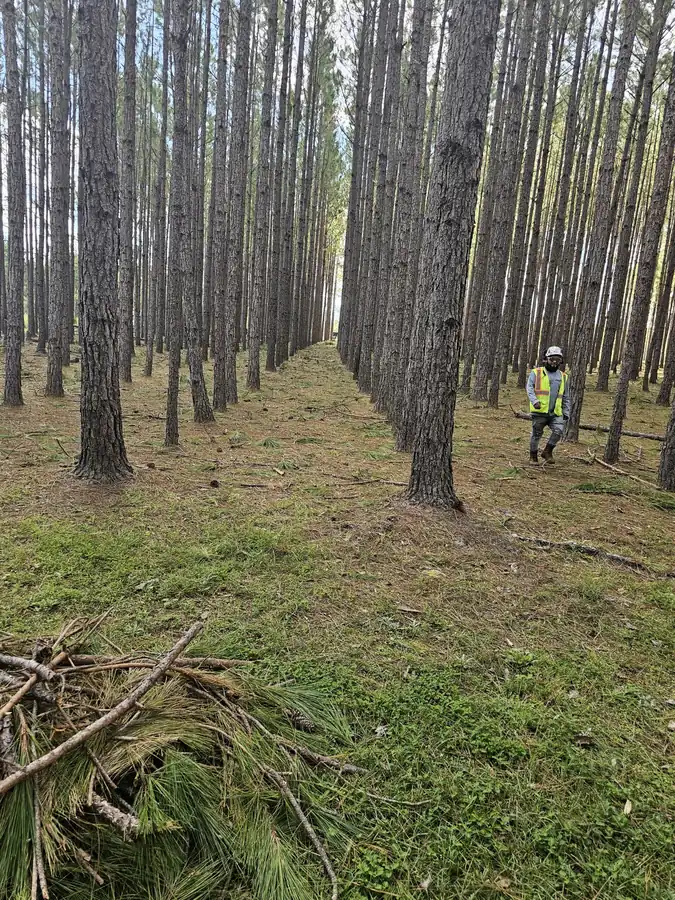
Your written, itemized scope for a Spring removal covers:
- Trees: each tree’s location, species, size and the reason for removal (dead, beetle activity, storm damage, structure conflict).
- Work: sectional removal, rigging points, and anything left standing on purpose.
- Access: gate width, backyard route, driveway protection, and whether trucks can reach the tree from the street.
- Cleanup: wood and brush hauled, logs from beetle-infested trees off the property, needles raked.
- Stump depth: how deep the grinder goes and what happens to the grindings.
- Schedule and price, with HOA approval or county contact noted where needed.
If a removal is part of an association project, see HOA tree service in Spring. To have a tree looked at, request a bid. For trees down after a storm, go to emergency tree removal in Spring.
Frequently asked questions
Does Spring, TX require a permit to cut down a tree?
There is no city permit because Spring is unincorporated, and we found no county ordinance protecting trees on private lots. Check your deed restrictions, since many Spring HOAs require architectural approval before a removal. Trees in a county road right-of-way belong under the county’s control.
My pine turned brown in a few weeks. Should it come out?
A pine that browns quickly in warm weather is often a bark beetle kill. If beetles are confirmed, removing the tree promptly and getting the wood off site helps protect nearby pines. Have it looked at before deciding.
Who pays to remove a dead tree on the property line?
That depends on where the trunk stands and what the neighbors agree. The Texas State Law Library’s neighbor law guide is a good starting point. Our scope can be split between owners when both agree.
Will you grind the stump in my Spring yard?
Yes, stump grinding is a normal part of a removal scope when you want it. The scope states the depth and whether the grindings are hauled or left to fill the hole.
References
Related reading

Request a bid