
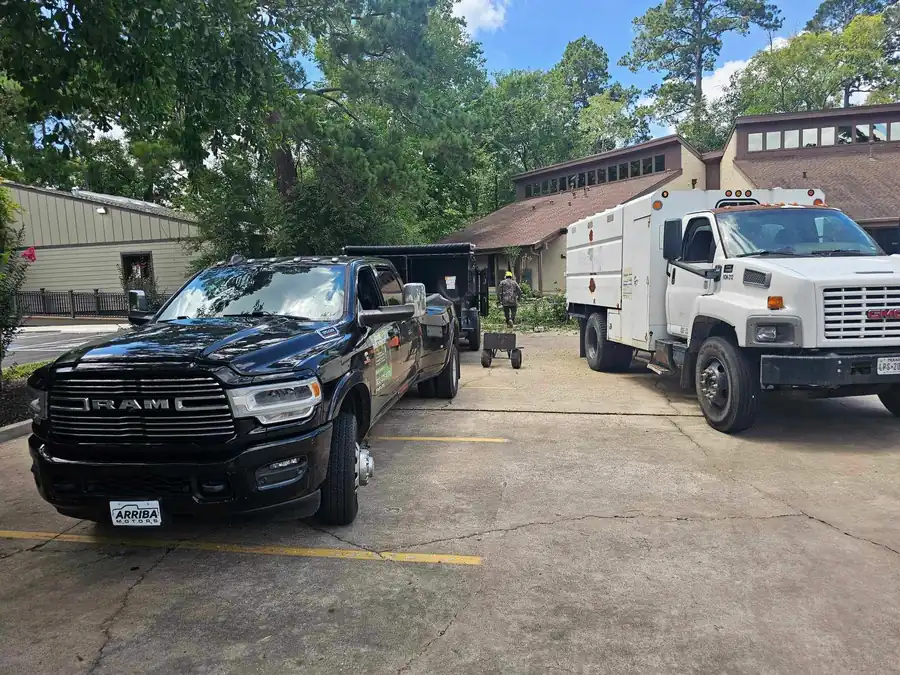
Service · Tree removal
Commercial and HOA tree removal in Greater Houston
Removing a tree on an occupied property is a planned job, not just a cut. We assess the tree, check permits, plan how every piece comes down and grind the stump to a depth written into the scope.
When removal is the right call
Most trees on HOA and commercial property should be kept, pruned and cared for. Removal is the right answer when the tree’s risk cannot be brought down to an acceptable level another way, or when keeping it causes a bigger problem. Common reasons include:
- Dead or dying trees, especially near parking, walks, roofs and play areas.
- Failed or failing structure: cracked trunks, split forks, heavy lean with root lifting, or decay in the trunk or root flare.
- Disease and insect management: Texas A&M guidance calls for removing pines with live bark beetles inside, and Texas AgriLife guidance suggests considering removal when hypoxylon canker affects more than 15 percent of the canopy.
- Construction and site conflicts: trees in a building footprint, a new drive or a utility route.
- Wrong tree, wrong place: trees that have outgrown their space and cannot be reduced without topping.
When a tree is borderline, ask for an assessment before a removal price. Our page on hazard tree signs explains what to look for, and our page on tree risk assessment explains how the decision is documented.
Assessment before removal
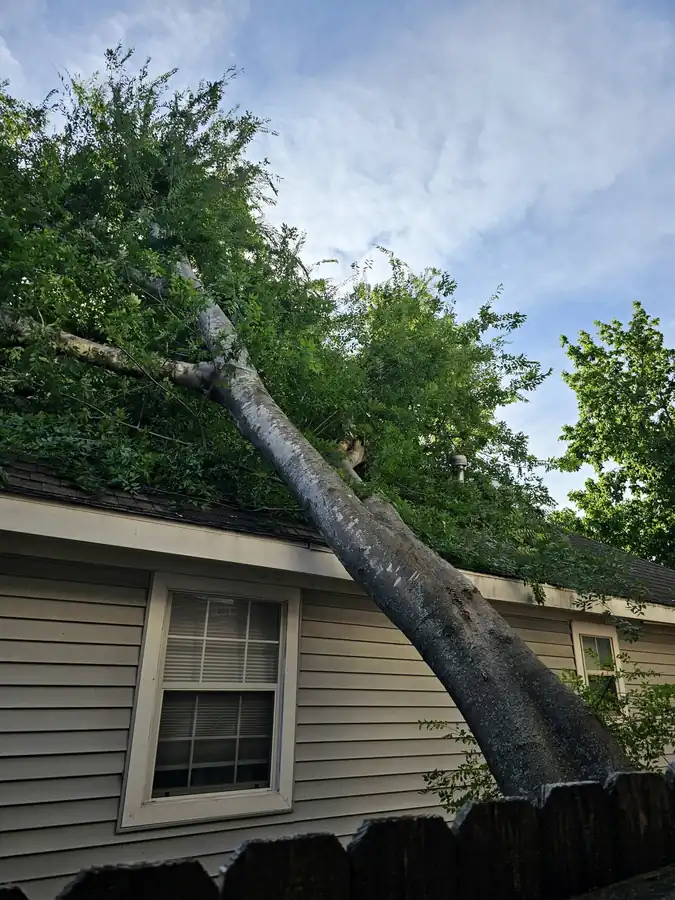
The ISA’s tree risk assessment method looks at three things: how likely a tree or part is to fail, how likely it is to hit something or someone if it does, and how serious the consequences would be. Those factors combine into a risk rating. Options short of removal, such as pruning, reduction or moving the target, are weighed before removal is recommended.
Safety and training credentials are available on request. He looks at each tree in a removal scope on the site walk and records the reason it is coming out. That record matters to HOA boards, which often need to explain a removal to residents.
Permits and approvals
Some trees cannot be removed without permission. The Houston Permitting Center requires its Tree Removal / Tree Trimming Permit (PRD1001) to remove any tree on city property, including rights-of-way, medians and parks, or on a setback. Processing takes 10 business days, the permit is valid for 1 year and it must be posted for 20 days before work. Houston also protects certain trees under Chapter 33 of its code. Other cities and HOA covenants set their own rules. Our page on tree removal permits in Houston covers the steps.
Removals near buildings, pools and fences
Most commercial removals are not open-field felling. The tree leans over a roof, a pool deck, a fence line or a parking lot, and it has to come down in pieces. Crews take it apart from the top down, lowering limbs and trunk sections on ropes with controlled friction so each piece lands where planned. Our page on limited-access and near-structure removal walks through the method, including how roofs, gutters and hardscape are protected.
Crane-assisted removal
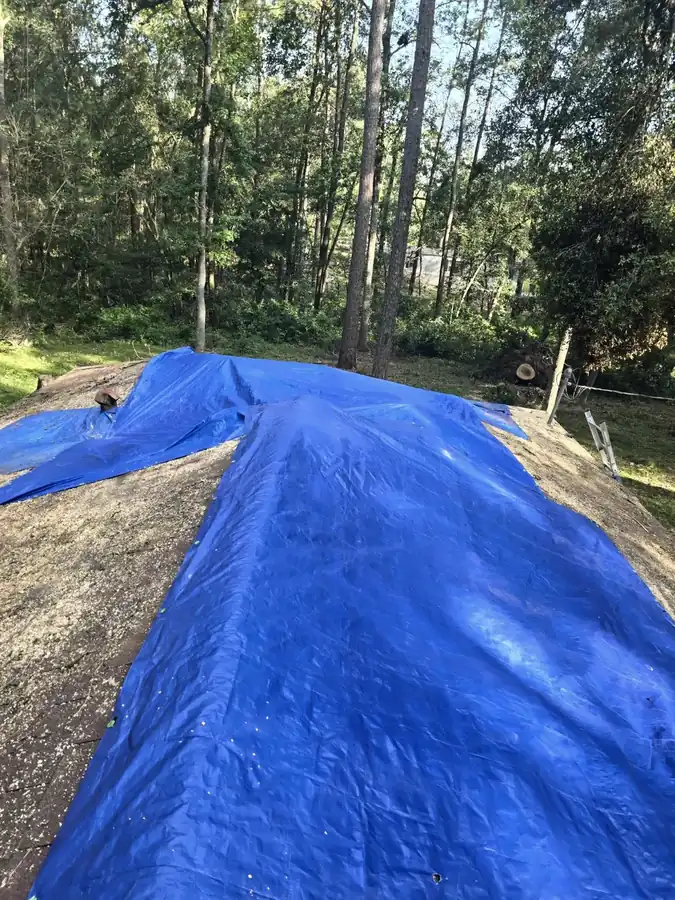
Some trees are too large, too decayed or too close to a building to climb and lower safely. When the job needs it, we arrange a crane and operator, and each piece is lifted clear of the structure instead of lowered past it. Crane work brings its own planning: setup location, ground conditions and power lines. OSHA requires equipment that can reach toward lines to keep at least 10 feet from lines of 50 kV or less. See crane and rigging removal.
Trees near power lines
Texas Health and Safety Code Chapter 752 bars work within 6 feet of lines over 600 volts unless the line operator has been notified at least 48 hours ahead and a safety arrangement is in place. When a tree to be removed is within reach of energized lines, CenterPoint Energy or a line-clearance qualified crew handles the part near the line, and Strong Tree Service coordinates and works outside the minimum approach distances. See power line safety.
Safety on an occupied site
OSHA names falls, falling objects and electricity as the main hazards in tree work. A removal adds heavy wood, rigging loads and machines. Drop zones are marked and kept clear, traffic is routed around the work and residents or tenants are told in advance which areas close. Our page on tree removal safety covers the controls and what the property needs to prepare.
Stump grinding and cleanup
After the tree is down, the stump can be ground below grade so the spot can be turfed, mulched or replanted. No industry standard sets one required depth, so the depth goes into the scope based on what comes next. Fresh oak stumps are painted in any season, per Texas A&M Forest Service oak wilt guidance. Read more on stump grinding.
Diseased and infested wood
Wood from diseased or infested trees can spread the problem if it is moved or stored the wrong way. Texas A&M Forest Service advises never storing unseasoned wood from diseased red oaks near healthy oaks. Pine wood with live bark beetles should be dealt with quickly. Ash wood from counties under the Texas Department of Agriculture’s emerald ash borer quarantine cannot leave the quarantined area except as the rules allow. Our plant health care team covers diagnosis, and our page on infested wood disposal in Texas covers the rules.
Storm damage
For trees that are already down or hanging after a storm, go to emergency tree removal. Strong Tree Service keeps a 24/7 emergency tree removal line at (832) 525-1070.
What the board or manager receives
| Item | What it covers |
|---|---|
| Written scope by work zone | Trees, work, access, cleanup, stump depth, schedule and price |
| Reason for removal | Recorded on the site walk for board and resident questions |
| Permit status | Whether a city permit or HOA approval applies, and who files it |
| Site protection notes | Roofs, pools, hardscape, turf and access routes |
| Final walkthrough | Cleanup checked with you, zone by zone |
A certificate of insurance and a W-9 are sent on request. The crew has about 15 years in the field, including work for national tree care firms.
What to ask any removal contractor
- Why does this tree need to come out, and what options were considered?
- Is a permit or HOA approval needed, and who is getting it?
- How will the tree come down near the building, and is a crane needed?
- How deep will the stump be ground, and what happens to the grindings?
- How will diseased or infested wood be handled?
For HOA and commercial programs, see HOA tree service and commercial tree service. To get a written removal scope, request a bid.
[1] Source in references below
[2] Source in references below
[3] Source in references below
[4] Source in references below
[5] Source in references below
[6] Source in references below
[7] Source in references below
Frequently asked questions
Do we need a permit to remove a tree in Houston?
For any tree on City of Houston property, including rights-of-way, medians, parks or a setback, yes. The permit takes about 10 business days to process and must be posted 20 days before work. Private trees outside those areas may still need HOA approval.
Can you remove a tree next to the building without a crane?
Often, yes, by taking it down in sections and lowering each piece on ropes. When a crane is safer, we arrange one. The choice is made on the site walk and written into the scope.
How deep will you grind the stump?
It depends on what goes in the spot next. Turf or mulch needs less depth than replanting a tree. No industry standard sets one depth, so we write the depth into the scope.
The tree is near a power line. Can you remove it?
Not the part within the utility’s clearance zone. Texas law bars work within 6 feet of high voltage lines without an arrangement with the line operator. CenterPoint Energy or a line-clearance qualified crew handles that part, and we coordinate the rest.
How do we know the tree really needs to come out?
Ask for the reason in writing and the options considered. A risk assessment looks at the chance of failure, the chance of hitting a target and the consequences. Our head foreman records the reason for each removal on the site walk.
References
- Houston Permitting Center, Tree Removal / Tree Trimming Permit PRD1001
- ISA, Tree Risk Assessment Form
- OSHA, 29 CFR 1910.333
- Texas Legislature, Health and Safety Code Chapter 752
- Texas AgriLife Extension, Hypoxylon canker management, PLPA-116
- Texas Cooperative Extension and Texas Forest Service, Landowner’s Guide: Pine Bark Beetles, 2003
- USDA Forest Service and Texas Forest Service, Identify and Manage Oak Wilt in Texas, SR-1
Go deeper
Related reading
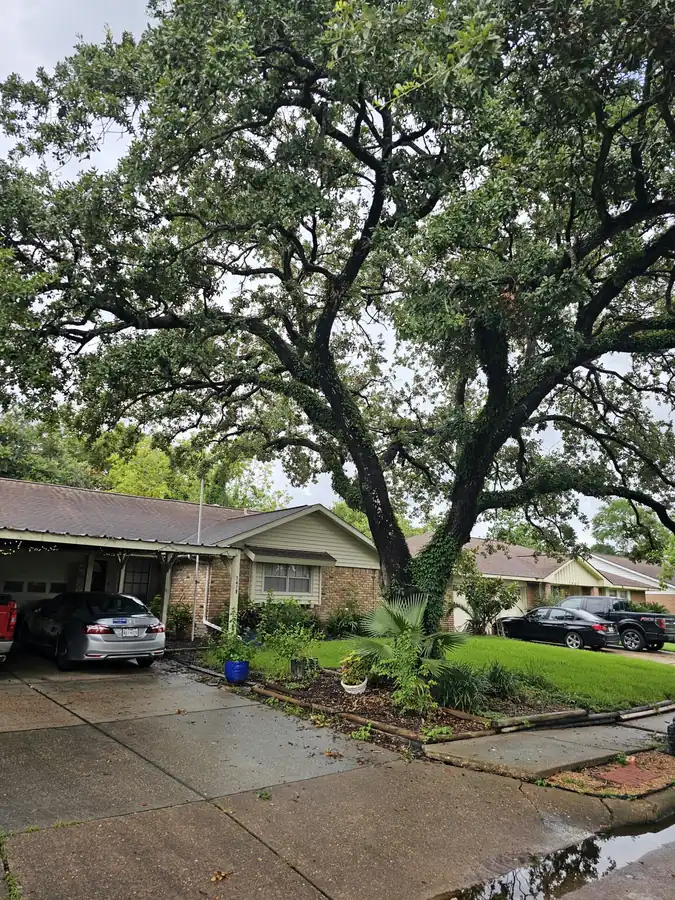 Service · Tree trimming and pruningTree trimming and pruning for HOAs and commercial properties in Greater Houston
 Service · Plant health careTree disease and pest care for Houston HOAs and commercial propertiesService · Emergency tree removalEmergency tree removal and storm cleanup for Houston commercial properties and HOAs
Request a bid