
Sugar Land · Tree removal
Sugar Land tree removal: what the city requires and what it does not
Sugar Land does not regulate removal of trees on private lots, but HOA deed restrictions and the Development Code’s Protected Tree rule can still apply. Knowing which one governs your tree saves time before the crew arrives.
Who decides whether a Sugar Land tree comes down
The city’s tree FAQ is direct on two points. First, the tree’s owner makes the removal decision. Second, the city has no ordinance for removing trees on private property. Where a homeowners association exists, its deed restrictions may hold the real approval step, since the city notes some HOAs restrict tree work.
There is one city rule that matters for building projects. The Development Code requires replacement of Protected Trees, which it defines as hardwoods with a caliper of 8 inches or greater. That requirement is settled during the building permit process and the landscape plan review when one is required. According to the city, the Article XV landscaping rules apply where construction needing a building permit takes place, with exceptions including interior remodels and expansions of single-family or two-family homes. A commercial site planning new construction should account for Protected Tree replacement before clearing.
Trees in the right-of-way are a separate case. The city says adjacent property owners generally own and maintain them and decide whether to replace them.
Common reasons for removal in Sugar Land
- Crowded plantings. In First Colony and other older sections, trees planted close together have grown into each other. The city removed some roadway trees for that reason, citing dead turf, erosion and runoff. Associations face the same choice on common areas.
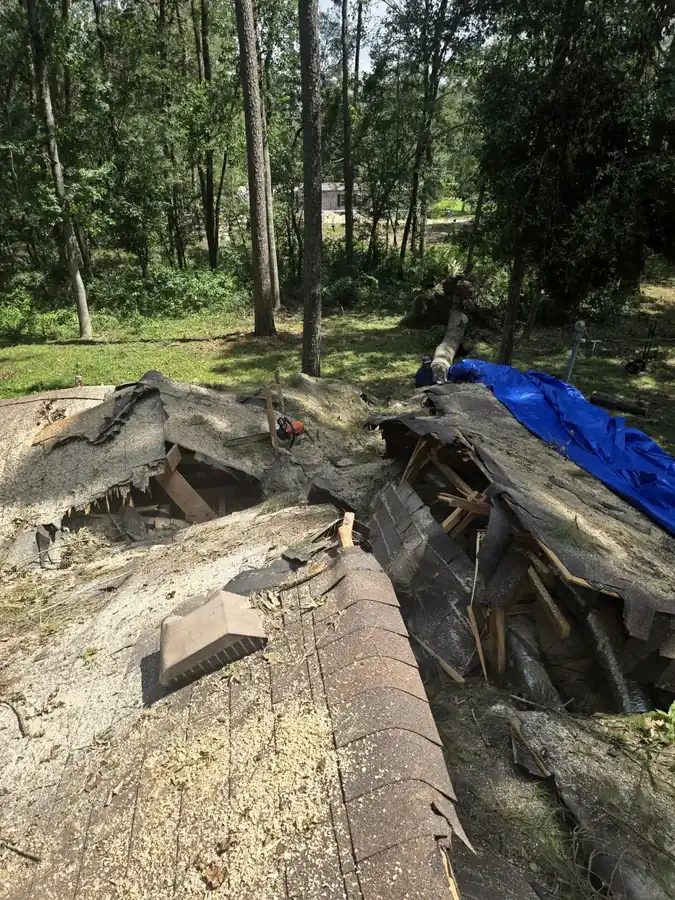
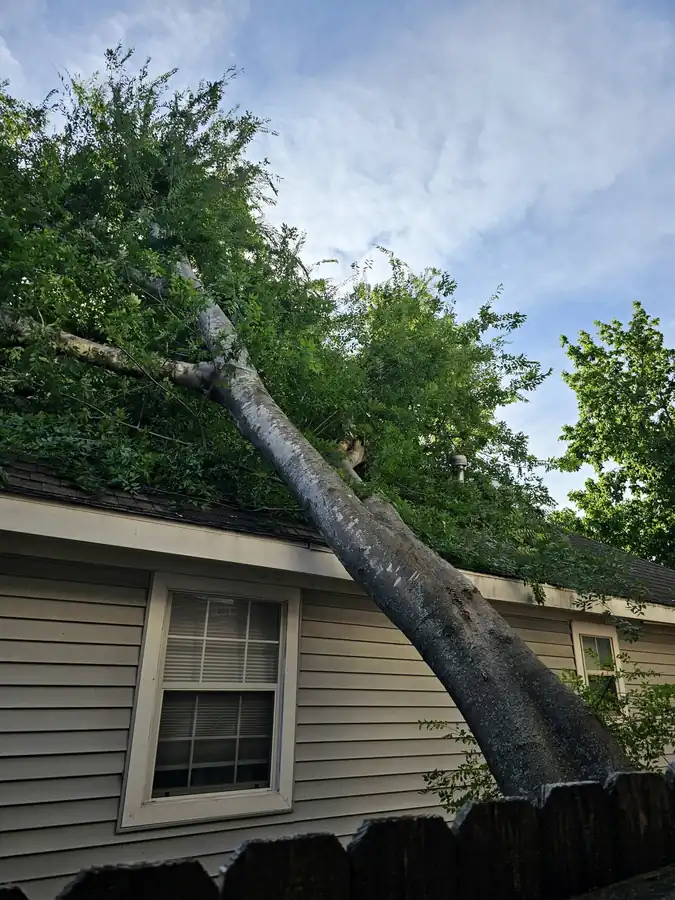
- Storm damage. Hurricane Beryl in 2024 and Winter Storm Uri in 2021 left split trunks and broken tops that cannot be pruned back to a sound shape.
- Dead or declining trees. Drought, root damage from construction and disease all play a role.
- Trees too close to structures whose roots or limbs are causing damage that pruning cannot fix.
Not every removal request needs to end in removal. A tree risk assessment weighs the defect, the target and the options, and our hazard tree signs page lists warning signs owners can spot themselves.
How removals are done on Sugar Land lots
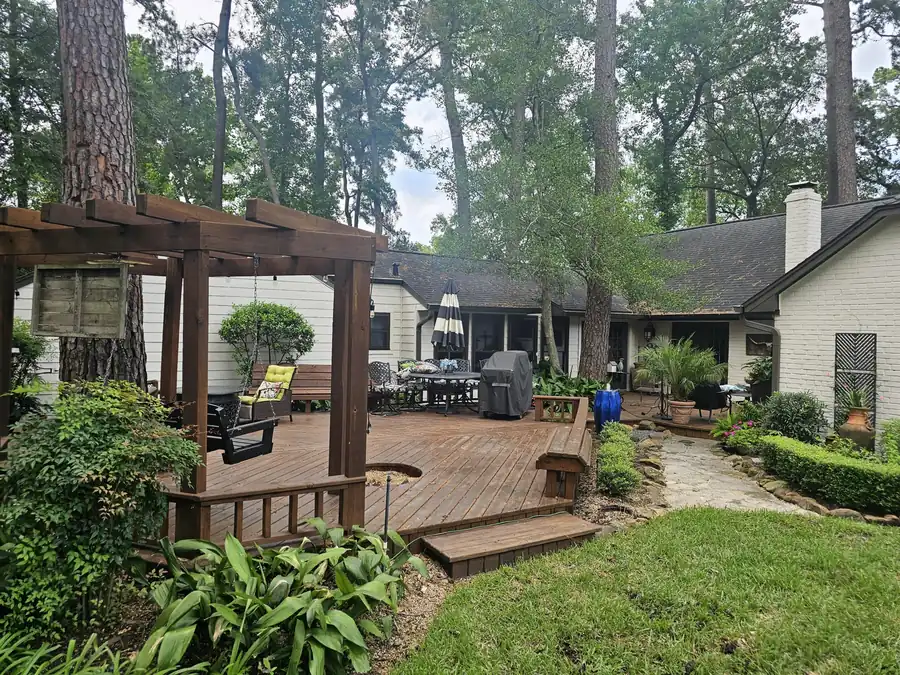
Some Sugar Land homes back onto lakes, levees, greenbelts or neighbors, with fenced yards and pools in between. Trees in those spots come down in pieces, lowered by rope so nothing drops on the house, fence or water. If a job calls for one, we arrange a crane and say so in the scope. Our pages on limited-access and near-structure removal and crane and rigging removal explain the methods. Every removal follows our tree removal safety practices, and the full service is described on tree removal.
Stumps are ground to the depth the scope sets. Sugar Land common areas often have irrigation, lighting and drainage lines, so these are located before grinding. More detail is on stump grinding.
Local rules
- Private lots: no city removal ordinance, per the city FAQ. Check your HOA’s deed restrictions.
- Development and building permits: Protected Trees (hardwoods 8 inches caliper or more) require replacement under the Development Code, decided during permit and landscape plan review.
- Right-of-way trees: generally owned and maintained by the adjacent property owner.
- Near lines: CenterPoint Energy or a line-clearance qualified crew handles any part of the tree inside the minimum approach distances.
Our tree removal permits page compares rules across the Houston area.
What we scope on Sugar Land properties
For each work zone, a Sugar Land removal scope states:
- Each tree, its species and size, and why it should come out.
- Whether it could be a Protected Tree if construction permits are involved.
- The method: felled, sectioned or rigged, and any crane we arrange.
- Protection for fences, pools, lawns and irrigation.
- Stump depth and handling of grindings.
- Cleanup and hauling.
- Schedule and price.
When the work is done, we review the site with you. Our head foreman plans each removal. Paperwork for your files, a certificate of insurance and a W-9, is available on request. For a removal scope, request a bid.
[1] Source in references below
Frequently asked questions
Do I need a city permit to cut down a tree in my Sugar Land yard?
According to the city FAQ, no city ordinance covers removing trees from private property. Your HOA’s deed restrictions may still require approval first.
What is a Protected Tree in Sugar Land?
Under the Development Code, it is a hardwood tree with a caliper of 8 inches or more. Replacement is required when one is removed as part of development that goes through building permit and landscape plan review.
Can I remove the tree between my sidewalk and the street?
The city says adjacent property owners generally own and maintain right-of-way trees and decide on replacement. Confirm with your HOA, and keep the work clear of any lines.
Will removing crowded trees help my lawn?
The city found that thinning out crowded roadway trees let sunlight reach the turf and cut erosion. Removing or thinning trees on a crowded lot can do the same, though each tree should be judged on its own.
References
Related reading
Request a bid